

Infinix GT 30 5G+ India Launch: Infinix has announced the launch date of its latest gaming-focused smartphone, the Infinix GT 30 5G+, in India. The company is set to launch the device on August 8 at the12 PM IST. It is expected to join the Infinix GT 30 Pro 5G, which was introduced by the Transsion Holdings subsidiary last month. The Infinix GT 30 5G+ will be available in Blade White, Cyber Blue, and Pulse Green colour options. The Infinix GT 30 5G+ is expected to feature customizable lights. It will be the first smartphone in its price segment to offer gaming triggers, along with Infinix AI and Xboost AI enhancements. The company has confirmed that the lights can be set to three different patterns — ‘breathe’, ‘meteor’, and ‘rhythm’ — and can be customized for 10+ scenarios such as incoming calls, notifications, gaming, and more. The smartphone will run on Infinix’s XOS 15 based on Android 15. The game starts with you! Infinix GT 30 5G+, with the unique Cyber Mecha 2.0 Design, Customizable LED Lights and GT Shoulder Triggers is launching on 8th August Kaun kaun excited hai??#GT305G #TheGameStartsWithYou pic.twitter.com/VNBew1O5W1 — Infinix India (@InfinixIndia) August 4, 2025 Infinix GT 30 5G+ Specifications (Expected) The upcoming smartphone is expected to boast a 1.5K 10-bit AMOLED display with a 144Hz refresh rate and an impressive peak brightness of 4,500 nits, offering a vivid and smooth visual experience. The screen will be protected by Corning Gorilla Glass 7i for added durability. The device is expected to be powered by the 4nm MediaTek Dimensity 7400 chipset, the same processor seen in the iQOO Z10R and Motorola Edge 50 Fusion. It will be paired with up to 16GB of LPDDR5X RAM (including virtual expansion) and up to 256GB of internal storage. In terms of performance, the phone is expected to deliver an AnTuTu benchmark score of over 7,79,000 and offer 25% better energy efficiency compared to its predecessor. The handset is likely to come with Infinix’s AI suite, featuring tools like AI Call Assistant, AI Writing Assistant, the Folax voice assistant, and support for Google’s Circle to Search functionality. Infinix GT 30 5G+ Price In India (Expected) The phone is expected to be priced under Rs 20,000, especially considering that the GT 30 Pro starts at around Rs 25,000. Adding further, the key specifications of the Infinix GT 30 5G+ have been teased through a dedicated microsite on Flipkart.

DoT Slashes Security Test Evaluation Fees By Up To 95 Per Cent To Boost Telecom Innovation | Technology News
New Delhi: The Department of Telecommunications (DoT) on Monday announced a sharp reduction of up to 95% in the security test evaluation fees for telecom and ICT products. Previously, these fees ranged from Rs 2,00,000 to Rs 3,50,000 depending on the equipment category, but have now been drastically reduced. Under the revised structure, the fee for Group A equipment has been reduced to Rs 10,000 from ₹2,00,000; for Group B to Rs 20,000 from Rs 2,00,000; for Group C to Rs 30,000 from Rs 2,50,000; and for Group D to Rs 50,000 from Rs 3,50,000. This move will significantly ease the financial burden on telecom and ICT product manufacturers, especially domestic players. Effective from August 1, 2025, this revised fee structure under the Communication Security Certification Scheme (ComSec) aims to make the security certification process more affordable for domestic manufacturers, particularly MSMEs, according to a statement from the Ministry of Communications. For government R&D institutes such as CDOT and CDAC, all security test evaluation fees are fully exempted for applications submitted for product certification until March 31, 2028. This is part of a broader initiative to encourage innovation in public sector research. The DoT also announced simplification of the security testing and compliance process for Highly Specialized Equipment (HSE) and End-of-Sale/End-of-Life telecom products. Currently, products such as IP routers, Wi-Fi CPEs, and 5G Core SMFs are subject to mandatory security testing, while Optical Line Terminals and Optical Networking Terminals fall under voluntary security certification, with fee exemptions valid until August 31, 2025. The National Centre for Communication Security (NCCS), under the DoT, has been mandated to implement security testing and certification under this scheme. According to the updated framework, OEMs, importers, and dealers who intend to sell, import, or use telecom equipment in India must ensure their products undergo security testing and certification under the ComSec scheme. For this purpose, security test evaluation fees are applicable. This fee reduction is expected to boost the competitiveness of Indian telecom manufacturers, stimulate local innovation, and provide a more streamlined pathway to market entry for both domestic and international Original Equipment Manufacturers (OEMs).

India’s Chip Market Poised To Scale $110 Billion By 2030 | Technology News
New Delhi: India’s transformation from a consumer to a key manufacturer in the global semiconductor value chain, with the chip market targeted to reach 100 to 110 billion dollars by 2030, is being driven by strategic initiatives launched by the government. These include the India Semiconductor Mission, rolled out with an investment of Rs 76,000 crore, the SEMICON India Programme, and global partnerships such as iCET, according to an official statement issued on Sunday. According to industry estimates, the size of the Indian semiconductor market was about 38 billion dollars in 2023, is projected to be 45 to 50 billion dollars in 2024-2025, and is expected to reach 63 billion dollars by 2026 and 100 to 110 billion dollars by 2030. With its fourth edition to be held in Delhi from September 2 to 4, Semicon India 2025 is set to showcase India’s evolving role in the global semiconductor ecosystem, with participation from as many as 18 countries. The three-day event will bring together industry leaders, innovators, academia, government, and other stakeholders to drive collaboration and technological advancements across the entire supply chain. As approved facilities begin operations and new projects take shape, India is positioning itself as a trusted hub for semiconductor manufacturing, strengthening its digital economy, national security, and technological self-reliance. From dependence to dominance, the chip revolution is real and “it’s happening right here, right now in Bharat”, the statement said. In May 2025, the Union Cabinet approved the establishment of one more semiconductor unit under the India Semiconductor Mission. The unit approved is a joint venture of HCL and Foxconn. This plant will manufacture display driver chips for mobile phones, laptops, automobiles, PCs, and myriad other devices that have a display. The plant is designed for 20,000 wafers per month. The design output capacity is 36 million units per month. At the Global Investors Summit 2025, it was announced that India’s first indigenous semiconductor chip would be ready for production this year. Five production units are under construction, signalling a significant milestone for domestic capability. To further strengthen the talent pipeline, the government has also initiated a program to train 85,000 engineers in advanced semiconductor and electronics manufacturing. Madhya Pradesh has taken a significant stride in the IT and electronics sector with the inauguration of its first IT campus, backed by an investment of Rs 150 crore over the next six years. Spanning 1 lakh square feet, the state-of-the-art facility is designed to support end-to-end manufacturing of IT hardware and electronic products under one roof. The plant will produce a wide range of components, including servers, desktops, motherboards, chassis, RAM, SSDs, as well as advanced technologies such as drones and robots. It will also manufacture desktop computers, all-in-one workstations, laptops, tablets, and monitors. The project is expected to generate employment for around 1,200 professionals, positioning the state as a growing hub for electronics manufacturing in India. In July 2025, Netrasemi, a startup supported under the government’s chip design scheme, received Venture Capital (VC) investment of Rs 107 crore. The company is working on making chips for smart vision, CCTV cameras, and Internet of Things (IoT) applications. The global demand for chips is skyrocketing, but the supply chain remains very fragile owing to the concentration of the industry in a few limited geographies. There is a clear need for global diversification of manufacturing. India is emerging as a dominant player in this regard, the statement pointed out. Initiatives like including Electronics Systems Design and Manufacturing (ESDM) as one of the key sectors under Make in India, or the India Semiconductor Mission and Semicon India programme, have helped create an ecosystem to support the industry. The global semiconductor market is expected to reach $1 trillion by 2030, with India’s market occupying a substantial portion of it. India has the capacity to emerge as a key contributor to the 3 primary pillars of the semiconductor manufacturing supply chain: Equipment – leveraging strong base of MSMEs to produce components for semiconductor equipment: Materials – India is a rich source of chemicals, minerals and gases which can be utilised by semiconductor supply chain companies; and Services (R&D, Logistics and supply chain, major talent in AI, big data, cloud computing and IoT, the statement added.

ChatGPT Launches ‘Study Mode’ Feature For Students In 11 Indian Languages; Here’s How To Use It Free | Technology News
ChatGPT Study Mode Feature: OpenAI has launched a new Study Mode in ChatGPT for free, designed to assist students with learning, revision, and exam preparation. This dedicated mode is now available for free in India, offering a major educational boost to millions of users. The AI-powered study assistant is accessible to logged-in users across Free, Plus, Pro, and Team plans. The new Study is available in 11 Indian languages with multimodal support, bringing voice, image, and text together to make AI learning accessible for diverse learners. Meanwhile, the ChatGPT Edu users will also get access in the coming weeks. This move comes as a response to growing concerns and conversations around the use of AI in education, aiming to make learning more accessible and effective for students. The new Study Mode in ChatGPT helps students learn more effectively. They can get simple explanations, ask subject-specific questions, and even take quizzes — all within one interface. Whether it’s math, essays, or science, Study Mode makes studying easier, more personalized, and more helpful. The new mobile-friendly design ensures that students from any part of the country, whether urban or rural, can use it easily, making high-quality learning support widely accessible. ChatGPT ‘Study Mode: How To Use It For Free Step 1: Go to the ChatGPT app or website and sign in to your account. Step 2: On the home screen, look for the “Study Mode” banner or icon. Step 3: Tap or click the banner to switch to Study Mode. Step 4: Choose what you want to study, like English, History, or Physics. Step 5: Ask questions, get simple explanations, or try quizzes and practice material. How To Use ChatGPT Study Mode For Academic Success The new mode helps students make the most of their study time. You can ask the AI to break down your syllabus into daily, bite-sized lessons, making learning more manageable. Students can practice regularly by using the quiz feature to test themselves before exams and stay sharp. If any topic feels confusing, simply request a simplified explanation or an easy-to-understand analogy. To enhance your preparation, you can copy AI-generated summaries into your personal study notes or journal. Adding further, students can easily switch between topics based on their needs and requirements.

India’s 165,000 Posts Offices To Go Digital By Aug 4 In Big Tech Push To Speed Up Delivery | Technology News
New Delhi: More than 86,000 post offices across the country have gone digital and by August 4 this year the entire network of nearly 1,65,000 post offices will have migrated to the new platform as part of the reform initiative launched by the Centre to reposition India Post as a technology-driven, citizen-centric logistics and e-commerce enabler, according to an official statement issued on Wednesday. The technological transformation of India Post under the IT 2.0 framework is designed to introduce real-time track and trace capabilities, customised services for bulk customers, electronic proof of delivery, OTP-based authentication, digital payments, and open API integration, the statement said. In line with industry’s best practices, the Department has introduced centralised delivery for all categories of mail and parcels by setting up dedicated delivery centres that consolidate the service areas of existing post offices. These delivery centres will enable the Department to offer flexible delivery services, including Sunday and holiday deliveries, as well as morning and evening delivery options. A total of 344 delivery centres have been launched nationwide during Phase 1, the statement added. Union Minister of State for Communications and Rural Development Dr. Pemmasani Chandra Sekhar Reviews India Post Reforms: Tech-Driven Overhaul Gains Momentum India Post 2.0: Massive Tech Push to Power Last-Mile Delivery Across Bharat India Post Embarks on Technology-Driven… pic.twitter.com/AXotOuVUrh — PIB India (@PIB_India) July 30, 2025 One of the core pillars of this transformation is the integration of India Post’s systems with major national digital commerce ecosystems. According to officials, the Open Network for Digital Commerce (ONDC) will enable wallet-based prepaid bookings, centralised order tracking, and automated reconciliation with ONDC’s accounting systems. Through its collaboration with the Government e-Marketplace (GeM), India Post will provide API-driven automated pricing and centralised dashboards for payment tracking and cash-on-delivery (COD) settlements, they said. Union Minister of State for Communications Chandra Sekhar Pemmasani, on Tuesday, chaired a high-level review of the mail operations, parcel operations, and business strategy divisions of the Department of Posts. “These enhancements must enable India Post to offer seamless, end-to-end logistics services comparable to those of leading market players,” Pemmasani said while addressing the briefing. “India Post’s unmatched physical footprint must now be complemented by cutting-edge digital capabilities. This transformation is about scale, speed, and service for every Indian — from the remotest village to the busiest metropolitan area,” he added. India Post is currently undergoing a comprehensive, technology-driven transformation under the IT 2.0 framework. This initiative is part of a strategic roadmap aimed at positioning India Post as a strong competitor in the logistics industry, especially in the rapidly expanding e-commerce parcel delivery sector. To drive this transformation, India Post has on-boarded a dedicated data analytics team working with IT 2.0 to enhance operational efficiency through route optimisation, smart sorting, and demand forecasting. The focus is also on data-driven revenue generation, positioning India Post as a modern logistics force aligned with India’s digital economy vision, the official statement added.

Moto G86 Power 5G Launched In India With AI Features; Check Camera, Battery, Display, Price And Launch Offer | Technology News
Moto G86 Power 5G India Launch: Motorola has launched the company’s latest Moto G86 Power 5G smartphone in India. The newly-launched smartphone brings Moto AI in camera and overall. The company claims that the Moto G86 5G phone comes with an IP68+IP69 dust and water-resistant ratings in the country. The handset has a MIL-STD-810H-certified durable build and measures 161.21×74.74×8.6mm and supports a smart water touch 2.0 for wet-hand usability. Moreover, the smartphone comes with Gorilla Glass 7i display protection. The device is available in three Pantone-certified colour options with vegan leather back panels. The Moto G86 Power 5G uses Hello UI based on Android 15 and includes 1 year of OS upgrades and 3 years of security updates. Moto G86 Power 5G Specifications The device is powered by the MediaTek Dimensity 7400 chipset, paired with 8 GB of RAM and 128 GB of internal storage, ensuring smooth performance and ample space for apps and media. The smartphone packs a robust 6,720 mAh battery with support for 33W fast charging, and the charger is included in the box. On the photography front, the rear camera setup includes a 50 MP Sony Lytia 600 sensor with Optical Image Stabilisation (OIS) and an 8 MP ultra-wide + macro vision lens. For selfies and video chats, there is a 32 MP shooter at the front. Adding further, the smartphone integrates several AI tools such as Magic Eraser, Photo Unblur, and Magic Editor, along with moto AI features embedded throughout the system for an enhanced user experience. For audio, it boasts Dolby Atmos dual stereo speakers, Hi-Res Audio support, and Moto Spatial Sound for immersive listening. Moto G86 Power 5G Price In India And Launch Offer The Moto G86 Power 5G is priced at Rs. 17,999 in India for the 8GB RAM and 128GB storage variant. The smartphone will go on sale starting August 6 via Flipkart, Motorola’s official online store, and offline retail outlets across the country. Buyers can avail a flat Rs. 1,000 discount on select bank cards or opt for an additional Rs 1,000 off on exchanging an eligible device.
‘Made In India’ Galaxy Fold 7 Gain Significant Traction From Tier 4 Cities And Beyond: Samsung | Technology News
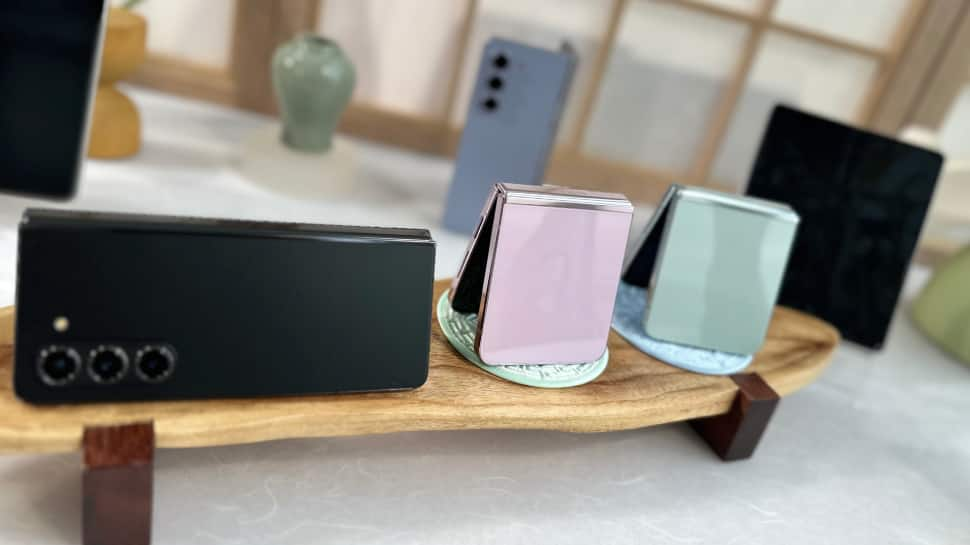
New Delhi: Samsung India on Thursday said that its newly-launched, ‘Made in India’ Galaxy Z Fold 7, is surprisingly gaining significant traction from not only tier 3 markets, but also tier 4 and beyond, amid a resilient economy and rising aspirations across the country. “The unprecedented demand has made us allocate stocks of the Galaxy Z Fold7 across the deeper pockets of Bharat. We are immensely encouraged by the new demand surfacing from tier 4 and beyond and will continue to serve these markets in the best possible manner,” said Raju Pullan, Senior Vice President and Head at Samsung India. Primarily, the design aesthetics of the new Galaxy Z Fold7 – in a sleek, lightweight form factor – have drawn significant interest. The new colours, flagship processing power, along with Galaxy AI have further sweetened the experience for consumers, he added. The company said it is witnessing unprecedented demand for the Galaxy Z Fold7, with the smartphone being ‘out of stock’ in select markets across the country. The company is taking necessary steps at its manufacturing factory in Noida to meet the unprecedented demand. Samsung India had earlier announced that it has received a record 210,000 pre-orders for its seventh-generation foldables – Galaxy Z Fold 7, Galaxy Z Flip 7 and Galaxy Z Flip 7 FE – in just 48 hours in India – signalling rapid mainstreaming of the foldable form factor in India. “We are working overtime to ensure adequate supplies of our most advanced smartphone, to enable customers to enjoy the Galaxy Z Fold7 at the earliest. The strong demand is coming from both retail markets and online platforms,” said Pullan. Galaxy Z Fold7, in its thinnest and lightest design to date, weighs just 215 grams – even lighter than Galaxy S25 Ultra. It is just 8.9 mm thick when folded and 4.2 mm thick when unfolded, according to the company.
Microsoft To Delete All Your Saved Passwords From August 1; Here’s How To Set Up Passkey | Technology News
Microsoft Authenticator Password: If you are someone who uses Microsoft Authenticator, you have probably seen the alert by now that the app’s password management feature is being discontinued. That means all the passwords you have saved in the app will be deleted on August 1. Yes, you heard that right. All your passwords will be deleted this Friday. After Friday, you will no longer be able to save new passwords, manage existing ones, use autofill, or rely on the app as your password manager. It is a major change, especially if you have been depending on it for your daily logins. What Is Microsoft Authenticator It stores your passwords and allows you to sign in to your Microsoft accounts using a PIN, facial recognition through Windows Hello, or other biometric methods like a fingerprint. This app also plays a key role in account recovery, helping you verify your identity if you forget your password. Adding further, it supports two-factor authentication, adding an extra layer of security to keep your accounts protected. Furthermore, If you still prefer to continue using passwords instead of passkeys, you can save them in Microsoft Edge. Notably, not all websites and apps have adopted passkeys yet, so many still rely on traditional passwords for sign-in. Microsoft Passkeys Passkeys consist of two parts of a code that only work when paired together, similar to a digital key and padlock. One half of the encrypted code is stored with you, either in the cloud through a supported authentication app like Microsoft Authenticator, or on a physical security device. The other half is stored by the app, service, or account you’re trying to access. Earlier this summer, Microsoft announced it was moving from passwords to passkeys. So instead of creating a password with a mix of letters, symbols and numbers, you’ll use PINs, fingerprint scans, facial recognition or a pattern on your device’s lock screen to log in to your accounts. How To Set Up New Passkey In Microsoft Authenticator App Step 1: Open the Microsoft Authenticator app on your phone. Step 2: Tap on your account, then select Set up a passkey. Step 3: Log in using your existing Microsoft credentials when prompted. Step 4: Once logged in, follow the on-screen instructions to complete your passkey setup.

India To Host AI Impact summit 2026, Leading Global Dialogue On Democratising AI | Technology News
New Delhi: India is set to host the AI Impact Summit in February 2026, reinforcing its commitment to democratising Artificial Intelligence (AI) for the public good, the Parliament was informed on Wednesday. This landmark event aligns with Prime Minister Narendra Modi’s vision of making technology accessible to all and leveraging AI to tackle real-world challenges across healthcare, education, agriculture, climate, and governance, Union Electronics and Information Technology Minister Ashwini Vaishnav told the Lok Sabha. The IndiaAI mission, which prioritises accountability, safety, equity, and the defence of privacy and human rights, is at the core of India’s AI strategy. According to the statement, one of the main highlights is the creation of native Large and Small Language Models using Indian datasets. Currently, startups such as Sarvam AI, Soket AI, Gnani AI, and Gan AI are developing foundational models that are suited to the linguistic and cultural diversity of India. According to the statement, these models will be open-source, allowing other startups to create locally tailored applications. According to Minister Vaishnaw, to support scalable innovation, the government is also enhancing AI compute capacity by ensuring GPU infrastructure access and expanding the AIKosh Datasets Platform, which currently hosts over 1,000 datasets and 208 AI models, including Text-to-Speech tools in Indian languages. Additionally, the mission is funding 30 AI-based applications addressing public interest areas like health, climate, and governance. Through its IndiaAI Startups Global Programme, 10 startups are being mentored at Station F and HEC Paris, including PrivaSapien Technologies (privacy-enhancing AI) and Secure Blink (AI cybersecurity). Ensuring safe and trusted AI, India has established the IndiaAI Safety Institute to coordinate efforts on responsible AI. Projects under this initiative include AI bias mitigation, machine unlearning, and watermarking, as per the statement A strong legal framework that addresses AI-related risks like disinformation, deepfakes, and data misuse, such as the Digital Personal Data Protection Act (2023), IT Act (2000), and IT Rules (2021), supports the tech initiatives. A techno-legal approach underpins India’s regulation, combining legislation with government-funded R&D on deepfake detection, privacy, and cybersecurity tools, according to the written reply. India’s hosting of the 2026 summit further solidifies its position as a global leader in the development of AI that is inclusive, moral, and driven by innovation.

Want To Turn Your Photos Into PAW Patrol-Style Characters On WhatsApp For Free? Follow THESE Steps | Technology News
Convert Your Photo Into Cartoon Online For Free On WhatsApp: In today’s fast-moving tech world, turning your photo into a fun PAW Patrol-style cartoon is now super easy. You can do it using WhatsApp, ChatGPT, or other free AI tools. One popular option is Puch AI, a chatbot that works right inside WhatsApp. It lets you turn your picture into a PAW Patrol-style cartoon for free. You do not need to download any extra apps, and it works well on both phones and computers. In this article, we will show you the steps based on trusted guides. We will also share a few other free tools you can try. This fun trend brings a touch of childhood magic to your photos, and best of all, it is completely free. How To Turn Your Photos Into PAW Patrol Characters On WhatsApp For Free: Step 1: Start a new chat by searching for “Puch AI” or use a direct link (search “Puch AI WhatsApp bot” in your browser to find the official link). Step 2: Once the bot opens in WhatsApp, tap on it and send a simple message like “Hi” to begin. Step 3: Choose a photo from your gallery or click a new one, then send it to the bot in the chat. Step 4: Type a message like “Convert this to Shinchan style” or “Make me a Shinchan cartoon” to request the transformation. Step 5: Wait 10–20 seconds while the bot processes your request. You’ll receive the Shinchan-style cartoon version, ready to download or share. How To Turn Your Photos Into PAW Patrol Characters Via ChatGpt Step 1: Log in and start a new chat. Step 2: Click the paperclip or image icon to upload your photo directly into the chat. Step 3: Type: Transform this photo into a Shinchan-style cartoon with unique poses and expressions, formatted as WhatsApp stickers (512×512 PNG with transparent background). Step 4: Save the generated images and use any WhatsApp sticker maker app to import them as custom stickers. How To Turn Your Photos Into PAW Patrol Characters Via AI Tool Step 1: Go to Fotor’s Photo-to-Anime Converter or Canva’s Animeify App using your browser. Step 2: Click Upload and select a photo from your device. Both tools support quick drag-and-drop options. Step 3: Choose from various anime filters or presets. Look for fun, cartoonish styles that resemble Shinchan or similar characters. Step 4: Download the transformed image and share it on WhatsApp directly or use it to create stickers with a sticker maker app.