

New Delhi: In a key step towards combating cyber fraud and financial crime via mobiles, the Department of Telecommunications (DoT) on Wednesday announced sharing of “Financial Fraud Risk Indicator (FRI)” with its stakeholders. The multi-dimensional analytical tool, developed as part of the Digital Intelligence Platform (DIP), empowers financial institutions with advance actionable intelligence for cyber fraud prevention. This will enhance cyber protection and validation checks in case of mobile numbers flagged with this tool when digital payment is proposed to be made to such numbers, said the Ministry of Communications. It is a risk-based metric that classifies a mobile number to have been associated with Medium, High, or Very High risk of financial fraud. Leading UPI platforms — PhonePe, Paytm and Google Pay who collectively account for over 90 per cent of UPI transactions — have begun integrating DIP alerts into their systems. “One of the leading UPI platforms has introduced transaction delays, with alerts and needing user confirmations. Other banks are also actively using the data for mitigating cyber frauds,” said the Ministry. With UPI being the most preferred payment method across India, this intervention could save millions of citizens from falling prey to cyber fraud. The FRI allows for swift, targeted, and collaborative action against suspected frauds in both telecom and financial domains. The Digital Intelligence Unit (DIU) of DoT regularly shares the list of mobile numbers, that were disconnected, with stakeholders along with the reasons for disconnections — found involved in cyber-crime, failed re-verification and exceeding prescribed limits. These numbers are also usually used for financial frauds. As soon as a suspected mobile number is flagged by a stakeholder, it undergoes multi-dimensional analysis, and classifies it into Medium, High, or Very High financial risk associated with it. It then shares this assessment about the number immediately with all stakeholders through DIP. DoT said it is committed to prevent misuse of telecom resources by implementing national level technology driven solutions and collaborating with stakeholders, thus ensuring a secure and safe telecom ecosystem for all citizens.
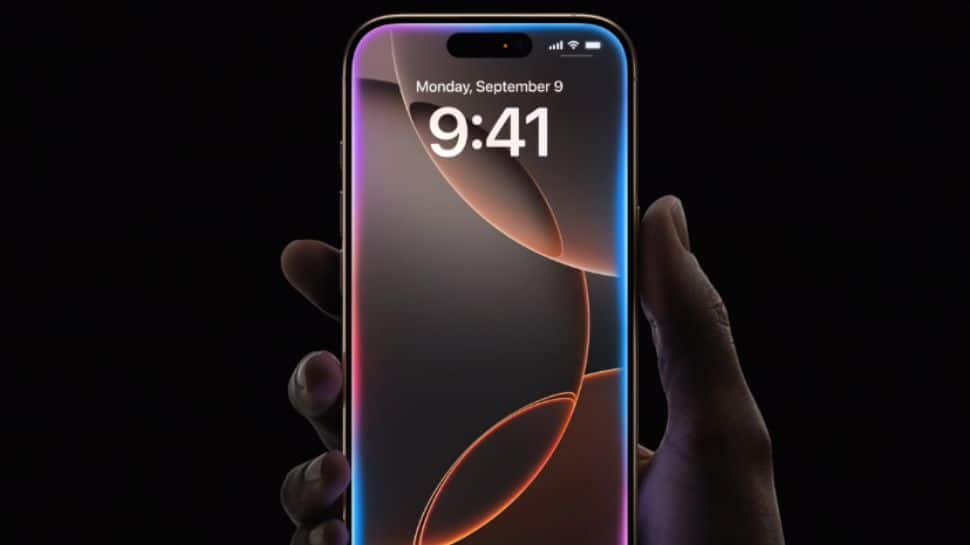
iPhone Security Alert: Apple Warns Users To Urgently Turn Off THIS Popular Feature; Here’s How To Stay Safe | Technology News
Apple iPhone Security Alert: Apple has issued a crucial warning to millions of iPhone users, advising them to take immediate action after serious security vulnerabilities were discovered in iPhones. Researchers at cybersecurity firm Oligo found major security flaws in Apple’s AirPlay feature that allow hackers to hijack compatible devices connected to the same Wi-Fi network, according to media report. As a result, the tech giant has recommended disabling the AirPlay feature due to what has been dubbed the “AirBorne” security flaw. These vulnerabilities pose significant risks to user privacy and data security. A total of 23 security flaws, dubbed “AirBorne”, have been found in Apple’s AirPlay protocol and the AirPlay Software Development Kit (SDK), which is used by other companies to make their devices work with AirPlay. These flaws could let hackers break in without any user action. Once inside, attackers can remotely access devices, install malware, and steal sensitive data — all without any interaction from the iPhone user. Moreover, they claimed hackers could realistically use similar tactics to access devices with microphones for espionage. This isn’t the first time Apple has urged users to update their devices amid security concerns. In February, Apple reported facing “extremely sophisticated” attacks that could potentially disable USB Restricted Mode on locked devices. Adding further, Apple’s Restricted Mode is a security feature added almost seven years ago in iOS 11.4.1 and included in all later versions of iOS. The new security feature prevents locked devices from leaking data to any accessories connected to the USB-C or Lightning port. How To Stay Safe Open Settings: Go to Settings > General > AirPlay And Handoff on your Apple device. Disable AirPlay Receiver: Turn off the AirPlay Receiver option to stop unnecessary broadcasting. Restrict Access: If you keep AirPlay on, set access to Current User Only to limit potential intrusions. Install Security Software: Use trusted security apps to enhance protection against background broadcasting risks.

Google I/O 2025 Highlights: From Gemini 2.5 Pro To AI-Powered Search Mode – Big Announcements You Need To Know | Technology News
Google I/O 2025 Announcements: Google’s just wrapped up its I/O 2025 keynote with another jam-packed set of AI-first announcements, demos, forward-looking promises at the Shoreline Amphitheatre in Mountain View, California. The tech giant has made it clear that artificial intelligence is no longer just a feature — it’s the foundation. During the keynote, the tech giant introduced two new subscription tiers: AI Pro and AI Ultra. These plans are designed for users who want deeper access to Google’s most advanced AI tools and features. Both premium plans are powered by Gemini, Google’s flagship AI model, and promise better performance, smarter context handling, and exclusive capabilities. It’s worth noting that AI Ultra is a brand-new offering, while AI Pro is simply a rebrand of the existing Premium plan. Following last year’s momentum, Google made big moves with Gemini 1.5, Project Astra, Circle to Search, and stronger AI features in Android. This year, the tech giant kept on maintaining that momentum and went even further. At Google I/O 2025, Search became a fully AI-powered experience. Project Starline got a new name: Google Beam. Google also showed off smart glasses powered by Android XR and introduced new tools to create videos using AI. This wasn’t just a small step forward—it was a major shift in Google’s AI journey. Let’s have a quick look at everything big that Google announced at Google I/O 2025 Gemini Comes To Chrome For Pro And Ultra Users Gemini is now built into Google Chrome. With just a click, it can summarize web pages, help with research, and even support cross-tab tasks. This feature is available to Gemini Pro and Ultra users. Deep Think Mode For Gemini 2.5 Pro Google also introduced a new “Deep Think” mode for Gemini—designed to handle complex tasks like math and coding. It tests multiple ideas before giving an answer and is currently being rolled out to trusted testers. New AI Mode In Search Search now includes a new AI Mode tab, where users can chat directly with Gemini to explore topics, make charts, and even shop. This feature is launching in the U.S., with future updates like live conversations and smart shopping on the way. Flow App Brings AI Video Creation Google launched Flow, a creative or filmmaking app that lets you make 8-second AI-generated video clips using Veo, Imagen, and Gemini. You can also stitch clips together and build scenes to make longer videos. Project Aura: Smart Glasses Powered by Android XR Google teamed up with Xreal to introduce Project Aura, a prototype smart glasses powered by Android XR, complete with cameras and Gemini AI. Brands like Samsung, Gentle Monster, and Warby Parker are also working on XR glasses. Search Live: Talk To Your Camera Expanding on last year’s Astra demo, Google revealed Search Live—a real-time tool that lets you point your camera and talk to Search about what it sees. It’s useful for things like homework help, object detection, or discovering products. Stitch: Your New AI UI Design Assistant Google launched Stitch, a new experimental tool that applies AI to create app interfaces from sketches, screenshots, or design prompts. Targeted at developers and designers, it’s live on Google Labs now. Smarter Gmail Replies Are Coming Smart Replies in Gmail are also getting smarter. Soon, they’ll pull context from your inbox and Google Drive to craft more personal responses—adjusting tone depending on who you’re replying to.

Gemini AI App Crosses 400 Million Monthly Active Users: Google CEO Sundar Pichai | Technology News
New Delhi: The Gemini app now has over 400 million monthly active users and we are seeing strong growth and engagement particularly with the 2.5 series of AI models, Sundar Pichai, CEO of Google and Alphabet, has said. Over seven million developers are building with Gemini, five times more than this time last year, and Gemini usage on Vertex AI is up 40 times, said Pichai during the ‘Google I/O 2025’ conference in the US. “For those using 2.5 Pro in the Gemini app, usage has gone up 45 per cent,” he informed. This time last year, “we were processing 9.7 trillion tokens a month across our products and APIs. Now, we’re processing over 480 trillion — that’s 50 times more”, Pichai added. He further stated that what all this progress means is that “we’re in a new phase of the AI platform shift, where decades of research are now becoming reality for people, businesses and communities all over the world”. Since launching last year, AI Overviews have scaled to over 1.5 billion users and are now in 200 countries and territories. “In our biggest markets like the U.S. and India, AI Overviews are driving over 10 per cent growth in the types of queries that show them, and this growth increases over time. For those who want an end-to-end AI Search experience, we’re introducing an all-new AI Mode,” informed the Google CEO. It’s a total reimagining of Search. With more advanced reasoning, you can ask AI Mode longer and more complex queries. In fact, early testers have been asking queries that are two to three times the length of traditional searches, and you can go further with follow-up questions. All “I’m excited to share that AI Mode is coming to everyone in the U.S., starting today (Tuesday US time). With our latest Gemini models our AI responses are at the quality and accuracy you’ve come to expect from Search, and are the fastest in the industry. And starting this week, Gemini 2.5, is coming to Search in the U.S., as well,” he added. The company is making 2.5 Pro even better by introducing an enhanced reasoning mode called Deep Think. It uses our latest cutting-edge research in thinking and reasoning, including parallel thinking techniques.
5 Breakthrough Machine Learning Research Papers Already in 2025
Machine learning research continues to advance rapidly.

Only 7% Indian Firms Are Cybersecurity Ready, Alarming Gap In Security Preparedness: Cisco | Technology News
New Delhi: Cybersecurity readiness remains alarmingly low in Indian companies, with only 7 per cent of firms in India expected to achieve a mature level of readiness by 2025, according to a recent report by global technology firm Cisco. This marks an increase from last year’s (2024) Index, in which only 4 per cent of Indian organisations were designated as mature, the Cisco 2025 Cybersecurity Readiness Index noted. This demonstrates that despite an improvement from last year, cybersecurity preparedness remains low, especially as hyper-connectivity and AI introduce new complexities for security practitioners. The report added that artificial intelligence (AI) is both revolutionising security and escalating threat levels, with 9 in 10 organisations (95 per cent) facing AI-related security incidents last year. However, only 66 per cent of respondents expressed confidence that their employees fully understand AI-related threats. The report further observed that more than half of Indian organisations (57 per cent) suffered cyberattacks in the previous year, hindered by complex security frameworks and disparate point solutions. The Cybersecurity Readiness Index also highlighted that industry respondents view external threats—such as malicious actors and state-affiliated groups (46 per cent)—as more significant than internal threats (54 per cent), underscoring the urgent need for streamlined defence strategies to thwart external attacks. The Index evaluates companies’ readiness across five pillars—Identity Intelligence, Network Resilience, Machine Trustworthiness, Cloud Reinforcement, and AI Fortification—encompassing 31 solutions and capabilities. A deep dive into the findings reveals that the lack of cybersecurity readiness in India is alarming, as 81 per cent of respondents anticipate business disruptions from cyber incidents within the next 12 to 24 months. In India, about 96 per cent of organisations use AI to better understand threats, 88 per cent for threat detection, and 77 per cent for response and recovery—underscoring AI’s vital role in strengthening cybersecurity strategies. The report also notes that Generative AI (GenAI) tools are widely adopted, with 46 per cent of employees using approved third-party tools. However, 28 per cent have unrestricted access to public GenAI, and 43 per cent of Information & Technology (IT) teams are unaware of employee interactions with GenAI—highlighting major oversight challenges. On the investment front, about 98 per cent of organisations plan to upgrade their IT infrastructure, yet only 54 per cent allocate more than 10 per cent of their IT budget to cybersecurity—down 7 per cent year over year.

Airtel Partners With Google To Offer Six Months Free 100 GB Of Cloud Storage To Postpaid And Wi-Fi Customers | Technology News
Google One Cloud Storage Subscription Service Free: Bharti Airtel and Google has announced a partnership that brings Google One cloud storage subscription service for Airtel customers. This partnership aims to address the common issue of limited device storage by offering six months of 100 GB Google One cloud storage to all postpaid and Wi-Fi customers at no additional cost. Moreover, Airtel customers will also be able to share this storage with up to five additional people, said the companies in a statement. 100 GB Cloud Storage Free: The 100 GB cloud storage will be available at no extra cost for the first six months from the date of activation, enabling customers to back up their data and experience the convenience of cloud storage. Airtel partners with @Google to bring Google One cloud storage to its Postpaid and Wi-Fi customers in India. As part of the offer, customers will get 100 GB of storage across Google Photos, Drive, and Gmail—free for the first 6 months. The service will also support WhatsApp chat… — Bharti Airtel (@airtelnews) May 20, 2025 Users To Pay Rs 125 Per Month After Six Months After six months of 100 GB storage at no charge, a fee of Rs 125 per month will be added to the customer’s monthly bill. If a customer chooses not to continue the subscription, they can opt out of Google One membership. Notably, Airtel’s plans start at Rs. 499 per month for Wi-Fi subscribers and Rs. 449 for postpaid customers. The partnership aims to address the growing issue of data storage constraints by ensuring that users have ample space to store their cherished photos, videos, documents, and other digital content—without frequently deleting files or relying on costly physical storage solutions. Cloud Storage For Android And iOS Platforms Adding further, WhatsApp chats on Android are backed up to Google Account storage which will make device switching easier for customers. The cloud storage provision is compatible with both Android and iOS platforms, making it widely accessible to Airtel’s diverse customer base. Google One, the subscription service offering cloud storage and AI features, has recently surpassed 150 million subscribers. This marks a 50 per cent increase since February 2024, when it reached the 100 million mark nearly six years after its launch. (With IANS Inputs)
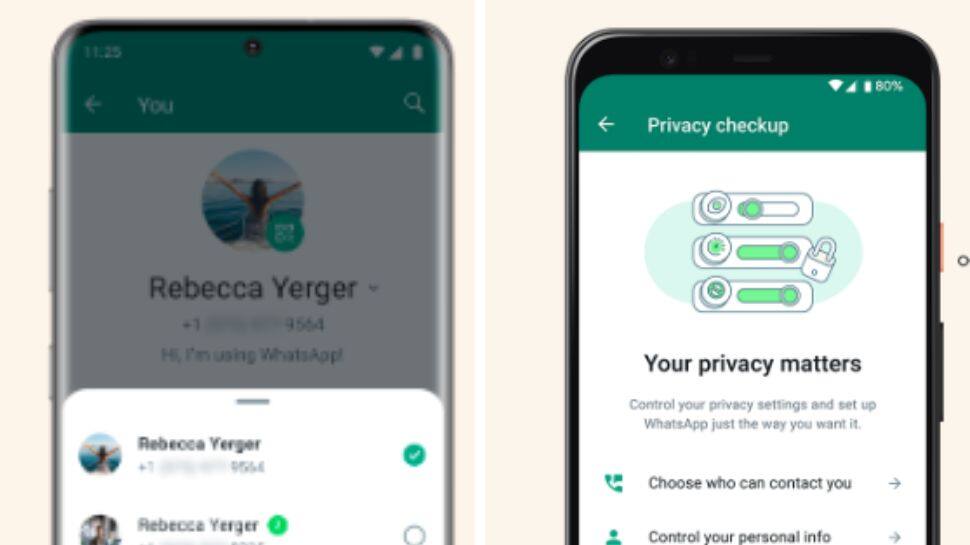
WhatsApp Rolls Out Its Biggest Privacy Campaign Across 16 States, Including Delhi; Features THIS Bollywood Star… | Technology News
WhatsApp Privacy Campaign: WhatsApp, the instant messaging platform, has launched a global privacy campaign highlighting that no one—not even the Meta-owned service—can see or hear users’ messages. The campaign, titled ‘Not Even WhatsApp’, is the company’s largest marketing initiative to date and aims to emphasize enhanced privacy for its over 3 billion monthly users worldwide. Meta-owned WhatsApp has kicked off a large-scale privacy campaign targeting audiences across India, the United States, the United Kingdom, Brazil, and Mexico. WhatsApp is rolling out its campaign across multiple channels which includes TV, digital platforms, online videos, audio, digital out-of-home (DOOH), and in-app messaging. In India, the privacy campaign will run across 16 states, including major regions like Delhi, Maharashtra, and Karnataka. The privacy campaign starts with a brand manifesto TV spot directed by Achowe from Chalk and Cheese Films. The ad was filmed across various locations in Delhi, including familiar landmarks such as the Yamuna River and Chandni Chowk. The 60-second film also features well-known personalities, with Aamir Khan lending his voice for the Hindi and English versions aired in India. The advertisement offers a fresh perspective—showing what messaging looks like from the “other side” of the phone. The campaign highlights the platform’s strong privacy promise: even WhatsApp can’t access your messages. Whether you’re sharing a voice note with family, sending a selfie, or having a private chat with a friend, everything stays confidential. This sense of privacy comes from WhatsApp’s end-to-end encryption, which ensures that messages and calls can only be accessed by the sender and the intended recipient. No third party—not even WhatsApp—can read or listen to the communication. Adding further, the campaign aligns with the rollout of a new feature called Advanced Chat Privacy. This optional setting offers users more control by blocking others from exporting chat content, stopping automatic media downloads, and preventing messages from being used in AI features. However, people can still manually download files or take screenshots. However, WhatsApp continues to enhance its Privacy Checkup tool, which helps users manage their privacy settings and security options all in one place.
A Gentle Introduction to Learning Rate Schedulers
Ever wondered why your neural network seems to get stuck during training, or why it starts strong but fails to reach its full potential? The culprit might be your learning rate – arguably one of the most important hyperparameters in machine learning.
World’s Most Secure Phones: Used By Prime Ministers, Presidents, CIA Agents, Militaries, And VVIPs — These Phones Include… | Technology News
World’s Most Secure Phones: In a world where privacy is priceless, some phones stand guard like silent sentinels. These are the most secure handset on the planet which is reportedly trusted by intelligence agencies, militaries, and VVIPs alike. From the sleek Apple iPhone to Samsung’s fortress-like devices, these handsets aren’t just gadgets; they’re shields against cyber threats, using advanced technology to stop hacking, spying, and data leaks. This is why these smartphones reportedly are trusted by Prime Ministers, Presidents, CIA agents, government officials, and VVIPs. Here are six of the most secure phones in the world that help keep secrets safe in an increasingly connected world. Let’s have a quick look at the list of the most secure phones in the world. 2. Blackphone 2 Don’t confuse it with Boeing Black. Launched by Silent Circle, the Blackphone 2 runs SilentOS, a customized version of Android, and uses a proprietary GoSilent firewall. Its Security Center gives you complete control over app permissions and data sharing. pic.twitter.com/o4Ou1gLQmP (@Dmj_dev) February 12, 2021 Blackphone 2 (Silent Circle) The super ultra phone is specially designed with privacy and security in mind. It runs on Silent OS, which is based on Android but almost completely eliminates tracking and data sharing. It offers encrypted calls, messaging, and browsing to keep user communications private. Boeing Black It is developed by the Boeing company, this phone is specifically designed for defense and government use. Its standout feature is that it self-destructs if tampered with, preventing any data leaks. Sirin Labs Unveils $999 FINNEY Blockchain Smartphone with Dual Displays Read More: https://t.co/LXCEerfSlx pic.twitter.com/5Y4Jelse2D — MasterGadgets (@MasterGadgetsIN) July 14, 2018 Sirin Labs Finney A blockchain-based smartphone known for its cybersecurity features. It provides multi-layer cyber protection, a cold storage wallet, and secure device communication. It is very popular among VVIPs and cryptocurrency users. The first Librem 5 smartphones are shipping https://t.co/hA7CG7X4yQ “This is a big moment, not just for us as a company, but for everyone concerned about issues of privacy, security, and user freedom.” – Todd Weaver, founder and CEO of #Purism #Librem5 #Librem5Aspen #Linux #GNOME pic.twitter.com/thZX7D34fx — Purism (@Puri_sm) September 24, 2019 Purism Librem 5 An open-source phone based on Linux, this device includes hardware kill switches that physically disable the camera, microphone, and network. It is ideal for users who want to have full technical control over their privacy. iPhone 17 Pro Max What do you think? pic.twitter.com/BLjjximCgP — Apple Club (@applesclubs) May 18, 2025 Apple iPhone (with iOS 17 or later) While extremely popular among general users, the iPhone’s security is so advanced that many government agencies also use it. Features like end-to-end encryption and Secure Enclave make it highly secure. Samsung Galaxy S24 series Key takeaways – Bunch of new AI features in OneUI 6.1 – Titanium frame on S24 Ultra – S24 & S24+ get new displays – Same cameras on S24/24+ as last yr – S24 Ultra gets new 50MP 5X tele lens – Snapdragon 8 Gen 3 on S24U, Exynos 2400 on S24/24+ – Bumped… pic.twitter.com/TSzew75qQb — Yogesh Brar (@heyitsyogesh) January 18, 2024 Samsung Galaxy S24 Ultra (Secure Folder + Knox) Samsung’s Knox security platform offers defense-grade protection. Its “Secure Folder” feature allows data to be stored separately and encrypted. It is used by military and government officials in several countries.