
Amidst tensions between Beijing and Washington, China has decided to expand its ban on using iPhones in sensitive departments to government-backed agencies and state companies. Sources familiar with the matter told Bloomberg that several agencies have already instructed their staff not to bring iPhones to work, confirming an earlier report by the Wall Street Journal. The Chinese government plans to further extend this restriction to a number of state-owned enterprises and other government-controlled organisations, revealed the sources. As of now, there is no formal or written injunction in place, so it is uncertain how many companies or agencies will eventually adopt restrictions. Some firms could choose to prohibit Apple devices in the workplace, while others may instruct their staff to avoid their use altogether. The Chinese government has been working for years to eliminate the use of foreign technology in sensitive areas. This effort coincides with the country’s attempt to reduce its dependence on foreign software and circuitry, especially in America. The move could pose a significant challenge for Apple as the company heavily relies on China for revenue growth and manufacturing. China has been one of Apple’s largest markets, amounting to one-fifth of the company’s total revenue in the previous year, and the iPhone sales in China exceeded those in the United States in the last quarter. The shares of Apple dropped by 2.9 per cent on Thursday due to reports that China intends to expand the ban on iPhones for use in government-backed agencies and companies. Apple experienced its largest daily decline in over a month. The company lost approximately $200 billion in just two days, and its stock is currently performing worse than ever before in recent times. Huawei could be the reason behind iPhone ban in China Bank of America analysts noted in a report that the possibility of a ban on iPhones in the US coincides with the launch of a new high-end smartphone by Chinese manufacturer Huawei, the Mate 60 Pro. The US government has opened an investigation into Huawei’s latest smartphone, which was recently launched. This comes after the smartphone was found to be equipped with an advanced 7nm chip produced by Chinese chipmaker SMIC. Despite the US’ restrictions on exporting advanced chip-making machinery to China, the chip offers connectivity speeds that are comparable to those of other 5G-enabled chipsets, while the curb should have pushed China’s chip industry back a decade down the line. National Security Adviser Jake Sullivan has stated that the US requires further information about the new chip’s nature and composition to determine if the parties involved have evaded restrictions on the export of semiconductors. The timing of the ban is seen as “interesting” by the analysts.
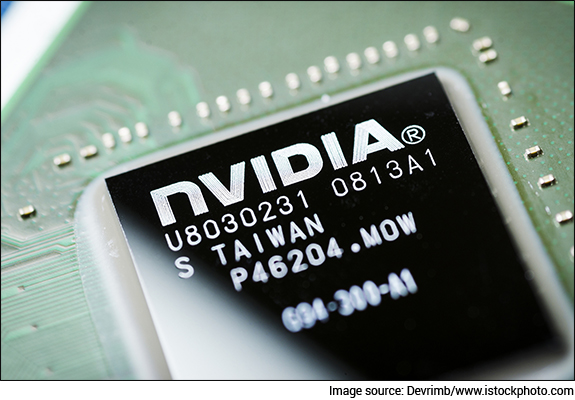
US chip giant Nvidia partners with Tata Group: What the deal means for TCS, Tata Motors and Tata Communications
US chip giant Nvidia announced a collaboration with Tata Group to deliver computing infrastructure and platforms for developing artificial intelligence-based solutions. Nvidia and Tata Group will also work together to build an AI supercomputer powered by the next-generation Nvidia GH200 Grace Hopper super chip. This partnership will also catalyze the AI-led transformation across Tata Group companies ranging from manufacturing to consumer businesses, Nvidia said in a statement. What the deal means for TCS, Tata Motors and Tata Communications The US-based chipmaker is tying up with Tata Group companies — Tata Motors, Tata Consultancy Services and Tata Communications. As per the deal, NVidia will reportedly work with Tata Motors to deploy AI across design, styling, engineering, simulation testing and autonomous vehicle capabilities. The company will help Tata Communications build AI infrastructure. TCS will utilize Nvidia’s AI infrastructure and capabilities to build and process generative AI applications as well as upskill its 600,000-plus workforce. Nvidia CEO and Tata Group chairman on the deal “The global generative AI race is in full steam,” said Jensen Huang, founder and CEO of Nvidia. “Data centers worldwide are shifting to GPU computing to build energy-efficient infrastructure to support the exponential demand for generative AI. We are delighted to partner with Tata as they expand their cloud infrastructure service with NVIDIA AI supercomputing to support the exponential demand of generative AI startups and processing of large language models.” Huang added. Commenting on the collaboration N Chandrasekaran, chairman of Tata Sons, said, “The advancements in AI have made focus on AI a central priority in governments, industries and society at large. The impact of AI and machine learning is going to be profound across industries and every aspect of our lives. Our partnership with NVIDIA will democratize access to AI infrastructure, accelerate build-out of AI solutions and enable upgradation of AI talent at scale. Tata Group’s presence across sectors coupled with NVIDIA’s deep capabilities offers numerous opportunities for collaboration to advance India’s AI ambition.” Earlier in the day, Reliance and Nvidia announced partnership to create AI language models and generative apps for millions of Reliance Jio users.

Here’s Everything You Need To Know About UI, UX
Introduction To UI, UX UI and UX stand for user interface and user experience, respectively. Together, they represent the combined effort of designing the visual as well as the functional aspects of a digital product to create an engaging and user-friendly experience. What Is UI/UX Design? UI/UX design is the process of creating user interfaces and experiences that optimise user satisfaction and interaction with a digital product. It involves the careful consideration of aesthetics, functionality, and usability to ensure a cohesive and enjoyable user journey. What Is UI? UI specifically focuses on the visual design and layout of a digital product. It encompasses the colours, typography, icons, and overall visual elements with which users interact on the screen. What Is UX? UX encompasses the overall experience a user has while interacting with a digital product. It involves aspects such as ease of use, navigation, responsiveness, and the emotional connection users feel while using the product. What Is Material UI? Material UI is a design system and a set of UI components developed by Google. It follows the principles of Material Design, a design language that focuses on creating consistent and intuitive user experience across various platforms and devices. What Is One UI? One UI is a user interface design developed by Samsung for its smartphones. It aims to simplify and streamline the user experience by organising content and interactions in a user-friendly manner, especially for larger screens. What Is UI Testing? UI testing involves evaluating the functionality and usability of a user interface. Testers interact with the UI to identify any bugs, glitches, or design inconsistencies that might affect the user experience. What Is UX Research? UX research involves gathering insights and data to understand user behaviour, needs, and preferences. It informs the design and development process by ensuring that the final product aligns with user expectations and provides a satisfying experience. In the rapidly evolving digital landscape, UI and UX design have become indispensable components for creating successful digital products. By focusing on both the visual appeal and functional aspects of a product, businesses can provide users with an engaging, intuitive, and delightful experience. In the Indian context, the importance of UI and UX design is particularly evident as businesses cater to a diverse and rapidly growing digital audience. UI design in India often includes crafting visually striking elements that resonate with the country’s rich cultural diversity. For instance, a food delivery app might incorporate vibrant colours and icons representing various regional cuisines to appeal to a diverse user base. On the other hand, UX design in India may involve optimising navigation and usability to accommodate users with varying levels of digital literacy. The post Here’s Everything You Need To Know About UI, UX appeared first on Inc42 Media.
Spyware Infection: New flaw in Apple devices led to spyware infection, researchers say
Researchers at digital watchdog group Citizen Lab said on Thursday they found spyware they linked to Israeli firm NSO that exploited a newly discovered flaw in Apple devices. While inspecting the Apple device of an employee of a Washington-based civil society group last week, Citizen Lab said it found the flaw had been used to infect the device with NSO’s Pegasus spyware, it said in a statement. “We attribute the exploit to NSO Group’s Pegasus spyware with high confidence, based on forensics we have from the target device,” said Bill Marczak, senior researcher at Citizen Lab, which is based at the University of Toronto’s Munk School of Global Affairs and Public Policy. He said the attacker likely made a mistake during the installation which is how Citizen Lab found the spyware. Citizen Lab said Apple confirmed to them that using the high security feature “Lockdown Mode” available on Apple devices blocks this particular attack. “This shows that civil society is once again serving as the early warning system about really sophisticated attacks,” said John Scott-Railton, senior researcher at Citizen Lab. The flaw allowed compromise of iPhones running the latest version of iOS (16.6) without any interaction from the victim, the digital watchdog said. The new update fixes this vulnerability. Apple issued new updates on its devices after investigating the flaws reported by Citizen Lab.

Decentralised Crypto Exchange Brine Fi Bags $16.5 Mn Funding, Valued At $100 Mn
The funding round was led by Pantera Capital and also saw participation from Elevation Capital, Starkware, Spartan Group, Goodwater Capital, among others Founded in 2021 by Shaaran Lakshminarayanan, Ritumbhara Bhatnagar and Bhavesh Praveen, Brine Fi is a DEX targeted at institutions and high-frequency traders The fundraise comes at a time when investors are veering towards decentralised crypto exchanges in the aftermath of the collapse of FTX Decentralised crypto exchange (DEX) Brine Fi has raised $16.5 Mn in its Series A funding round, led by Pantera Capital, at a valuation of $100 Mn. The round also saw participation from Elevation Capital, Starkware, Spartan Group, Goodwater Capital, Upsparks Ventures, Protofund Ventures and other angel investors, Brine Fi said in a statement. However, the startup did not specify where it would deploy the fresh funds. “… with Brine Fi we make it easy for institutions, centralised exchanges, HFT traders and retail users to reduce their counterparty risk and at the same time get the best price for their orders in the industry,” said Brine Fi cofounder and CEO Shaaran Lakshminarayanan. Chiming in, Pantera Capital managing partner Paul Veradittakit said, “Brine tackles some of the most important challenges holding back institutional and mainstream user adoption in DeFi. There’s an urgent demand for a self-custodial execution layer that is faster, more reliable, user-friendly, and cost-effective.” Founded in 2021 by Lakshminarayanan, Ritumbhara Bhatnagar and Bhavesh Praveen, Brine Fi is a crypto decentralised exchange targeted at institutions and high-frequency traders. The platform deploys StarkWare’s zkP (Zero Knowledge Proofs) technology which enables privacy on crypto trading positions (avoids frontrunning). It also claims to help users execute orders in milliseconds while remaining fully non-custodial. Brine Fi claims to have so far onboarded some of the world’s largest hedge funds, exchanges and high-frequency traders in the crypto space. The fundraise comes weeks after Brine Fi debuted its orderbook platform which, as per the company, is processing monthly volumes of $300 Mn and is ranked among the top 10 DEXs globally. The fundraise comes at a time when centralised crypto exchanges have come under fire in the aftermath of the collapse of FTX. As a result, a host of traders have veered towards DEXs, seeking to safeguard their portfolios. Brine Fi aims to capture the burgeoning decentralised exchange market, which continues to be plagued by issues such as cumbersome user interface, frontrunning and limited support. Meanwhile, the crypto ecosystem has been hit by regulatory red tape and wary investors who have been spooked by the collapse of crypto exchanges. This has led to a fall in crypto volumes even as nations across the globe move to tighten the noose around these virtual currencies as instances of money laundering via cryptos rise. While the Indian government has been batting for a global framework to regulate cryptocurrencies, Indian crypto startups have been struggling amid funding winter and adverse market conditions. Recently, homegrown crypto exchanges CoinDCX and CoinSwitch laid off a portion of their workforce even as many other similar platforms are experimenting with new business models. With Sequoia Capital recently slashing its crypto fund by more than 65% to about $200 Mn, a slew of other allied players have emerged in the crypto space to leverage the booming web3 economy. As much unfolds in the crypto ecosystem, the fundraise by Brine Fi has come as a much needed respite for the space which has been mired in controversies lately.

FBI Warns: FBI wants you to think through before installing the beta version of apps, here’s why
Installing beta versions of apps to get newer features before others or simply to try out new features and changes coming to apps in future has become a common phenomenon. However, this has led to the rise of a new type of scam and phishing attack. FBI warns about a new beta app scam The Federal Bureau of Investigation has issued a warning against installing beta versions of apps as cybercriminals have started embedding malicious code in mobile beta-testing applications (apps) to defraud potential victims. For those unaware, beta apps are basically pre-release version of apps that developers issue to users in order to test new features and receive feedback based on them in order to improve and refine the overall experience before the official rollout. How malicious beta apps affect users According to the warning issued by the FBI, these malicious apps pose a risk of enabling theft of personally identifiable information (PII), financial account access or device takeover. These beta mobile apps claim to be from authentic sources and pretend to be legitimate by using names, images or descriptions similar to the original apps. How beta mobile app scam works Phishing or romance scams are two main ways for cyber criminals to establish communications with the victim. Once the communication is established, they convince the victim to install a mobile beta-testing app within a mobile beta-testing app environment. They also promise added incentives like large payments for installing and using the apps. The most common beta testing app is cryptocurrency exchange and these apps trick victims into entering account details to make payments in order to invest in cryptocurrency. However, these account details and the funds are transferred to cyber criminals instead. Basically, these apps extort money from victims in the name of investment which is actually a fake investment. To protect this from happening, the FBI has also laid down a couple of recommendations for users, here’s a list of things that you should keep in mind while installing beta mobile apps and to stay safe from such scams. Before installing the beta application, make sure to check app developers and customer reviews. Avoid sending payments to someone you haven’t met or just spoken online even if things look fine from your end. Avoid providing personal information or financial information in emails or messages. Also, do not respond to emails or messages that include links. Do not download or use suspicious-looking apps as a tool for investing unless you can verify the legitimacy of the app. Maintain a vigilant attitude towards urgency or threats in messages, such as warnings of your account being closed or demands for immediate action. Exercise caution when receiving unexpected email attachments, even from familiar contacts. Cybercriminals can manipulate the sender’s information to make it appear trustworthy. Avoid interacting with such messages. If you encounter an email, attachment, or message that raises suspicions, refrain from opening it, even if your antivirus software claims it’s safe. Attackers frequently release new viruses that may go undetected by antivirus programs. Avoid clicking on links within emails or text messages. Many cybercriminals craft convincing messages to deceive users into divulging login credentials. Verify the legitimacy of a link by hovering your cursor over it and checking for any inconsistencies. Scrutinise email attachments and website links, even if they originate from contacts you recognise. Prior to opening attachments, save and scan them for potential threats. Ensure that your software is kept up to date to safeguard against vulnerabilities. Exercise strict control over app permissions and uninstall unused applications to minimize potential security risks.

Logistics Startup Porter’s Operating Revenue Doubles To INR 1,753 Cr In FY23
The Tiger Global-backed startup’s total expenditure also almost doubled to INR 1,946.8 Cr in FY23 from INR 984 Cr in FY22 Porter’s net loss jumped 29% to INR 157.7 Cr in FY23 from INR 122.2 Cr in FY22 Founded in 2014, Porter is an important player in the logistics space with its on-demand marketplace for trucks, bikes and packers and movers Bengaluru-based intra-city logistics startup Porter’s operating revenue crossed the INR 1,700 Cr mark in the financial year ended March 31, 2023. The Tiger Global-backed startup reported an operating revenue of INR 1,753.5 Cr in the financial year 2022-23 (FY23), a 2X jump from INR 847.6 Cr in the previous year. Porter generates revenue by offering services for transportation of goods. Including other income, Porter reported a total revenue of INR 1,789.1 Cr during the year under review as against INR 862 Cr in the previous fiscal year. In line with the revenue, the startup’s total expenditure also almost doubled to INR 1,946.8 Cr in FY23 from INR 984 Cr in FY22. The rise in the expenditure could solely be attributed to the increase in fleet operation cost, which accounted for 80% of the total expenditure at INR 1,578.8 Cr in FY23. Fleet operating expenses stood at INR 786.4 Cr in FY22. Porter also spent INR 185.9 Cr on employee benefit expenses, a 75% increase from INR 106 Cr in the previous year. It must also be highlighted that Porter announced an Employee Stock Ownership Plan (ESOP) liquidation scheme worth INR 50 Cr for its current and former employees in January this year. Porter’s net loss jumped 29% to INR 157.7 Cr in FY23 from INR 122.2 Cr in the previous fiscal year. Founded in 2014 by Pranav Goel, Vikas Chaudhary, and Uttam Digga, Porter is an important player in the logistics sector with its on-demand marketplace for trucks, bikes and packers and movers. The startup recently restructured its leadership team, with cofounder Digga assuming the role of CEO. Earlier, Digga held the position of chief operating officer, a role which the startup has decided to dissolve. Porter has raised over $132 Mn to date and counts Tiger Global, Peak XV Partners, and the Mahindra Group among its backers. The startup competes with the likes of listed unicorn Delhivery, Xpressbees, and Ecom Express.

Paint: Microsoft Paint to get this Adobe Photoshop feature soon
Microsoft Paint received a major overhaul in terms of features and design with Windows 11 update and now it is due for another update that’s set to bring a couple of new features, refinements and more. Microsoft via an official announcement has confirmed the Background removal tool for Paint. The company has mentioned that it has started rolling out an update for the Paint app on Windows Insider in the Canary and Dev Channels (version 11.2306.30.0). And, the update will bring the ability to remove the background of any image automatically in just a single click. How does the background removal tool work Microsoft has mentioned that the background removal in MS Paint will be a single-click feature. This will leave users with a smooth cutout of the subject as it can detect the subject from the entire canvas or from a selection using the selection tool and remove it. All users need to do is import content onto the canvas and click on the new remove background button from the toolbar to remove the background of the entire image. Users will also get the option to use the rectangle select to specify a particular area in the image and then remove the background using the newly introduced tool. Official rollout It is worth mentioning that the background removal tool is currently in testing and available to Windows Insider Preview users running either Canary or Dev Channel builds. The official rollout details are not available as of now. However, we expect it to become available to all users in the coming months, once Microsoft is done receiving the feedback and refining the feature during the beta testing period.
Gmail may soon give you the option to react to an email with emojis
It looks like Google is on an emoji spree. Recently, the company added emoji icons for Maps list, then it brought emoji reactions to Meet, Docs and several other services. Now it seems that it is planning to bring emoji reactions to Gmail. The new feature appears to allow users to react to emails in the inbox. New hidden code for Gmail reveals emoji reactions Hidden code for the Gmail app for iOS (spotted by Steve Moser) and Android (spotted by TheSpAndroid) suggest that Google is reportedly planning to bring emoji reactions to Gmail inbox. The report says that the codes reveal that an emoji reaction feature is in development for the email service. Emoji reactions in Gmail are “coming soon” according to the hidden code found within the Android app. Also, some strings suggest that Google is also planning to show users a message “You’re among the first Gmail users to get an emoji reaction. Soon you’ll be able to send emoji reactions yourself”. This suggests that Google is soon planning to introduce this feature in Gmail, but in beta first with select users before the final rollout. It is yet to be seen how Google is planning to implement emoji reactions in Gmail. And, even the choice of emojis users will have for the reaction. We expect a little flexibility here – at least. That’s not it. The strings from the hidden code also include some restrictions. Here’s a list according to the report. Emails received via BCC won’t support reactions Encrypted messages won’t support reactions Email threads with “large groups” will not support reactions There’s a currently unspecified limit on how much you can use a single emoji reaction Messages can only support up to 20 emoji reactions from a single person Messages can only support up to 50 unique emoji reactions There’s a currently unspecified limit on how much you can use a single emoji reaction Messages can only support up to 20 emoji reactions from a single person Messages can only support up to 50 unique emoji reactions At first glance, emoji reactions in Gmail seem like a weird idea, but realistically it could be quite useful as mentioned above. Currently, though, it’s unclear when Google plans to roll the feature out, as there’s been no official announcement or tease. Emoji reactions aren’t new for emails There are several email services that allow users to react to an email using emojis, including Outlook. Microsoft’s email client lets users react to an email with emojis. Although it does not show them as a complete email reply, the feature comes in handy in case an email is only about acknowledgement.
Top 20 AI Business Ideas to Start in 2024
In the rapidly evolving landscape of technology, Artificial Intelligence (AI) stands out as a beacon of innovation, promising to reshape industries and redefine the way we live, work, and think. As we approach 2024, the potential of AI has expanded beyond mere speculation, presenting tangible opportunities for entrepreneurs, governments, and industries. From enhancing consumer experiences to revolutionizing public services, the following AI business ideas offer a glimpse into a future where technology and human ingenuity converge to create unprecedented value. 1. Industry-specific YouTube channel about AI Similar to the newsletter idea, but in video format. This can cater to various niches and provide insights on how AI is impacting those sectors. 2. AI Newsletter Create an email newsletter that covers AI developments. There’s a growing demand for niche, industry-specific newsletters that discuss AI developments relevant to specific industries or job roles, such as dentists, doctors, veterinarians, lawyers, insurance agents, real estate agents, and more. 3. Property Management for Independent Landlords A significant part of a property manager’s job involves messaging. This can be automated using tools like GPT-4, allowing property managers and landlords to streamline their communication processes. 4. Airbnb Messaging Automation Given the high volume of messaging involved in Airbnb hosting, there’s an opportunity to develop a tool that automates most of the messaging for hosts or to offer a full-service Airbnb management service that uses AI messaging to reduce costs. 5. AI-Driven Time Management AI is proficient at saving time on universal business initiatives like copywriting, social post scheduling, image creation and editing, and even forecasting cash flow. Tools like ChatGPT can help in generating content, pitch decks, and more. 6. AI for Research and Market Analysis Over 40% of startups fail because they’ve misread the market demand. AI can be used to identify companies addressing specific ideas, refine their prompts to identify selling points and messaging already in the market, and find gaps that still exist. 7. Cost Savings with AI The biggest percentage of a startup’s overhead costs is usually payroll. AI can help founders conserve cash by automating tasks that would otherwise require human intervention. For instance, instead of hiring a customer service team, one could run an AI-enabled chatbot. Additionally, AI can help manage cash allocation across the business, integrating data from various platforms to provide a clearer picture of ROI and effective budget allocation. 8. Automated Phone System for Solopreneurs Many small business owners can’t man their phones all the time. An automated phone system using GPT-4 combined with voice-to-text and text-to-voice models can handle customer calls, especially beneficial for businesses like landscaping where the owner might be busy with hands-on work. 9. AI in Foreign Policy AI will play a crucial role in geopolitical leadership and economic resilience. Governments are likely to invest heavily in AI technologies to maintain global competitiveness. 10. AI-Enabled Consumer Experiences The metaverse, cryptocurrencies, and other next-gen consumer experiences will be critically enabled by AI. AI algorithms can bridge the feedback loops between the digital and physical realms, enhancing user experiences. 11. AI in Addressing Climate Crisis AI can play a pivotal role in mitigating the threats posed by climate change. From prediction markets powered by AI to “twin Earth” simulations that require real-time data, AI can help in understanding and addressing environmental challenges. 12. Personalized Medicine with AI AI can help in constructing and analyzing “digital twin” rubrics of individual biology, paving the way for truly personalized medical treatments. 13. Insurance Claims Adjustment & Investigation A lot of the work done by insurance claims adjusters and investigators can be automated using large language models and image analysis AI tools. 14. Software Development Agency Arbitrage With the rise of AI, there’s an opportunity to streamline software development processes and offer more efficient solutions. 15. Automated Email Customer Support Many businesses have customer support emails. An AI tool can automate a significant portion of this, reducing the workload on human agents. 16. AI Textbot Therapist Use GPT-4 to act as a therapist, offering users a phone number they can text for therapeutic conversations. 17. YouTube Thumbnail Generator Develop an AI tool that can analyze a video’s content and automatically produce a captivating, high-performing thumbnail. This can help content creators increase their click-through rates. 18. End-to-End AI-Generated YouTube Channel Imagine a YouTube channel that’s entirely automated. This would involve: Automatic generation of video ideas based on scraping news and other articles, with GPT-4 conducting related research processes. Script creation using GPT-4. Production of an audio track from the script using tools like Eleven Labs. Automated selection and sequencing of stock video clips relevant to different segments of the audio track. As AI text-to-video tools progress, stock video clip selection can be replaced by AI video generation. Automatic thumbnail, video description generation, and upload to YouTube. Potential niches for this channel could include human geography, finance & economics daily news, space exploration & tech, sports history & facts, history of brands, and many more. 19. SaaS Product for AI YouTube Channels Instead of launching an AI-generated YouTube channel yourself, consider creating a SaaS product that enables others to do so. Users could specify their niche, design their YouTube brand, and list sources for content inspiration. The software would then automate the entire content creation and upload process. 20. AI and ML Transforming Scientific Method AI and Machine Learning (ML) can bring about significant improvements in scientific research. They enable the analysis of enormous data sets and computationally discover complex relationships and patterns, potentially ushering in a new golden age of scientific discovery. Conclusion The transformative power of Artificial Intelligence is undeniable. As we’ve explored, the potential applications of AI in 2024 span a diverse range of sectors, from real estate and healthcare to government operations and transportation. For aspiring entrepreneurs and established businesses alike, the time is ripe to harness the capabilities of AI, not just as a tool but as a strategic partner in innovation. As the boundaries of what AI can achieve continue to expand, those who embrace