

Samsung Galaxy S24 Ultra Discount Offer: Planning to buy a new smartphone at a massive discount? This is the perfect time to upgrade your device without breaking the bank. Now, the Galaxy S24 Ultra has received a significant price cut on Amazon, making it more accessible to premium smartphone buyers. Originally priced much higher, the flagship device is now available for ₹83,990 after a 38% discount. The original price of the smartphone was Rs 1,34,999. The smartphone runs on One UI 6.1 based on Android 14. Samsung promises seven years of software updates and security patches. Consumers can purchase the smartphone in various colour options, including Titanium Gray, Titanium Black, Titanium Violet, and Titanium Yellow. Samsung Galaxy S24 Ultra Specifications The device features a stunning 6.8-inch Dynamic AMOLED 2X display with a smooth 120Hz refresh rate and sharp QHD+ resolution, offering an immersive visual experience. It is powered by the Snapdragon 8 Gen 3 for Galaxy chipset—an octa-core processor clocked at up to 3.39 GHz—ensuring top-tier performance. Users can choose from generous storage options of 256GB, 512GB, or 1TB to suit their needs. On the photography front, the phone stands out with a versatile quad-camera setup on the rear. It includes a 200MP main sensor, a 12MP ultrawide lens, a 50MP telephoto lens, and an additional 10MP telephoto sensor. For selfies and video calls, there is a 12MP front-facing camera. The phone is backed by a 5000mAh battery with fast charging support, the device keeps up with demanding usage. Connectivity is seamless, with support for 5G, Wi-Fi 6E, Bluetooth, NFC, and USB Type-C.

88% Global Firms Now Have Dedicated AI Budgets; Focus Shifts To Intelligent Agents: Report | Technology News
New Delhi: Nearly 88% of global enterprises now have dedicated budgets for Artificial Intelligence (AI), with nearly two-thirds of them spending over 15% of their overall tech budgets on AI projects, a new report said on Monday. This major investment push marks a clear shift from early experimentation with Generative AI to building intelligent, goal-oriented systems known as AI agents, according to data compiled by Nasscom. Titled ‘Enterprise Experiments with AI Agents – 2025 Global Trends,’ the report provides a comprehensive look at how companies across the globe are preparing for the next phase of AI adoption. Sangeeta Gupta, Senior Vice President and Chief Strategy Officer at Nasscom, said that enterprises are at a crucial turning point. “AI agents represent the next evolution of enterprise AI — one that requires philosophical shifts in how we view work, intelligence, and autonomy,” she said. However, she also emphasised that scaling AI systems responsibly would require strong trust, data readiness, and continuous human oversight. Based on responses from over 100 companies across 8–9 global regions and more than 10 industries, the study shows how enterprises are moving beyond passive data analysis to more active AI systems that can perform tasks and make decisions with human oversight. The report shows that businesses are strengthening their AI foundation through investments in GenAI tools, data infrastructure, and flexible processes. Many companies have already formed specialised AI teams and are working with advanced platforms, upgrading their tech setups to support the deployment of AI agents. However, despite high awareness of Generative AI, only half of the surveyed companies are fine-tuning large language models (LLMs) or foundation models for their own needs. One of the biggest highlights of the report is the growing interest in Agentic AI — systems designed to act independently while still being monitored by humans. About 62% of companies are experimenting with such AI agents, mainly for internal tasks such as IT operations, HR, and finance. External uses, like customer service, are still limited, with only 31% of enterprises using Agentic AI in those areas. However, looking ahead, 88% of companies plan to set aside budgets specifically for Agentic AI systems in 2025. The report also reveals that most companies are being cautious. Around 77% are designing Agentic AI systems with a ‘human-in-the-loop’ model to ensure oversight and adaptability. Only 46% are testing fully autonomous agents. Manufacturing companies appear to be ahead in adoption, using AI for robotics, quality control, and other operational areas. When it comes to benefits, companies believe AI agents can help in making faster decisions and responding better to market changes, the report said.

Nothing Phone 3 And Headphone 1 India Launch Tomorrow; Check Expected Specs, Price And Other Details | Technology News
Nothing Phone 3 India Launch: Nothing is set to launch its two highly anticipated products at a major event in London, United Kingdom on July 1 which is tomorrow. The company will unveil the Nothing Phone 3 and Nothing Headphone 1, an over-the-ear headphone. However, both devices have generated much attention among tech enthusiasts through leaks and rumours ahead of the official launch event. Notably, the device is coming nearly two years after the launch of the Nothing Phone 2 in the country. Adding further, the company promises a minimum of seven years of software support for the Phone (3), including five years of full Android updates and two years of security patches. The much-anticipated smartphone is expected to launch the latest Android 16 operating system. It is expected that the phone will have a dedicated AI button, similar to a feature on the iPhone (3a) series. Nothing Phone 3 Specifications (Expected) It is expected to feature the same 6.7-inch LTPO OLED display as its predecessor, offering vibrant visuals and adaptive refresh rates. Under the hood, it will likely be powered by Qualcomm’s upcoming Snapdragon 8s Gen 4 processor, paired with a 5,150mAh battery for extended usage. The phone is rumored to come in two configurations: one with 12GB RAM and 256GB storage, and another with 16GB RAM and 512GB storage. On the photography front, the smartphone may include a 50-megapixel main sensor and a 50-megapixel ultra-wide lens, while the front camera is expected to see a jump from 32 megapixels to 50 megapixels, enhancing selfie quality. Moreover, there could be an inclusion of eSIM support, offering users more flexibility in connectivity. Nothing Headphone 1 Specifications (Expected) It is designed to target the premium audio market, with performance reportedly set to surpass that of Apple’s AirPods Max. Weighing around 329 grams, these over-ear headphones are expected to feature custom 40mm drivers developed in collaboration with British audio company KEF, renowned for its high-quality speakers. The wearable device may offer up to 80 hours of playback without noise cancellation and around 35 hours with ANC enabled when using the AAC codec. For those using high-resolution LDAC streaming, users can expect up to 54 hours without ANC and 30 hours with it on. The headphones will also come loaded with smart features, including Google Fast Pair, Microsoft Swift Pair, dual-device connection, wear detection, low-latency gaming mode, LED charging indicators, personalised sound profiles, and support for Google’s “Find My Device” network. Nothing Phone 3 And Headphone 1 Price In India (Expected) The smartphone is expected to be competitively priced for the mid-range market in India, likely starting at around Rs 50,000 and going up to Rs 60,000. On the other hand, the Nothing Headphone 1 could be priced between Rs 15,000 and Rs 25,000, aiming to deliver premium features at a more accessible price point to the customers.

Govt Begins Testing New Mobile Alert System For Real-Time Disaster Warnings | Technology News
New Delhi: The Department of Telecommunications (DoT) on Monday announced that, in partnership with the National Disaster Management Authority (NDMA), it is currently testing a new mobile alert system that will help send emergency warnings to people across India in real time. This new system, known as the Cell Broadcast (CB) system, is designed to send alerts instantly to mobile phones in areas affected by natural disasters or emergencies like tsunamis, earthquakes, lightning, gas leaks, or chemical hazards. Unlike regular SMS alerts, which are sent individually, Cell Broadcast messages are sent to all mobile phones in a particular area at once, making them faster and more effective in critical situations. The CB system is being developed and implemented by the Centre for Development of Telematics (C-DOT), a leading R&D organisation under the Department of Telecom. The system is currently undergoing nationwide testing, which will last for about two to four weeks. During this time, people may receive test messages on their mobile phones in English and Hindi. These messages will clearly state that they are part of a test and do not require any action from the public. Only mobile phones with Cell Broadcast test channels enabled will receive these test messages. Also, some people might get the same message more than once, as the system is being tested across the entire mobile network, including all base stations and towers. The NDMA already runs an SMS-based alert system called ‘SACHET,’ which has been operational in all 36 states and Union Territories. Built using the Common Alerting Protocol recommended by the International Telecommunication Union (ITU), this system has already sent over 6,899 crore SMS alerts in more than 19 Indian languages during past disasters and extreme weather events. Once the testing of the Cell Broadcast system is complete, it will be used alongside SMS alerts to deliver warnings in real time and in multiple Indian languages to all mobile users — even if their phones do not have the test channels activated. The government has asked the public to cooperate during the testing phase and to ignore any test messages received. These messages are only meant to check the system’s performance and do not indicate any actual emergency.

Digital India Has Become People’s Movement: FM Nirmala Sitharaman | Technology News
New Delhi: Digital India has not remained a mere government programme but has also become a people’s movement, Finance Minister Nirmala Sitharaman said on Tuesday. In a post on X, she said ‘Digital India’ is central to building an ‘Aatmanirbhar Bharat’, and to making India a trusted innovation partner to the world. “From bringing internet access to remote corners of the country to making government services available online, the ‘Digital India’ initiative of Prime Minister Narendra Modi led-government has truly bridged the digital divide across the nation,” the Finance Minister wrote as the ‘Digital India’ mission completed 10 successful years. “Scan. Pay. Done. India’s UPI revolution powers nearly half of the world’s real-time digital transactions,” she further stated. According to Commerce Minister Piyush Goyal, with initiatives like UPI, DBT, GeM, ONDC, SVAMITVA, and many more, the nation is moving from digital governance to global digital leadership. “Prime Minister Narendra Modi writes, when the intent is right, innovation empowers the less empowered,” he posted on X. The Prime Minister said in a post on LinkedIn that ‘Digital India’ is central to building an ‘Aatmanirbhar Bharat’, and to making India a trusted innovation partner to the world. “To all innovators, entrepreneurs, and dreamers: the world is looking at India for the next digital breakthrough”. Ten years ago, India embarked on a bold journey into uncharted territory with great conviction. While decades were spent doubting the ability of Indians to use technology, “we changed this approach and trusted the ability of Indians to use technology,” said PM Modi. Union Minister Pralhad Joshi said that ‘Digital India’ has revolutionised agriculture through eNAM, enabling farmers to connect directly with buyers across the country. “With Rs 4 lakh crore in trade and 1.7 crore farmers empowered across 1,400+ mandis, the impact is real. A bold leap under the visionary leadership of PM Modi,” he posted on X.
Implementing Vector Search from Scratch: A Step-by-Step Tutorial
There’s no doubt that search is one of the most fundamental problems in computing.
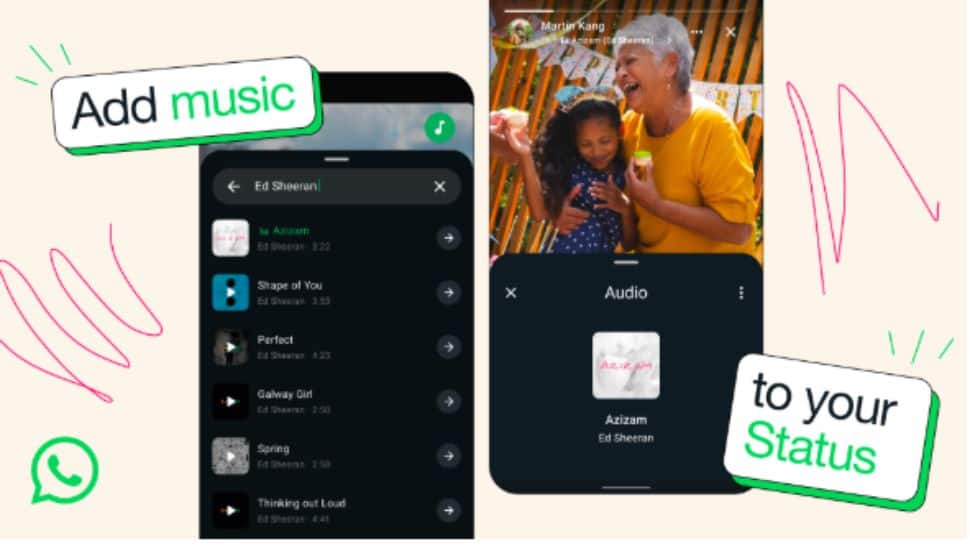
WhatsApp Users Can Now Add Music To Status Updates On Latest iOS And Android Versions; Here’s How to Do It | Technology News
WhatsApp Music Status: Want to make your WhatsApp Status more engaging? Adding music is a great way to set the mood and express yourself creatively. Whether you’re sharing a photo, video, or a special moment, a background track can enhance the impact. WhatsApp, the instant messaging platform, has recently begun rolling out a new feature that allows you to add music to your Status on the latest version of WhatsApp for iOS and Android. Similar to Meta’s other platforms like Instagram and Facebook, WhatsApp now lets you add up to 15 seconds of music to an image and up to 60 seconds when sharing a video in your Status. These Status updates—including those with music—are protected by end-to-end encryption. That means even WhatsApp can’t see which songs you’ve added. Like always, your Status will disappear after 24 hours. Notably, the Music on Status is currently not supported on WhatsApp Web. In this guide, we’ll walk you through the simple steps to add music to your WhatsApp Status and make your updates stand out from the crowd. How To Add Music To Your WhatsApp Status Step 1: Open WhatsApp and go to the Updates tab from the bottom navigation bar. Step 2: Tap the Add Status button to begin creating a new status. Step 3: Choose an image or video from the media gallery shown. Step 4: Tap the music icon at the top of the screen to add a song. Step 5: Search or pick a track, then use the slider to select the part of the song you want. Step 6: Once satisfied, tap Done, then hit the green send button to publish your Status.
Navigating Imbalanced Datasets with Pandas and Scikit-learn
Imbalanced datasets, where a majority of the data samples belong to one class and the remaining minority belong to others, are not that rare.
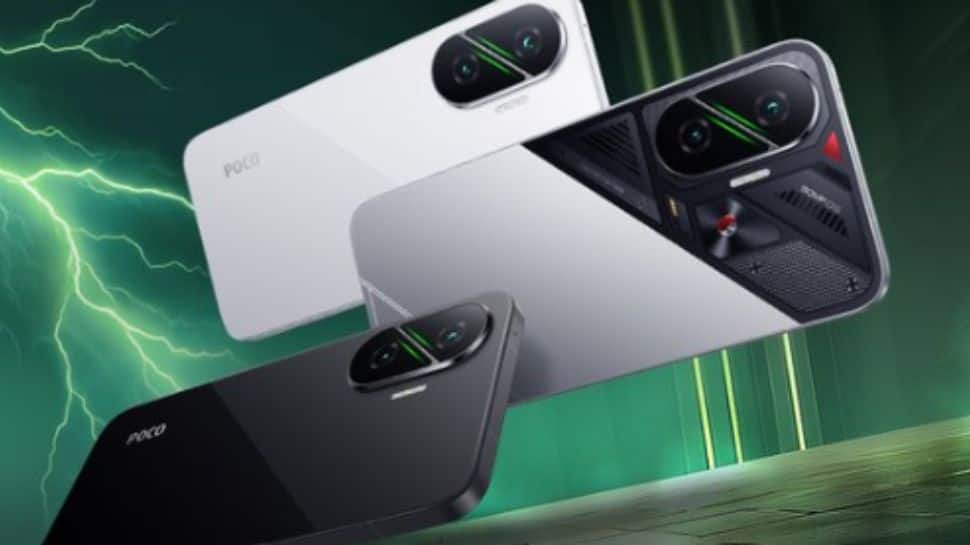
Poco F7 5G Goes On Sale In India With Discount And Sale Offers; Check Specs, Price And Availability | Technology News
Poco F7 5G Sale In India: Poco has launched the Poco F7 5G in India earlier this month. The smartphone is now available for purchase in the country. The company has promised four years of Android OS updates and six years of security patches. It comes with several artificial intelligence features such as Google Gemini, Circle to Search, AI Notes, AI Interpreter, and AI-powered image tools. As part of the first sale, the company is also offering special deals to customers. Poco F7 5G Price In India And Availability The handset starts at Rs 31,999 for the 12GB RAM + 256GB storage variant, while the 12GB + 512GB model is priced at Rs 33,999. It is available from today, 1 July via Flipkart. Poco F7 5G Discount And Sale Offers HDFC, SBI, and ICICI Bank cardholders can avail an instant discount of Rs 2,000, reducing the effective prices to Rs 29,999 and Rs 31,999, respectively. Buyers can also benefit from an extra Rs 2,000 exchange bonus. First sale offers include one-year screen damage protection worth Rs 10,000 and an extra one-year warranty, extending the total coverage to two years. Poco F7 5G Specifications The smartphone is powered by Qualcomm’s Snapdragon 8s Gen 4 chipset and features a large 6.83-inch AMOLED display with a 1.5K resolution (1,280×2,772 pixels) and a smooth 120Hz refresh rate. It packs a robust 7,550mAh battery that supports 90W fast charging and 22.5W reverse charging. On the photography front, the device sports a dual-camera setup comprising a 50-megapixel primary sensor and an 8-megapixel ultrawide lens, while a 20-megapixel front camera handles selfies and video calls. Built for durability, the smartphone is claimed to meet IP66, IP68, and IP69 ratings for dust and water resistance. On the connectivity front, the device supports 5G, 4G, Wi-Fi 7, Bluetooth 6.0, GPS, NFC, and a USB Type-C port. The Poco F7 5G weighs 222 grams and has a slim profile with a thickness of 7.98mm. The smartphone also features Poco’s advanced 3D IceLoop cooling system, which uses AI-driven temperature control along with a large vapor chamber to effectively manage heat. Adding further, it includes WildBoost Optimisation 3.0 to deliver an enhanced gaming experience.
Advanced Feature Engineering Using Scikit-Learn Pipelines with Pandas’ ColumnTransformer and NumPy Arrays
Pandas , NumPy , and Scikit-learn .