

Apple Holiday Season Sale: As India enters the holiday season, Apple has rolled out its Holiday Season sale worldwide, including in India. The offers are now available on Apple’s official website. While direct price cuts on the newest devices are rare, customers can still save a lot through instant cashback and no-cost EMI options. Apple is offering discounts on all its products, including the latest iPhones, MacBooks, Watches, iPads, and AirPods. Adding further, banks like American Express, Axis Bank, and ICICI Bank are giving extra benefits. Shoppers can get cashback up to Rs 10,000 and enjoy no-cost EMIs for up to six months, depending on the product and the card used. To make it more lucrative for Apple users, Apple is offering 3 months of free Apple Music subscription to those who buy an Apple Watch. People can also claim Apple TV subscription of 3 months for free if you purchase an Apple device via Apple.in. Add Zee News as a Preferred Source Apple iPhone 17 Series And iPhone 16: Discount Offers The iPhone 17 series is now listed on Apple’s official website, Apple.in, with an instant cashback of Rs 5,000 on select bank cards. However, the standard iPhone 17 is out of stock on most stores, including Croma, Amazon, Flipkart, and Vijay Sales. Apple.in is still a reliable place to buy it, though it only gives Rs 1,000 as a card discount. Those who can wait may get better deals when stock increases. The iPhone 17 Pro, originally priced at Rs 1,34,900, comes with a Rs 5,000 instant discount on ICICI, American Express, and Axis Bank card users. Meanwhile, Apple also gives Rs 4,000 cashback on the iPhone 16 and iPhone 16 Plus. The other stores like Flipkart, Reliance Digital, and Vijay Sales are offering higher discounts of up to Rs 9,000. Apple MacBook Air M4, MacBook Pro M4: Discount Offers Apple’s official India website shows that the 13-inch MacBook Air M4 is available with an instant cashback of Rs 10,000. Originally priced at Rs 99,900, the effective price comes down to Rs 89,900. The same Rs 10,000 cashback is also offered on the 14-inch and 16-inch MacBook Pro models. On the other hand, the 14-inch MacBook Pro M4, launched at Rs 1,69,900, is now available for Rs 1,59,900. The 16-inch MacBook Pro M4 Pro, originally Rs 2,49,900, can now be bought for Rs 2,39,900. Apple Watch Series 11, iPad: Discount Offers The Apple Watch Series 11 is available with a Rs 4,000 bank discount, while the Apple Watch SE 3 comes with Rs 2,000 off. Both AirPods Pro 3 and AirPods 4 offer Rs 1,000 cashback. The latest iPad Air models, including the 11-inch and 13-inch versions, have a Rs 4,000 discount, while the standard iPad and iPad mini are available with Rs 3,000 off. These offers make it easier for buyers to save on Apple’s latest gadgets.

Fine-Tuning a BERT Model – MachineLearningMastery.com
import collections import dataclasses import functools import torch import torch.nn as nn import torch.optim as optim import tqdm from datasets import load_dataset from tokenizers import Tokenizer from torch import Tensor # BERT config and model defined previously @dataclasses.dataclass class BertConfig: “”“Configuration for BERT model.”“” vocab_size: int = 30522 num_layers: int = 12 hidden_size: int = 768 num_heads: int = 12 dropout_prob: float = 0.1 pad_id: int = 0 max_seq_len: int = 512 num_types: int = 2 class BertBlock(nn.Module): “”“One transformer block in BERT.”“” def __init__(self, hidden_size: int, num_heads: int, dropout_prob: float): super().__init__() self.attention = nn.MultiheadAttention(hidden_size, num_heads, dropout=dropout_prob, batch_first=True) self.attn_norm = nn.LayerNorm(hidden_size) self.ff_norm = nn.LayerNorm(hidden_size) self.dropout = nn.Dropout(dropout_prob) self.feed_forward = nn.Sequential( nn.Linear(hidden_size, 4 * hidden_size), nn.GELU(), nn.Linear(4 * hidden_size, hidden_size), ) def forward(self, x: Tensor, pad_mask: Tensor) -> Tensor: # self-attention with padding mask and post-norm attn_output, _ = self.attention(x, x, x, key_padding_mask=pad_mask) x = self.attn_norm(x + attn_output) # feed-forward with GeLU activation and post-norm ff_output = self.feed_forward(x) x = self.ff_norm(x + self.dropout(ff_output)) return x class BertPooler(nn.Module): “”“Pooler layer for BERT to process the [CLS] token output.”“” def __init__(self, hidden_size: int): super().__init__() self.dense = nn.Linear(hidden_size, hidden_size) self.activation = nn.Tanh() def forward(self, x: Tensor) -> Tensor: x = self.dense(x) x = self.activation(x) return x class BertModel(nn.Module): “”“Backbone of BERT model.”“” def __init__(self, config: BertConfig): super().__init__() # embedding layers self.word_embeddings = nn.Embedding(config.vocab_size, config.hidden_size, padding_idx=config.pad_id) self.type_embeddings = nn.Embedding(config.num_types, config.hidden_size) self.position_embeddings = nn.Embedding(config.max_seq_len, config.hidden_size) self.embeddings_norm = nn.LayerNorm(config.hidden_size) self.embeddings_dropout = nn.Dropout(config.dropout_prob) # transformer blocks self.blocks = nn.ModuleList([ BertBlock(config.hidden_size, config.num_heads, config.dropout_prob) for _ in range(config.num_layers) ]) # [CLS] pooler layer self.pooler = BertPooler(config.hidden_size) def forward(self, input_ids: Tensor, token_type_ids: Tensor, pad_id: int = 0, ) -> tuple[Tensor, Tensor]: # create attention mask for padding tokens pad_mask = input_ids == pad_id # convert integer tokens to embedding vectors batch_size, seq_len = input_ids.shape position_ids = torch.arange(seq_len, device=input_ids.device).unsqueeze(0) position_embeddings = self.position_embeddings(position_ids) type_embeddings = self.type_embeddings(token_type_ids) token_embeddings = self.word_embeddings(input_ids) x = token_embeddings + type_embeddings + position_embeddings x = self.embeddings_norm(x) x = self.embeddings_dropout(x) # process the sequence with transformer blocks for block in self.blocks: x = block(x, pad_mask) # pool the hidden state of the `[CLS]` token pooled_output = self.pooler(x[:, 0, :]) return x, pooled_output # Define new BERT model for question answering class BertForQuestionAnswering(nn.Module): “”“BERT model for SQuAD question answering.”“” def __init__(self, config: BertConfig): super().__init__() self.bert = BertModel(config) # Two outputs: start and end position logits self.qa_outputs = nn.Linear(config.hidden_size, 2) def forward(self, input_ids: Tensor, token_type_ids: Tensor, pad_id: int = 0, ) -> tuple[Tensor, Tensor]: # Get sequence output from BERT (batch_size, seq_len, hidden_size) seq_output, pooled_output = self.bert(input_ids, token_type_ids, pad_id=pad_id) # Project to start and end logits logits = self.qa_outputs(seq_output) # (batch_size, seq_len, 2) start_logits = logits[:, :, 0] # (batch_size, seq_len) end_logits = logits[:, :, 1] # (batch_size, seq_len) return start_logits, end_logits # Load SQuAD dataset for question answering dataset = load_dataset(“squad”) # Load the pretrained BERT tokenizer TOKENIZER_PATH = “wikitext-2_wordpiece.json” tokenizer = Tokenizer.from_file(TOKENIZER_PATH) # Setup collate function to tokenize question-context pairs for the model def collate(batch: list[dict], tokenizer: Tokenizer, max_len: int, ) -> tuple[Tensor, Tensor, Tensor, Tensor]: “”“Collate question-context pairs for the model.”“” cls_id = tokenizer.token_to_id(“[CLS]”) sep_id = tokenizer.token_to_id(“[SEP]”) pad_id = tokenizer.token_to_id(“[PAD]”) input_ids_list = [] token_type_ids_list = [] start_positions = [] end_positions = [] for item in batch: # Tokenize question and context question, context = item[“question”], item[“context”] question_ids = tokenizer.encode(question).ids context_ids = tokenizer.encode(context).ids # Build input: [CLS] question [SEP] context [SEP] input_ids = [cls_id, *question_ids, sep_id, *context_ids, sep_id] token_type_ids = [0] * (len(question_ids)+2) + [1] * (len(context_ids)+1) # Truncate or pad to max length if len(input_ids) > max_len: input_ids = input_ids[:max_len] token_type_ids = token_type_ids[:max_len] else: input_ids.extend([pad_id] * (max_len – len(input_ids))) token_type_ids.extend([1] * (max_len – len(token_type_ids))) # Find answer position in tokens: Answer may not be in the context start_pos = end_pos = 0 if len(item[“answers”][“text”]) > 0: answers = tokenizer.encode(item[“answers”][“text”][0]).ids # find the context offset of the answer in context_ids for i in range(len(context_ids) – len(answers) + 1): if context_ids[i:i+len(answers)] == answers: start_pos = i + len(question_ids) + 2 end_pos = start_pos + len(answers) – 1 break if end_pos >= max_len: start_pos = end_pos = 0 # answer is clipped, hence no answer input_ids_list.append(input_ids) token_type_ids_list.append(token_type_ids) start_positions.append(start_pos) end_positions.append(end_pos) input_ids_list = torch.tensor(input_ids_list) token_type_ids_list = torch.tensor(token_type_ids_list) start_positions = torch.tensor(start_positions) end_positions = torch.tensor(end_positions) return (input_ids_list, token_type_ids_list, start_positions, end_positions) batch_size = 16 max_len = 384 # Longer for Q&A to accommodate context collate_fn = functools.partial(collate, tokenizer=tokenizer, max_len=max_len) train_loader = torch.utils.data.DataLoader(dataset[“train”], batch_size=batch_size, shuffle=True, collate_fn=collate_fn) val_loader = torch.utils.data.DataLoader(dataset[“validation”], batch_size=batch_size, shuffle=False, collate_fn=collate_fn) # Create Q&A model with a pretrained foundation BERT model device = torch.device(“cuda” if torch.cuda.is_available() else “cpu”) config = BertConfig() model = BertForQuestionAnswering(config) model.to(device) model.bert.load_state_dict(torch.load(“bert_model.pth”, map_location=device)) # Training setup loss_fn = nn.CrossEntropyLoss() optimizer = optim.AdamW(model.parameters(), lr=2e–5) num_epochs = 3 for epoch in range(num_epochs): model.train() # Training with tqdm.tqdm(train_loader, desc=f“Epoch {epoch+1}/{num_epochs}”) as pbar: for batch in pbar: # get batched data input_ids, token_type_ids, start_positions, end_positions = batch input_ids = input_ids.to(device) token_type_ids = token_type_ids.to(device) start_positions = start_positions.to(device) end_positions = end_positions.to(device) # forward pass start_logits, end_logits = model(input_ids, token_type_ids) # backward pass optimizer.zero_grad() start_loss = loss_fn(start_logits, start_positions) end_loss = loss_fn(end_logits, end_positions) loss = start_loss + end_loss loss.backward() optimizer.step() # update progress bar pbar.set_postfix(loss=float(loss)) pbar.update(1) # Validation: Keep track of the average loss and accuracy model.eval() val_loss, num_matches, num_batches, num_samples = 0, 0, 0, 0 with torch.no_grad(): for batch in val_loader: # get batched data input_ids, token_type_ids, start_positions, end_positions = batch input_ids = input_ids.to(device) token_type_ids = token_type_ids.to(device) start_positions = start_positions.to(device) end_positions = end_positions.to(device) # forward pass on validation data start_logits, end_logits = model(input_ids, token_type_ids) # compute loss start_loss = loss_fn(start_logits, start_positions) end_loss = loss_fn(end_logits, end_positions) loss = start_loss + end_loss val_loss += loss.item() num_batches += 1 # compute accuracy pred_start = start_logits.argmax(dim=–1) pred_end = end_logits.argmax(dim=–1) match = (pred_start == start_positions) & (pred_end == end_positions) num_matches += match.sum().item() num_samples += len(start_positions) avg_loss = val_loss / num_batches acc = num_matches / num_samples print(f“Validation {epoch+1}/{num_epochs}: acc {acc:.4f}, avg loss {avg_loss:.4f}”) # Save the fine-tuned model torch.save(model.state_dict(), f“bert_model_squad.pth”)

How To Create Your Own 3D Caricature Using Gemini Nano Banana Pro — Check Step-By-Step Guide To The Hottest AI Trend Of 2025 | Technology News
Google’s Nano Banana Pro model has sparked a viral trend: Users are generating stylised 3D caricatures of themselves using the model. Several creators have already shared eye-catching results across social platforms, and Google has published detailed prompt guidance so anyone can try it. Prompt: A highly stylised 3D caricature of the person in the uploaded image, with expressive facial features and playful exaggeration. Rendered in a smooth, polished style with clean materials and soft ambient lighting. Bold colour background to emphasise the character’s charm and presence. Step-by-Step: Create your 3D caricature with Nano Banana Pro Add Zee News as a Preferred Source Open the Gemini app or visit the Gemini website. Sign in with your Google account — a Google AI Pro subscription is recommended for the best results. Tap the Tools icon beneath the search bar and choose Create images. Upload a clear photo of yourself, then paste the prompt (above) into the input field. Review the generated output. If you’re not satisfied, ask Gemini to refine or correct the image and re-render. Pro tip: If you’re unsure how to perfect the prompt, ask ChatGPT or another AI assistant to help you tune it for a better result. If you want to remove the Gemini watermark before sharing, you can use Qwen’s image editor and request removal of the watermark in the bottom-right corner. Why Nano Banana Pro stands out Although Nano Banana Pro is relatively new, it has quickly gained recognition as a leading image-generation and editing model. Key strengths include: Tight integration with Google Search and improved text rendering compared to earlier iterations, allowing users to generate complex visuals and infographics from simple text prompts. The ability to create hyper-realistic imagery from polished professional headshots to detailed product renders — with convincing textures and lifelike skin tones or fabrics. Many users on social media have been surprised by how closely some Nano Banana Pro outputs resemble real photographs, demonstrating the model’s strong rendering fidelity. Because of these capabilities, Nano Banana Pro is being used for both playful trends like 3D caricatures and more practical image-editing or content-creation workflows. As AI-generated visuals continue to evolve, trends like 3D caricatures showcase just how creative and accessible these tools have become. With Gemini Nano Banana Pro, users can transform simple photos into stylised, high-quality artworks in moments—opening the door to endless experimentation. Whether you’re creating content for fun, enhancing your social media presence, or exploring the latest advancements in AI imaging, this model offers a powerful and entertaining way to bring your imagination to life.
Did You Know Your Older Apple iPhones Including iPhone 16 Pro Beat iPhone 17 Pro Models In This Feature? How It Works And Check Price | Technology News
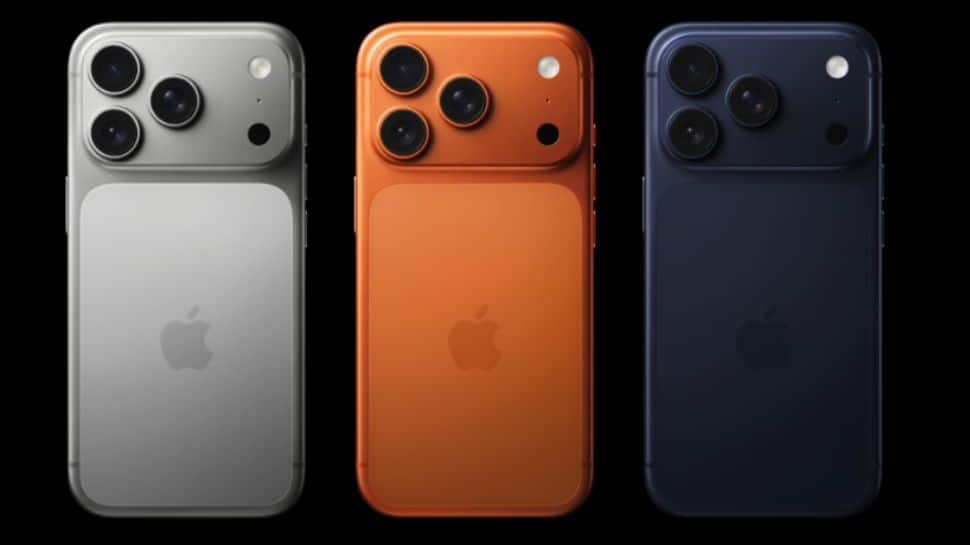
iPhone 17 Pro Max And iPhone 17 Pro Price In India: In the world of fast-paced technology, when you buy a brand new Apple iPhone, you usually expect it to have all the latest and coolest features currently going in the tech space. Everyone thinks the latest iPhone models are always better than the old ones. While software updates do bring many new features to older iPhone models, there are often a few tricks that only the newest devices can do. But here is something surprising. There is one feature that older iPhones can still do, but the newly launched iPhone 17 Pro and iPhone 17 Pro Max model cannot. That feature is taking photos in Portrait mode and Night mode at the same time. It sounds strange that a new iPhone cannot do something that older iPhones models already can. This shows that sometimes, newer is not always better in every way. iPhone 17 Pro Max And iPhone 17 Pro Models: Which Feature Is Missing Add Zee News as a Preferred Source According to TechRadar, users on Reddit and some official Apple forums have said that it is not possible to use Night mode while taking Portrait photos on the new iPhone. One Reddit user even said, “Portraits at night do not look as good as they could, and the quality is worse compared to what previous models could achieve.” MacWorld has also supported this claim. They report that an Apple Support document lists the iPhone 12 Pro through iPhone 16 Pro Max as models that can use Portrait and Night mode together, while the iPhone 17 Pro and iPhone 17 Pro Max are not included. However, it is not clear yet why Apple’s latest iPhone models aren’t able to use both Night mode and Portrait mode at the same time. After spending hefty heard-earned money, it is quite sad for the iPhone users who likes to create slightly more artistic shots in the evening. Portrait and Night Modes: How It Works in iPhone Models Portrait mode keeps the person or object in focus while softly blurring the background, giving your photos a DSLR‑style look. It uses depth data from the cameras and sensors to separate the subject from the background. You can also adjust the blur strength and choose different lighting effects, such as Natural, Studio, or Stage, either while taking the photo or later during editing. Night mode turns on automatically in dark places and shows a small yellow Night icon. It takes several photos in a short time and combines them to create a brighter and clearer picture with less grain. You can also use a slider to adjust how long the camera takes the shot, using a shorter time for quick photos or a longer time for more detail if your hands are steady. In short, Night mode on iPhones is designed to capture brighter and clearer photos in low light by using longer exposure and smart image processing. Portrait mode, on the other hand, keeps your subject sharp and artistically blurs the background using depth mapping and software. iPhone 17 Pro Max And iPhone 17 Pro Price In India The iPhone 17 Pro Max with 256 GB storage in Silver is priced at Rs 1,49,900 on Flipkart. The iPhone 17 Pro with 256 GB storage in the Cosmic Orange colour is listed at Rs 1,34,900 on Flipkart.
Govt Deploys AI Tools To Improve Crop Productivity, Farmer Livelihoods | Technology News
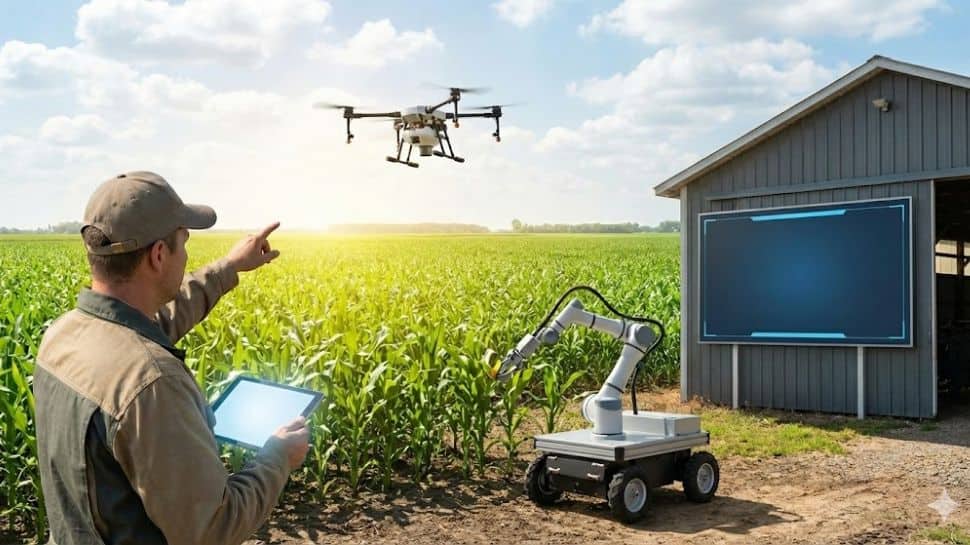
New Delhi: The government has employed Artificial Intelligence (AI) methods to improve crop productivity, sustainability and farmer livelihoods and to address various challenges in the agricultural sector. Towards this, an AI-based pilot was conducted in collaboration with the Development Innovation Lab-India on agriculturally relevant local monsoon onset forecasts across parts of 13 states for Kharif 2025. According to Minister of State for Agriculture and Farmers Welfare, Ramnath Thakur, an open-source blended model was used, including NeuralGCM, the European Centre for Medium-Range Weather Forecasts’ (ECMWF) Artificial Intelligence Forecasting System (AIFS), and historical rainfall data from 125 years from the India Meteorological Department (IMD). Add Zee News as a Preferred Source The probabilistic forecasts predicted only the local onset of the monsoon, which is essential for deciding on the date of sowing crops, said the minister in a written reply in Rajya Sabha. Local monsoon onset forecasts were sent via SMS through the M-Kisan portal to 3,88,45,214 farmers in 13states in five regional languages – Hindi, Odia, Marathi, Bangla and Punjabi. Telephonic farmer feedback surveys were conducted in Madhya Pradesh and Bihar through Kisan Call Centres after the forecasts were sent. The survey revealed that 31–52 per cent farmers adjusted their planting decisions, primarily through changes in land preparation and sowing timing, which included crop and input choice. Moreover, ‘Kisan e-Mitra’ is a voice-based AI-powered chatbot, developed to assist farmers with responses to their queries on PM Kisan Samman Nidhi scheme, PM Fasal Bima Yojna and Kisan Credit Card. This solution supports 11 regional languages and is evolving to assist with other government programs. At present, it handles over 8,000 farmer queries daily and so far, more than 93 lakh queries have been answered, according to the minister. Also, the National Pest Surveillance System utilises AI and Machine Learning to detect pest infestation in crop issues, enabling timely intervention for healthier crops. The AI tool, currently used by over 10,000 extension workers, allows farmers to capture images of pests to help them mitigate pest attacks and reduce crop losses. It supports 66 crops and over 432 pests. AI-based analytics using field photographs for satellite-based crop mapping is being used in crop-weather matching monitoring of crops sown.

YouTube ‘Recap’ Feature Launched: Check Top Trends, Podcasts, Songs, And Most-Watched Creators of 2025; Here’s How To View It | Technology News
YouTube ‘Recap’ Feature: Google-owned platform has launched the first full version of YouTube ‘Recap’ feature, a personalized shareable highlight reel that sums up everything you watched throughout the year in 2025. The company’s this move clearly aimed at taking on Apple Music Replay and Spotify Wrapped. Meanwhile, the YouTube also released its annual lists of top trends, creators, songs, and podcasts that shaped the platform in 2025. Notably, the YouTube Recap feature is currently available for users in North America, with a global rollout scheduled for later this week. YouTube added this feature after nine rounds of feedback and testing more than 50 different concepts. The new feature works across both mobile and desktop. What Is YouTube ‘Recap’ Feature? Add Zee News as a Preferred Source YouTube Recap serves as a snapshot of everything users consumed on the platform throughout 2025. Recap, according to YouTube, is basically a synopsis of your 2025 viewing habits. YouTube ‘Recap’ Feature: What’s Waiting Inside For You Users will get up to 12 cards that show their favourite channels, topics, and how their watching habits changed during the year. YouTube will also give each user a personality type based on the videos they watched. Some examples of these personality types are Sunshiner, Wonder Seeker, and Connector. Others, like Philosopher and Dreamer, are less common. Moreover, if a user watched a lot of music, their Recap will also show their Top Artists and Top Songs of the year. YouTube has also shared charts that highlight the year’s most popular creators, podcasts, and songs. (Also Read: Downloaded Sanchar Saathi? Here’s What I Found: Permissions Needed, Features, 90-Day Deadline For Apple, Samsung, OnePlus, Vivo And How To Install App) YouTube ‘Recap’ Feature: How To View It Step 1: Open YouTube on your Android phone, iPhone, or desktop. Step 2: Sign in to your YouTube account. Step 3: On the homepage, tap the ‘You’ tab. Step 4: Right below your profile details, you’ll see a banner that says “Your Recap is here.” Step 5: If you don’t see the banner, you can still view your Recap by visiting youtube.com/Recap in a browser.

Privacy Regulator Demands Coupang Re-Notify Users Of Data Breach | Technology News
Seoul: The data protection regulator here said on Wednesday that e-commerce giant Coupang Inc. did not properly notify its customers of its recent major data breach, demanding a corrected notification of a personal information “leak” from an “exposure” of such data. The Personal Information Protection Commission (PIPC) made the decision in an emergency meeting after the company said last week personal information of 33.7 million customers had been compromised, including names, addresses and phone numbers, reports Yonhap news agency. While Coupang notified affected users of the breach, the PIPC said the company merely described it as personal information being exposed when it was aware that such data had been leaked. Add Zee News as a Preferred Source The regulator said Coupang also partially omitted types of data affected while announcing the breach on its website for just one to two days. It ordered the company to notify affected customers again of the leak, advise them of data protection measures, such as changing passwords, and reinspect steps to prevent harm to customers, among other measures. It demanded Coupang submit the results of its measures within one week. “(We) will swiftly and thoroughly investigate the circumstances, scope and items of Coupang’s personal information leak, as well as violations of safety duties, and will make strict punishment if violations are found,” it said in a release. Meanwhile, the regulator said it strengthened the monitoring of illegal distribution of personal information on the internet and the dark web Sunday, which will last for three months. Coupang is facing a wave of class-action lawsuits over its massive data breach that affected nearly 34 million customers. A law firm named Chung filed the first complaint against Coupang on Monday on behalf of 14 clients, seeking 200,000 won (about US$140) per person in damages. Many other law firms have also expressed their intention to participate in the class-action lawsuits and are now recruiting participants. Considering past judicial precedents, however, the compensation awarded to users whose personal information was leaked was around 100,000 won per person, legal experts said on Wednesday.

Google’s Android 16 Update Brings AI Notification Summaries, New Customization Options, And Parental Controls For Pixel Users; Check New Features | Technology News
Google’s Android 16 Update For Pixel Users: Tech giant Google has rolled out the second Android 16 update of 2025, introducing new accessibility features for the first time. The update, which is first coming to Pixel devices, marks a major change in how Android updates are delivered, as the company is shifting from one yearly update to more frequent releases. The Android 16 update brings AI-powered notification tools, expanded customization options, and streamlined parental controls. Notably, the non-Pixel smartphones will receive Android 16 according to their manufacturers’ timelines. Android 16 Update For Pixel Users: What’s New Add Zee News as a Preferred Source The new Android 16 update brings several new features that make using a phone simpler and more helpful. It now includes AI-powered notification summaries that turn long messages and group chats into short, easy-to-read notes, so you don’t have to scroll through everything. There is also a new Notification Organizer that automatically groups and silences less important alerts like promotions, news, and social updates. Android 16 also gives users more ways to customize their phones with new icon shapes, themed icons, and the ability to darken apps that don’t support dark mode. For families, a new Parental Controls section in Settings lets parents manage their child’s phone use by setting daily screen time limits, controlling which apps can be used, and creating bedtime schedules. These controls are protected by a PIN and can be managed directly from the child’s device. Overall, Android 16 makes phones easier to use, more personal, and safer for kids. (Also Read: YouTube ‘Recap’ Feature Launched: Check Top Trends, Podcasts, Songs, And Most-Watched Creators of 2025; Here’s How To View It) Google’s New Android Features Google is also introducing some new Android features that work even if you are not using Android 16. One of them is a beta feature called “Call Reason,” which lets you mark a call to your saved contacts as “urgent,” so they know it’s important. Another new feature is “Expressive Captions,” which adds emotion tags like (sad) or (joyful) to video messages or social media posts, helping you understand the tone of what someone is saying. Chrome Gets Smarter With Better Pinned Tabs Google has also improved Chrome by making pinned tabs work just like they do on a computer, so your favorite pages stay at the front and are easy to return to. The “Circle to Search” tool is also getting better, allowing you to search anything on your screen by circling, highlighting, scribbling, or tapping. And now, you don’t even need to touch your phone to use Voice Access. You can simply say, “Hey Google, start Voice Access,” and control your phone with your voice.

Indian Airports, Including Delhi IGI, Hit By Cyber Attack? What Is GPS Spoofing, How It Works, And Where It Is Used | Technology News
Cyber Attack On Indian Airports: The government has confirmed that several major airports, including Delhi, Mumbai, and Bengaluru, detected GPS spoofing signals last month. However, it assured that flight operations were not affected. The cyberattack raises serious concerns about aviation cybersecurity and has prompted heightened vigilance at key air travel hubs. The confirmation follows multiple reports of technical anomalies, including suspected spoofing of navigational systems, at some of the country’s busiest airports. Notably, the Ministry of Civil Aviation, along with relevant security agencies, continues to monitor the situation closely to ensure smooth air traffic operations and to implement strengthened cyber countermeasures. Amid rising concerns over aviation sector vulnerabilities, industry experts have emphasised the need for stronger cyber preparedness. On this situation Evaa Saiwal, Head of Liability & Cyber Insurance at Policybazaar for Business, said, “The recent cyber-attack on Indian airports is a stark reminder that cyber incidents today are not just technical events — they impact operations, reputation, and customer trust. The ripple effect can extend to employees, partners, and entire service ecosystems”. Add Zee News as a Preferred Source He further stated that “As these threats continue to grow, cyber insurance has become a crucial layer of resilience. It helps organisations manage the tangible fallout — from operational losses and system downtime to data breaches and the high cost of investigation and recovery. More importantly, it gives businesses the confidence to get back on their feet quickly, protect stakeholders, and continue serving customers even in the face of unprecedented attacks.” What Is GPS spoofing? GPS spoofing is a cyberattack in which attackers send fake GPS signals to a device, causing it to show the wrong location, time, or route. In simple words, it fools maps, navigation tools, and tracking apps into thinking they are somewhere else. For pilots, this can affect what they see on their screens, including the aircraft’s position and speed. This is different from GPS jamming, where signals are completely blocked, making the GPS stop working and show errors like “no signal.” How GPS Spoofing Works? GPS satellites send very weak signals to Earth, which devices use to calculate their location, speed, and time. In a GPS spoofing attack, an attacker uses special radio transmitters or software to create stronger fake GPS signals that look like the real ones. The device connects to these fake signals instead of the real satellites, causing it to show the wrong location, route, speed, or time even though it has not actually moved. GPS Spoofing: Where It is Used GPS spoofing can affect navigation and transport by misleading ships, aircraft, drones, trucks, and cars, causing them to deviate from their routes or hide their actual movements. It can also impact smartphones and apps, allowing users to fake their location in ride-hailing, gaming, financial, or social apps, sometimes to commit fraud or bypass geo-restrictions. In the field of security and defense, state or sophisticated actors may use GPS spoofing around sensitive areas to protect VIPs, conceal military activity, or disrupt enemy drones. The incident has intensified calls for advanced monitoring, greater redundancy and stricter controls across aviation and related sectors. Highlighting the emerging threat landscape, Sameer Yadav, Founder at Netforchoice Datacentre, said: “The GPS spoofing at key airports in India is a pointer to the way cyber threats are morphing from digital hits on IT systems into cyber-physical strikes that aim to rupture the integrity of critical infrastructure. He further stated that “Today’s adversaries use APT methods in spoofing PNT/GNSS signals and exploiting OT-IT that could disrupt navigation, timing and safety of operations. With data centers and sat-based timing along with IAM and interconnected supply chain, this next attack suggests a need for redundancy, zero-trust architecture – continuous threat telemetry. In today’s world, cyber insurance is a must-have; not just as monetary protection but as a layer of resiliency that helps in forensic response, business interruption, compliance liability and fast recovery.” Recent Delhi Airport And Airbus A320 Glitch Scare The government’s statement comes just weeks after more than 400 flights were delayed at Delhi airport because of a technical problem in the Air Traffic Control system. The issue was linked to the Automatic Message Switching System, which sends important flight plan data to the Auto Track System. The GPS spoofing incident also follows global flight disruptions that happened a few days earlier, caused by a software update needed for Airbus A320 airplanes.
Google Workspace Studio: From Automatic Emails And Chats To Building AI Agents In Minutes; Check How This New Tool Works | Technology News
Google Workspace Studio: Google has officially launched Workspace Studio, a new automation tool that helps users design, manage and share AI agents inside Google Workspace. The platform is powered by Gemini 3, Google’s latest advanced AI model. It is Designed for Easy Automation. Workspace Studio was first teased and announced earlier this year. It is now available for business users who want to automate everyday work without coding. The tool follows a simple “if this, then that” automation model. It connects directly with Google apps like Gmail, Chat, Drive, Docs, and Sheets. It also supports third-party tools, including Asana, Jira, Mailchimp and Salesforce. Add Zee News as a Preferred Source Google claims that users can build AI agents in just a few minutes by typing natural language instructions instead of writing code. (Also Read: Spotify Wrapped And Apple Music Replay: Rapper Bad Bunny Is World’s Top Artist; Check Your Favourites) Agents With AI Reasoning and Context Understanding Workspace Studio replaces older rule-based automation tools. The new AI agents can: Understand context Reason through tasks Generate responses and actions Google says this allows more flexible workflows, compared to older tools that needed strict, technical commands. These agents can handle repetitive tasks such as organising emails, scheduling events, or sending follow-ups — freeing up teams to focus on important work. Built Into Google Workspace Apps A new shortcut icon will appear in the top-right corner of web apps, next to the Gemini button. Users will find three main tabs: Discover — ready-made automations My Agents — agents you create Activity — tasks performed by agents Workspace Studio is mainly for companies and professional teams. Helpful but Still Developing Google highlights Workspace Studio as a major step in the AI competition. The company aims to help organisations close the “automation gap” by making advanced automation available to everyone. However, the rollout comes with some limitations. Features like a public agent marketplace will not be ready until 2026, and companies still need to manage security, governance and cost controls carefully. Farhaz Karmali, Google Workspace product director, said the aim is to eliminate time-consuming office tasks, “You can delegate these repetitive tasks to agents that can reason, understand context and handle the work that used to slow you down,” the director said.