

New Delhi: The Telecom Regulatory Authority of India (TRAI) on Wednesday issued a direction mandating the last dates by which adoption of the ‘1600’ numbering series should be completed by entities in the Banking, Financial Services and Insurance (BFSI) sector, and government organisations to clearly distinguish their service and transactional calls from other commercial communications. The direction has been issued with the objective of curbing spam, and preventing fraudulent activities perpetrated through voice calls. In response to TRAI’s regulatory initiative, the ‘1600’ numbering series has been assigned by the Department of Telecommunications (DoT) for allocation to entities in the Banking, Financial Services and Insurance (BFSI) sector, regulated by the RBI, SEBI, and Pension Fund Regulatory and Development Authority (PFRDA) and Government organisations. The series will enable citizens to reliably identify legitimate calls originating from regulated financial institutions, an official statement said. Add Zee News as a Preferred Source The directive states that the adoption of ‘1600’ numbering series for all Mutual Funds and Asset Management Companies (AMCs) shall be completed by February 15, 2026. In the case of Qualified Stockbrokers (QSBs) the adoption of ‘1600’ numbering series shall be completed by March 15, 2026. For the time being, other SEBI-registered intermediaries may voluntarily migrate to the 1600-series after verification of their registration details, the directive states. Commercial banks (including Public Sector Banks, Private Sector Banks, and Foreign Banks) will have to adopt the 1600 series by January 1, 2026. Large NBFCs (asset size above Rs 5,000 crore), Payments Banks, and Small Finance Banks will have to onboard by February 1, 2026 while the remaining NBFCs, Co-operative Banks, Regional Rural Banks, and smaller entities shall onboard by March 1, 2026, the directive states. Central record keeping agencies and Pension Fund Managers shall onboard by February 15, 2026. The matter of mandating last date for adoption of 1600 series by the entities in the insurance sector is under discussion with IRDAI, and will be notified subsequently, the official statement said. The structured and time-bound adoption of the 1600-series is expected to significantly improve consumer safety and help curb impersonation-based financial frauds perpetrated through voice calls. After the assignment of the series and allocation of numbering resources to the Telecom Service Providers (TSPs), TRAI has regularly engaged with TSPs and the BFSI sector regulators for adoption of 1600 series by BFSI sector entities. Consequent to these efforts, about 485 entities have already adopted 1600 series, subscribing to a total of over 2800 numbers, the statement said. Based on TRAI’s interactions with stakeholders, it was considered that time is now ripe to mandate time-bound completion of the exercise so that entities continuing to use standard 10-digit numbers for service and transactional calls, also shift to 1600 series numbers to reduce the risk of fraudulent or misleading calls being made in the guise of trusted financial institutions, the statement explained. TRAI has taken inputs regarding timelines from the regulators of the BFSI sector, following deliberations held during the meetings of the Joint Committee of Regulators. Based on the consultations held with them, a phase-wise implementation schedule has now been issued, the statement added.

Elon Musk’s X (Twitter) Down For Desktop Users; Gemini, Perplexity And Cloudflare Also Hit by Outage | Technology News
X Down in India: Elon Musk-owned microblogging platform X (formerly Twitter) is facing a major outage, with hundreds of users reporting problems across the country. Many flagged the issue on Downdetector, noting that both the web version (x.com) and the Android/iOS apps are affected. By 5:20 PM on Tuesday, Downdetector had recorded over 10,000 reports from users unable to access X. Most complaints came from the mobile app (61%), followed by the website (28%) and server connection issues (11%). The disruption is widespread and appears to be impacting users globally, not just in India. On the other hand, the Cloudflare confirmed on Tuesday at 11:48 UTC that its global network is facing issues affecting multiple customers. Add Zee News as a Preferred Source Many users on apps and websites such as X, Gemini, and Perplexity reported Cloudflare-related errors, and the company has confirmed it is experiencing a technical issue. OpenAI has confirmed on its website that ChatGPT and some other services are down, and the team is investigating the issue. However, the company has not said whether this problem is connected to the Cloudflare outage.
Want To Send Message On WhatsApp Without Saving Contact On Your Smartphone? Step-by-Step Guide | Technology News
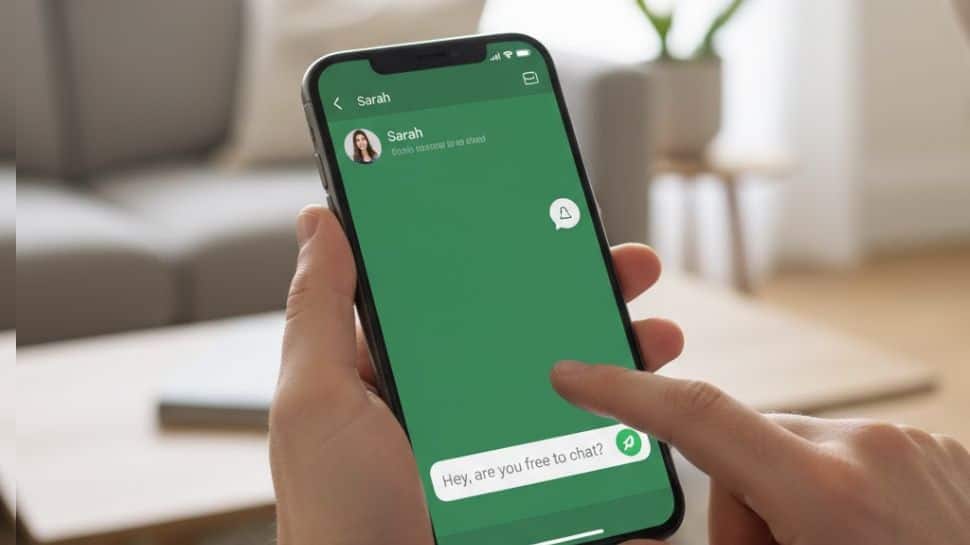
Send WhatsApp Message Without Saving Number: Sometimes you may need to message someone on WhatsApp but do not want to save their number, especially when it is a delivery agent, business inquiries, a shop owner or a person you will talk to only once. Adding every number to your phone can make your contact list crowded and difficult to manage later. However, many people do not know that WhatsApp actually allows you to start a chat without creating a new contact. This feature is very helpful when you want to keep your phonebook clean and organised. In this guide, we explain the simplest ways to send WhatsApp messages without saving a number, using easy steps that anyone can understand and follow. Notably, the tool works on both phones and WhatsApp Web and helps users begin a conversation simply by creating or tapping a link. (Also Read: Spotify Rolls Out Four New Premium Plans In India With AI Playlist Creation; Check New Price And Benefits) Add Zee News as a Preferred Source How To Send WhatsApp Message Without Saving Contact Step 1: Open the WhatsApp app on your phone. Step 2: Copy the phone number of the person you want to message. Step 3: Tap the “New Chat” button, then tap your name under WhatsApp Contacts. Step 4: Paste the number into the text field and hit Send. Step 5: If the person is on WhatsApp, you will see the option to start a chat with them. How To Send WhatsApp Message By Creating WhatsApp Link In Browser Step 1: Open your browser and paste the link: https://api.whatsapp.com/send?phone=xxxxxxxxxx Step 2: Replace “xxxxxxxxxx” with the phone number, including the country code (for example, http://wa.me/919876543210). Step 3: Press Enter and click “Continue to Chat.” Step 4: You will be redirected to WhatsApp and can start messaging.

How To Use OpenAI’s Sora 2 On Your iPhone: Follow THESE Simple Steps And Check Its Features | Technology News
OpenAI’s Sora 2 On iPhone Free: OpenAI launched Sora 2 in September as its most powerful AI video-generation model yet, along with a new social media app aimed at competing with TikTok and YouTube. The app lets users create high-quality videos with audio using simple text prompts and includes a special Cameos feature that allows you to place yourself inside AI-generated scenes. According to OpenAI, Sora 2 marks a major step forward in producing realistic, lifelike video content. Initially, Sora was available only on iOS and required an invite. However, OpenAI has now removed the waitlist in select regions such as the US, Canada, and Japan. If you’re in one of these supported areas, you can try Sora right away without hunting for an invite code. Despite being invite only at the start, Sora quickly topped the App Store charts in the US, with over one million downloads in less than five days, even faster than ChatGPT. You can easily use this model on your iPhone by following a few simple steps designed to help you get started quickly and make the most of all its features. Add Zee News as a Preferred Source How To Use OpenAI’s Sora 2 On Your iPhone Step 1: Make sure your iPhone runs iOS 18.0 or later. Open the App Store, search “Sora” (or Sora 2 if shown), tap Download / Get, and install the official app. Step 2: Launch Sora 2 and sign in with the same account you use for ChatGPT (enter credentials when prompted). If you don’t have an account, follow the app’s sign-up flow. Step 3: Complete any age verification the app requests. Grant required permissions (camera, microphone, photos) so you can record, edit, and save videos. Step 4: Tap Create / Record to capture video or upload from your camera roll. Use templates, trim clips, add filters, text, or music inside the editor — then preview your clip. Step 5: When ready, export the final video to your Camera Roll or use the app’s Share button to post to social apps or share a link. Optionally enable notifications to get updates from Sora 2. OpenAI’s Sora 2 Features Sora 2 brings major upgrades to video creation. It delivers highly realistic movements, follows real-world physics, and keeps multishot scenes consistent. It supports various visual styles such as realistic, cinematic, or anime, and also generates natural audio. The model can blend real-world elements like people, animals, and objects into scenes, making it a powerful all-in-one video and audio tool.

Apple Leadership Shift? Tim Cook Likely To Step Down As CEO In 2026 With John Ternus As Front-Runner | Technology News
Apple CEO Tim Cook: US tech giant Apple’s Senior Vice-President of hardware engineering, John Ternus, is viewed inside the company as a leading contender to succeed Chief Executive Tim Cook, who is set to step down in early 2026, a report said on Saturday. Apple’s board and senior leaders have accelerated its succession plans and increased focus on a smooth leadership transition as the company prepares for Tim Cook’s resignation after 14 years at the helm of the $4 trillion tech giant, the report from Financial Times said, adding that no final decision has been made. If appointed, Apple would get a hardware-focused leader in Ternus when it seeks expansion into new product categories to keep pace with Silicon Valley competitors in AI. The move is not tied to Apple’s current performance, as the company expects a strong year‑end sales season, particularly for the iPhone. Add Zee News as a Preferred Source Apple is unlikely to appoint a new CEO before its earnings report in late January, the report said. It noted that the company would allow the successor time to settle ahead of the Worldwide Developers Conference in June and the iPhone launch in September. Cook, who turned 65 this month, became Apple’s CEO in 2011 after co-founder Steve Jobs passed away. Under his leadership, Apple’s market value grew from around $350 billion in 2011 to $4 trillion. Apple’s stock nears a record high with a 12 per cent annual gain following strong results last month. But Apple’s gains trail US rivals like Alphabet, Nvidia, and Microsoft, which have soared amid investor enthusiasm for artificial intelligence. Apple recorded its highest-ever quarterly shipments in India in the third quarter of 2025 (Q3 2025), reaching 5 million units and securing the fourth position in the market for the first time.
Apple iPhone 16 Pro Gets Price Cut On THIS Platform; Check Display, Camera, Battery And Other Features | Technology News
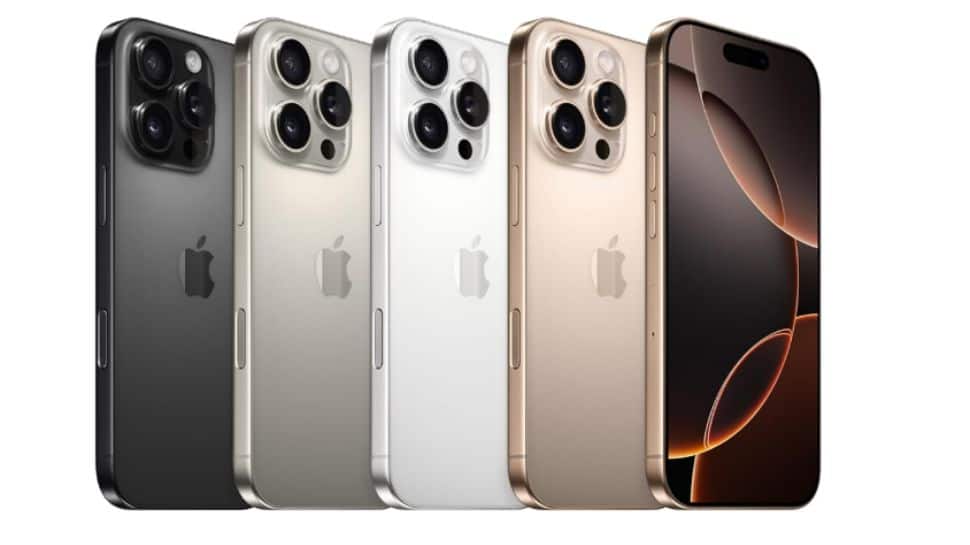
Apple iPhone 16 Pro Price: If you are planning to upgrade your smartphone, now is the perfect time to grab a lucrative deal on the e-commerce giant Flipkart. The Apple iPhone 16 Pro has received a major price drop, making Apple’s flagship smartphone more affordable than ever in India. Originally launched at a premium price, the 8GB RAM and 128GB storage variant is now available at a tempting price, with additional discounts for SBI credit card and Flipkart debit card users further reducing the cost. It comes in three color options: Natural Titanium, Desert Titanium, and Black Titanium. With its stunning design, top-notch performance, and advanced features, this price cut offers an ideal opportunity for buyers to upgrade to Apple’s latest flagship without breaking the bank. Apple iPhone 16 Pro: Discounted Price And Bank Offers On Flipkart Add Zee News as a Preferred Source The Apple iPhone 16 Pro with 8GB RAM and 128GB storage, which launched in India at Rs 1,09,900, is now available on Flipkart for Rs 99,999. Adding Further, Flipkart SBI credit card users can get extra discounts of up to Rs 4,000, bringing the price down to Rs 95,999. Hence, the Consumers can also buy with exchange and save up to Rs 55,250. Apple iPhone 16 Pro Specifications And Features The Apple iPhone 16 Pro comes with a 6.3-inch LTPO Super Retina XDR OLED display that offers a smooth 120Hz refresh rate and is protected by Ceramic Shield Glass. It is powered by a 3852mAh battery with 25W MagSafe wireless charging support. The device runs on the Apple A18 Pro chipset with a 6-core GPU, delivering fast and efficient performance, and comes with iOS 18, which can be upgraded to iOS 26.1. (Also Read: How To Use OpenAI’s Sora 2 On Your iPhone: Follow THESE Simple Steps And Check Its Features) On the Photography front, the iPhone 16 Pro features a triple rear camera setup including a 48MP main shooter with Optical Image Stabilisation (OIS), a 48MP ultra-wide camera, and a 12MP periscope telephoto camera, while a 12MP front camera with OIS handles selfies and video calls. The smartphone includes Face ID, accelerometer, gyroscope, proximity sensor, compass, and barometer. It also supports Ultra Wideband (UWB) with the second-generation chip. For safety, it offers Emergency SOS, and lets you send Messages or use Find My even via satellite.
Lava Agni 4 India Launch Date Officially Confirmed: Check Expected Display, Battery, Camera, Price, and Other Features | Technology News
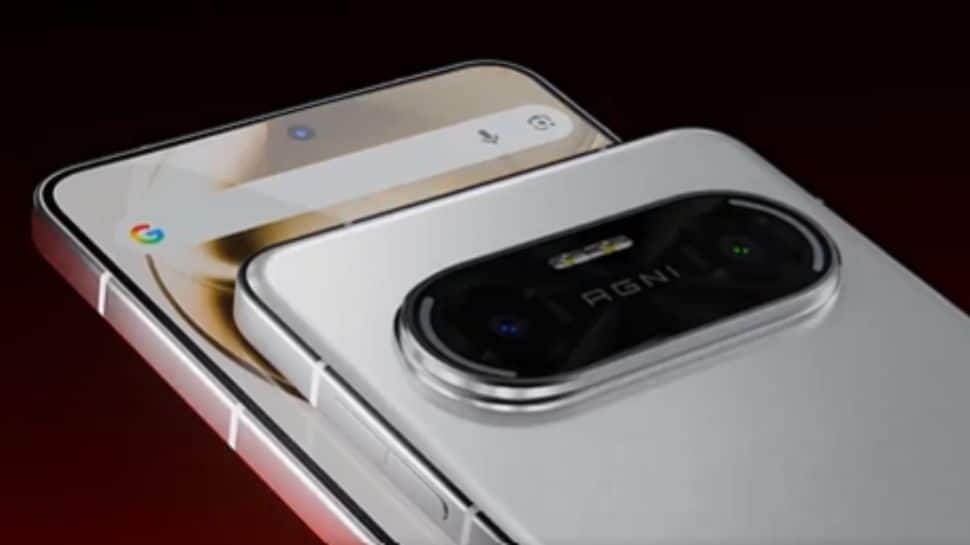
Lava Agni 4 India Launch: Lava is set to launch its newest member in the company’s top-of-the-line Agni series in the Indian market. The Lava Agni 4 will be making its debut on November 20 as the successor to the Lava Agni 3 5G. The upcoming smartphone is confirmed to come with a metal frame and a pill-shaped camera module with a dual camera setup. Meanwhile, Lava Mobiles shared a teaser of the upcoming Lava Agni 4 in a post on X (formerly Twitter). There appears to be a dual-LED flash above the camera sensors and “AGNI” branding in between them. The smartphone is also spotted on the IECEE certification website bearing the model number LBP1071A. What if your phone understood your ideas at the speed of thought? Introducing VAYU AI: Create, erase, refine in seconds. What’s the first idea you’d bring to life? Launching on 20.11.25 #Agni4 #VayuAI #ComingSoon #LavaMobiles pic.twitter.com/eaH2GB5U7Z — Lava Mobiles (@LavaMobile) November 16, 2025 Add Zee News as a Preferred Source Lava Agni 4 Specifications (Expected) The Lava Agni 4 is expected to feature a 6.78 inch Full HD Plus display with a smooth 120Hz refresh rate. It will likely run on the MediaTek Dimensity 8350 chipset, also used in phones such as the OnePlus Nord CE 5 and Infinix GT 30 Pro, paired with fast UFS 4.0 storage. The device is teased to include a dual rear camera setup with two 50 megapixel sensors and may pack a large battery of more than 7000mAh. It is confirmed to offer dual speakers and a flat display design. The phone is also expected to deliver a clean, bloatware free, near stock Android experience similar to previous Lava models. (Also Read: Vivo X300, Vivo X300 Pro Official India Launch Date Confirmed; Check Expected Display, Camera, Battery, And Other Features) Lava Agni 4 Price (Expected) The Agni 3 launched at a starting price of Rs 20,999, which indicates that the Agni 4 could arrive under Rs 25,000. With its expected specifications and price bracket, the Agni 4 is likely to compete with phones such as the OnePlus Nord CE 5, Infinix GT 30, and Poco X7.
OnePlus 15R Likely To Launch In India; Could Debut With 7,800mAh Battery; Check Expected Display, Camera, Colour Options, Processor, Price And Other Features | Technology News
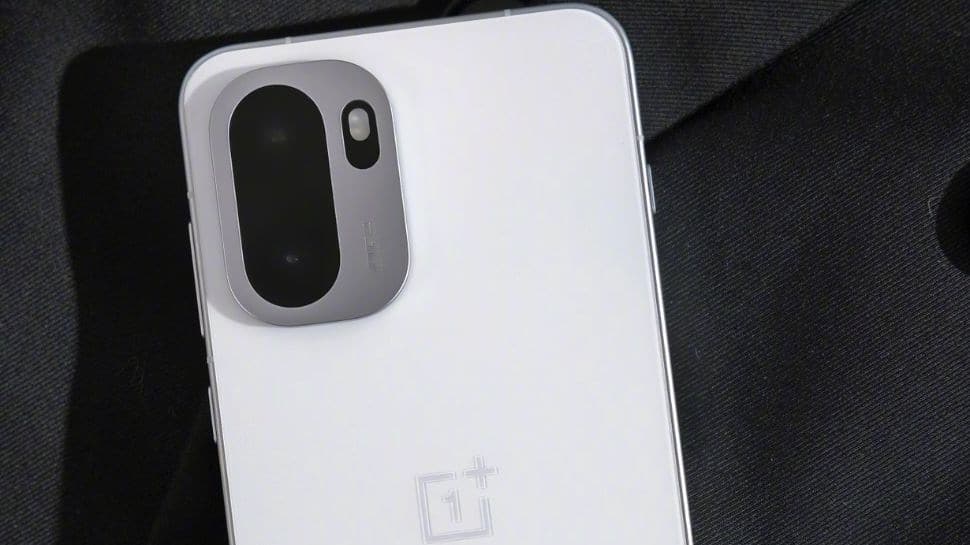
OnePlus 15R India Launch: After the OnePlus 15 Launched In India, the Chinese smartphone-maker quietly confirmed that the OnePlus 15R is coming soon to global markets, including India. Meanwhile, the early reports suggest that the device may arrive as a rebranded version of the OnePlus Ace 6, which recently made its debut in China in October. If you’re wondering what OnePlus has in store next, the upcoming OnePlus 15R is already creating buzz. The smartphone is likely to come in three colour options which includes the Flash White, Competitive Black and Quicksilver to make the cut. Here’s a quick look at all the key details, expected features, and early leaks surrounding the device. OnePlus 15R Specifications (Expected) Add Zee News as a Preferred Source If the OnePlus 15R mirrors the OnePlus Ace 6 specs, the smartphone is expected to feature a large 6.83-inch flat AMOLED display with a 1.5K resolution, a smooth 165Hz refresh rate, and an impressive 5,000-nit peak brightness. The device may powered by a Snapdragon 8 Elite chipset, paired with up to 16GB LPDDR5X RAM and up to 512GB UFS 4.1 storage. For photography, the phone may offer a 50MP OIS-enabled main camera, an 8MP ultra-wide lens, and a 16MP front camera. The phone is likely to run ColorOS 16 based on Android 16. It is packed by a massive 7,800mAh battery with 120W SuperVOOC fast charging. It is also said to come with IP66/68/69/69K dust and water protection. (Also Read: Lava Agni 4 India Launch Date Officially Confirmed: Check Expected Display, Battery, Camera, Price, and Other Features) OnePlus 15R Price (Expected) If the OnePlus 15R follows the pricing of the OnePlus Ace 6 in China, it may adopt a similar structure. The Ace 6 starts at CNY 2599 (approximately Rs 32,300) for the 12GB 256GB variant. The other configurations, 16GB 256GB, 12GB 512GB, and 16GB 512GB, are priced at CNY 2899 (about Rs 36,000), CNY 3099 (Rs 38,800), and CNY 3399 (about 42,200 rupees) respectively.

7 Prompt Engineering Tricks to Mitigate Hallucinations in LLMs
7 Prompt Engineering Tricks to Mitigate Hallucinations in LLMs Introduction Large language models (LLMs) exhibit outstanding abilities to reason over, summarize, and creatively generate text. Still, they remain susceptible to the common problem of hallucinations, which consists of generating confident-looking but false, unverifiable, or sometimes even nonsensical information. LLMs generate text based on intricate statistical and probabilistic patterns rather than relying primarily on verifying grounded truths. In some critical fields, this issue can cause major negative impacts. Robust prompt engineering, which involves the craftsmanship of elaborating well-structured prompts with instructions, constraints, and context, can be an effective strategy to mitigate hallucinations. The seven techniques listed in this article, with examples of prompt templates, illustrate how both standalone LLMs and retrieval augmented generation (RAG) systems can improve their performance and become more robust against hallucinations by simply implementing them in your user queries. 1. Encourage Abstention and “I Don’t Know” Responses LLMs typically focus on providing answers that sound confident even when they are uncertain — check this article to comprehend in detail how LLMs generate text — generating sometimes fabricated facts as a result. Explicitly allowing abstention can guide the LLM toward mitigating a sense of false confidence. Let’s look at an example prompt to do this: “You are a fact-checking assistant. If you are not confident in an answer, respond: ‘I don’t have enough information to answer that.’ If confident, give your answer with a short justification.” The above prompt would be followed by an actual question or fact check. A sample expected response would be: “I don’t have enough information to answer that.” or “Based on the available evidence, the answer is … (reasoning).” This is a good first line of defense, but nothing is stopping an LLM from disregarding those directions with some regularity. Let’s see what else we can do. 2. Structured, Chain-of-Thought Reasoning Asking a language model to apply step-by-step reasoning incentivizes inner consistency and mitigates logic gaps that could sometimes cause model hallucinations. The Chain-of-Thought Reasoning (CoT) strategy basically consists of emulating an algorithm — like list of steps or stages that the model should sequentially tackle to address the overall task at hand. Once more, the example template below is assumed to be accompanied by a problem-specific prompt of your own. “Please think through this problem step by step:1) What information is given?2) What assumptions are needed?3) What conclusion follows logically?” A sample expected response: “1) Known facts: A, B. 2) Assumptions: C. 3) Therefore, conclusion: D.” 3. Grounding with “According To” This prompt engineering trick is conceived to link the answer sought to named sources. The effect is to discourage invention-based hallucinations and stimulate fact-based reasoning. This strategy can be naturally combined with number 1 discussed earlier. “According to the World Health Organization (WHO) report from 2023, explain the main drivers of antimicrobial resistance. If the report doesn’t provide enough detail, say ‘I don’t know.’” A sample expected response: “According to the WHO (2023), the main drivers include overuse of antibiotics, poor sanitation, and unregulated drug sales. Further details are unavailable.” 4. RAG with Explicit Instruction and Context RAG grants the model access to a knowledge base or document base containing verified or current text data. Even so, the risk of hallucinations persists in RAG systems unless a well-crafted prompt instructs the system to exclusively rely on retrieved text. *[Assume two retrieved documents: X and Y]*“Using only the information in X and Y, summarize the main causes of deforestation in the Amazon basin and related infrastructure projects. If the documents don’t cover a point, say ‘insufficient data.’” A sample expected response: “According to Doc X and Doc Y, key causes include agricultural expansion and illegal logging. For infrastructure projects, insufficient data.” 5. Output Constraints and Limiting Scope Tightly controlling the format of generated outputs and their length contributes to reducing hallucinations in the form of speculative or tangential statements, like unsupported claims for causes, over-elaborated chains of reasoning, or made-up statistics, thereby preventing results that may drift away from source materials. Constraining the “degrees of freedom” over the answer space increases the odds of returning verifiable information rather than filling the gaps “no matter what.” “In no more than 100 words, summarize the role of mitochondria in human cells. If unsure, respond ‘I don’t know.’” A sample expected response: “Mitochondria generate ATP via oxidative phosphorylation, regulate calcium levels, and influence apoptosis. I lack sufficient data on additional roles.” 6. RAG-based Correction Loops: Chain-of-Verification This approach consists of combining retrieval with self-checking, enabling the model’s ability to question and double-check its own claims against external sources of evidence, primarily in RAG systems. It mainly targets hallucinations due to “over-confidence,” trying to mitigate them. “Step 1: Generate an initial answer to the question: ‘When did the Berlin Wall fall?’Step 2: Retrieve and read relevant passages from a trusted historical database.Step 3: Compare the retrieved evidence to your answer.Step 4: If discrepancies exist, correct the answer and cite the retrieved source.” A sample expected response: “Initial answer: 1989.Retrieved evidence: Historical archives confirm the Berlin Wall opened on 9 November 1989.Final verified answer: The Berlin Wall fell on 9 November 1989 when East Berlin opened border crossings.” 7. Domain-Specific Prompts, Disclaimers, and Safety Guardrails In high-stakes application domains like medicine, it is essential to specify constrained domain boundaries and require citations to sources, to reduce the risk of speculative claims that could in practice lead to negative consequences. Here is an example of doing so: “You are a certified medical information assistant. Using peer-reviewed studies or official guidelines published before 2024, explain the first-line treatment for moderate persistent asthma in adults. If you cannot cite such a guideline, respond: ‘I cannot provide a recommendation; consult a medical professional.’” A sample expected response: “According to the Global Initiative for Asthma (GINA) 2023 guideline, first-line therapy for moderate persistent asthma is a low-dose inhaled corticosteroid with a long-acting β₂-agonist such as budesonide/formoterol. For patient-specific adjustments, consult a clinician.” Wrapping Up Below is a summary the 7 strategies
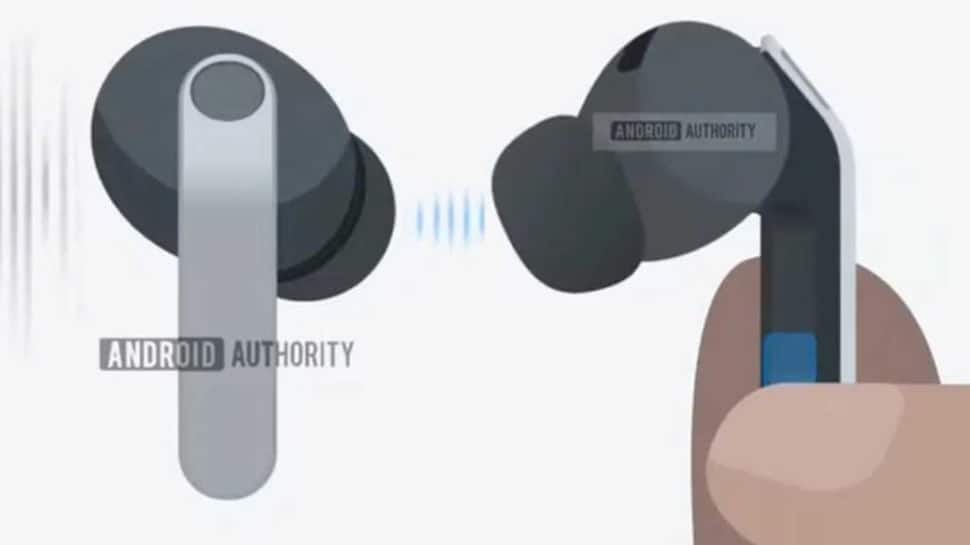
Samsung Galaxy Buds 4 Pro Design Leaked – Check Advanced Features And Upgrades | Technology News
Samsung’s next-generation Galaxy Buds 4 Pro have appeared online through newly leaked One UI 8.5 animations, giving the first detailed look at the upcoming earbuds. The leak has revealed major design upgrades, improved controls, and several new features. The earbuds are expected to launch alongside the Galaxy S26 series in early 2026, published by ‘Android Authority.’ Refined Design The leaked animations show that Samsung is keeping the stem-style design for the Galaxy Buds 4 Pro but refining it significantly. Instead of the sharp, triangular stem used in the Buds 3 Pro, the Buds 4 Pro appears to feature a flatter and cleaner-looking stem. Add Zee News as a Preferred Source Notably, the light bar on the stem, which was a signature design element of the Buds 3 Pro, seems to have been removed. However, the pinch controls are expected to remain. The in-ear tips also appear to be redesigned, likely offering a better fit and improved comfort for users. New Charging Case Layout Samsung seems to be introducing changes to the charging case as well. The Galaxy Buds 4 Pro are shown lying flat inside the case, rather than being placed vertically like previous models. This gives the charging case a more spacious and streamlined interior layout. Reports show that this new design language may also extend to the standard Galaxy Buds 4, though Samsung has not yet confirmed this. According to the leak, the Galaxy Buds 4 and Buds 4 Pro are identified internally by the codenames “Handel” and “Bach,” respectively. (Also Read: OnePlus 15R Likely To Launch In India; Could Debut With 7,800mAh Battery; Check Expected Display, Camera, Colour Options, Processor, Price And Other Features) Head Gestures: A New Hands-Free Control Feature According to ‘Android Authority,’ one of the biggest additions coming to the Galaxy Buds 4 Pro appears to be a new control system called Head Gestures. The feature was spotted in One UI 8.5 code strings and is designed to let users control their device by simply moving their head. With Head Gestures, users can nod or shake their head to respond to calls and notifications. The gestures can also be used to silence alerts, dismiss alarms, and answer yes-or-no questions. Additional Features Besides the design and control upgrades, leaked animations also point to several extra features expected for the Galaxy Buds 4 Pro. These include: 360-degree recording Adaptive Noise Control Find Your Phone support Easy pairing for both phones and tablets While Samsung has not officially confirmed any details about the Galaxy Buds 4 Pro, the leaks show that the company is preparing an advanced upgrade over the Buds 3 Pro. The Galaxy Buds 4 Pro is expected to be unveiled alongside the Galaxy S26 series in early 2026.