
iPhone And Android Government Alerts: Amid rising tensions between India and Pakistan, staying informed about emergency situations has never been more critical. With the situation evolving rapidly, both Android and iPhone users can rely on their devices to receive official government-issued alerts in real time — offering a vital lifeline during moments of uncertainty. These alerts deliver crucial updates, including safety advisories, security developments, and directives from authorities that can help you respond swiftly and appropriately. Adding further, tensions spiked further with reports of drone sightings at 26 locations — from Baramulla in the north to Bhuj in the south — spanning both the International Border and the Line of Control (LoC). Adding to the urgency, Noida in Uttar Pradesh is now on red alert as the situation intensifies. In this article, we’ll guide you on how to activate emergency alerts on your Android and Apple’s iPhone to ensure you never miss a critical government update when it matters most. How To Enable Government Test Alerts On iPhone Step 1: Go to your phone’s Settings. Step 2: Tap on the Notifications option. Step 3: Scroll down to the bottom of the menu. Step 4: Look for the Government Alerts section. Step 5: Enable the Test Alerts toggle to activate it. How To Enable Emergency Alerts On Android Step 1: Open your phone’s Settings. Step 2: Scroll down and tap on Safety and Emergency. Step 3: Select Wireless Emergency Alerts. Step 4: Turn on all available alert options to ensure you receive notifications.
India-Pakistan War Goes Digital: Your WhatsApp, Facebook, Telegram At Cyber Attack Risk; Here’s How To Stay Safe | Technology News
India Vs Pakistan Cyber Attack: India-Pakistan tensions have now moved into the digital space, with reports of cyberattacks linked to hackers based in Pakistan. As the situation between the two countries becomes more tense, Indian citizens, businesses, and especially important sectors like banking and finance are facing more online threats such as phishing, malware, and data breaches. After receiving an alert from CERT-In, the Bombay Stock Exchange (BSE) has issued a warning, asking market participants to stay extra cautious. According to officials, Pakistan hackers are using platforms like WhatsApp, email, Facebook, and Telegram to distribute malware aimed at compromising sensitive information and financial data. Moreover, the Indian banks have strengthened their cybersecurity frameworks and reinforced security at branches near border regions, anticipating possible retaliatory actions. Alarming incidents, including cyberattacks on Indian defence websites, further highlight the gravity of the threat. One such malware, identified as the “Dance of the Hillary” virus, is being circulated in the form of video files or documents. As this digital warfare intensifies, here are 5 crucial steps you must take to safeguard your personal and professional data against these evolving cyber threats. Use Strong Passwords Make sure your passwords are strong. Use a mix of letters, numbers, and symbols. Don’t use the same password for everything. Try using a password manager to help you remember them. Turn On Two-Step Verification (2FA) Add an extra layer of security to your accounts by turning on 2FA. This means even if someone knows your password, they still can’t log in without a special code sent to your phone or email. Keep Everything Updated Update your phone, computer, apps, and antivirus software regularly. Updates fix weak spots that hackers can use to get in. Don’t Click on Suspicious Links If you get a strange email or message, don’t click on links or download files. Hackers often send fake emails to trick you into giving away your information. Backup Your Important Files Save your important files to a cloud service or an external drive. If your device gets hacked or stops working, you won’t lose your data.
Detecting & Handling Data Drift in Production
Machine learning models are trained on historical data and deployed in real-world environments.

Elon Musk-Led X To Block Over 8,000 Accounts In India After Government Order | Technology News
New Delhi: Billionaire Elon Musk-led social media platform X on Thursday said the Indian government has asked it to block more than 8,000 accounts in the country for violating laws, and it will comply with the law of the land. While the platform did not specify names of the accounts, it includes “international news organisations and prominent X users”, the media platform shared in a statement. The move comes amid the India-Pakistan conflict, in the aftermath of the Pahalgam terror attack that killed 26 tourists, which has seen an increase in misinformation. “X has received executive orders from the Indian government requiring X to block over 8,000 accounts in India, subject to potential penalties including significant fines and imprisonment of the company’s local employees,” the statement said. The statement said that the government did not specify which posts have violated laws. “For a significant number of accounts, we did not receive any evidence or justification to block the accounts,” X said, noting that it will comply with the order and “withhold” the accounts only in India. Calling the decision “not easy”, X said it has initiated process and sent the affected users “notice of the actions”. It also expressed disagreement with the Indian government’s demands over blocking entire accounts. “It amounts to censorship of existing and future content and is contrary to the fundamental right of free speech,” the statement said. X said the platform is vital to Indians’ ability to access information. “We believe that making these executive orders public is essential for transparency — lack of disclosure discourages accountability and can contribute to arbitrary decision making. However, due to legal restrictions, we are unable to publish the executive orders at this time,” the statement said. The Musk led company said it is exploring all possible legal avenues available to the company. It also encouraged the impacted users “to seek appropriate relief from the courts”.

AI Surge In India Requires Additional 45-50 Million Sq ft Real Estate: Report | Technology News
New Delhi: As demand for artificial intelligence (AI) infrastructure grows, the country could require an additional 45–50 million square feet of real estate space and 40-45 terawatt hours (TWH) incremental power by 2030 to meet the growing demand for AI, a report showed on Thursday. India offers cost advantages, a renewable energy focus and a strategic location for the development of data centres, said a Deloitte report. The report further suggests that targeted policy interventions will be critical in positioning India as a global AI hub. The report identifies six key pillars for India to reach its full potential in building a world-leading and AI-ready ecosystem. These pillars are real estate, power and utilities infrastructure, connectivity and network infrastructure, compute infrastructure, talent and policy framework. “For India to accelerate its AI capabilities and realise its potential, it is necessary to introduce enabling policies to support the sector. India must develop its AI-ready infrastructure to meet this rising demand for data analytics and processing,” said S Anjani Kumar, Partner, Deloitte India. “Moreover, strengthening research and development (R&D), improving talent pipelines, securing vernacular datasets and supportive policies will further accelerate the AI-driven growth. By addressing key areas of growth and investment and promoting stronger public–private partnerships, India can solidify its position as a global AI ecosystem leader,” Kumar added. India’s strategic location allows it to serve domestic and global markets effectively, positioning it as a critical node in the global data centre ecosystem. However, India’s vision to become a global AI hub demands a relook at the traditional data centre infrastructure. A greater focus on building high-performance compute infrastructure, scalable power and cooling systems and efficient networking infrastructure, with a reconsideration of policy framework, can make India a hotspot for AI-powered data centre development in the coming years,” added Neha Aggarwal, Partner, Deloitte India. While India offers an advantage in data centre real estate with lower land and labour costs, significant new constructions are needed to meet the additional AI data centre capacity. The report highlights how rising interest in colocation models and government initiatives offering incentives under various state government data centre policies are helping drive growth. From a policy perspective, the report suggests that introducing a separate category for data centres in the National Building Code and recognising them under the Essential Services Maintenance Act could further incentivise specialised infrastructure development. Additionally, fast-tracking and simplifying the approvals by setting up data centre facilitation units can help boost the deployment of data centres, it added.
Is Your Aadhaar Card In Pakistani Hands? How To Check, Report And Stop Misuse | Technology News
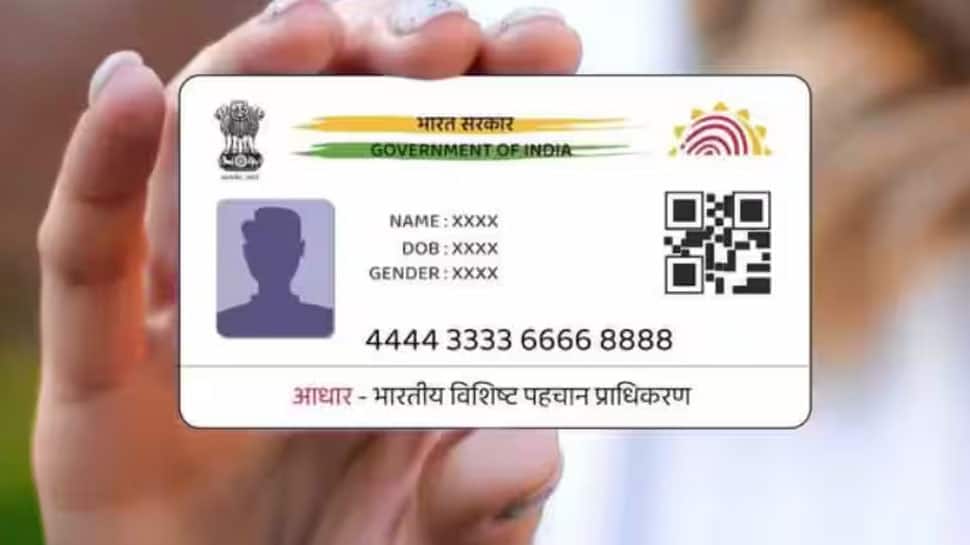
Aadhaar Card Misuse Detection: The Aadhaar card is a crucial document for Indian residents. The 12-digit ID number serves as proof of identity and address nationwide and is essential for accessing various services, including SIM card issuance, travel, government schemes, telecommunications, and banking. Amid ongoing India-Pakistan tensions, alarming reports of Aadhaar card misuse have raised concerns about the personal data of Indian citizens falling into the wrong hands—even in countries like Pakistan, where hackers have been consistently targeting Indian websites, including those of the defence sector and UIDAI. What’s concerning is that if your Aadhaar falls into Pakistani or other malicious hands, it can be misused and potentially become part of an anti-India plot. Since Aadhaar is linked to critical services such as bank accounts and mobile numbers, any unauthorised access could seriously compromise your identity and finances. To help individuals safeguard their Aadhaar and monitor its activity, the Unique Identification Authority of India (UIDAI) has introduced dedicated tools or features that allow users to track and secure their Aadhaar usage effectively. How To Check If Your Aadhaar Card Has Been Misused? Step 1: Visit the official myAadhaar portal. Step 2: Enter your Aadhaar number and captcha, then click on “Login with OTP.” Step 3: Enter the OTP received on your registered mobile number to access your Aadhaar dashboard. Step 4: Click on “Authentication History” and select the desired date range to view past activity. Step 5: Review the log for any unfamiliar entries and report suspicious activity immediately to UIDAI. How To Report Misuse Of Aadhaar Card? To report any fraudulent activity related to your Aadhaar card, you can call the toll-free number 1947, email help@uidai.gov.in, or file a complaint directly on the UIDAI website. How To Lock Your Aadhaar Biometrics: Step 1: Go to the official UIDAI website and open the “Lock/Unlock Aadhaar” section. Step 2: Read the guidelines carefully to understand the locking process. Step 3: Enter your Virtual ID (VID), name, PIN code, and the captcha code as required. Step 4: Click on “Send OTP” to receive a one-time password on your registered mobile number. Step 5: Use the OTP to confirm and lock your Aadhaar biometrics for enhanced security.

Amid India-Pakistan Tensions, Government Issues ‘National Security Warning’ To Airtel, Jio; THIS Service Halted Immediately: Reports | Technology News
India- Pakistan Tensions: The Department of Telecommunications (DoT) has raised red flags over national security after telecom giants Airtel and Reliance Jio announced plans to offer home delivery of SIM cards. The government has issued an important reminder regarding KYC (Know Your Customer) compliance to both country’s biggest telecom companies. According to a report in The Economic Times, the DoT objected to the idea of customers completing self-KYC authentication, citing national security concerns. In a letter dated April 16, Reliance Jio informed DoT Secretary Neeraj Mittal that it also planned to launch quick home delivery of SIM cards starting April 25, similar to the Airtel-Blinkit initiative. However, Reliance Jio has put its plans on hold after DoT blocked a similar initiative by Bharti Enterprises’ Airtel. The telecom giant had announced a partnership with Blinkit last month to deliver SIM cards to buyers within 10 minutes at a nominal fee of Rs 49. The service was launched in 16 cities across the country on April 16th. At the same time, the department stressed that Aadhaar-based KYC must be completed before a SIM card is delivered to a customer’s home. This rule is meant to ensure proper identity verification, prevent misuse, and strengthen national security. The initiative was put on hold on April 30 after the telecom department raised concerns about customers completing self-KYC after receiving the SIM. Importantly, this advisory was issued to all telecom operators, not just Airtel and Jio. Consumers can also trigger Mobile Number Portability (MNP) if they wish to switch from another network provider to Airtel for both prepaid and postpaid customers.

Samsung Galaxy S25 Edge India Launch Confirmed, Could Debut With 200MP Primary Camera; Check Expected Specs, Price | Technology News
Samsung Galaxy S25 Edge India Launch: South Korean giant Samsung has announced India official launch date for the much-anticipated Galaxy S25 Edge smartphone in the Indian market. The company has announced the event titled “Galaxy S25 Edge: Beyond Slim” through its social media platforms. The company has confirmed that it will launch the Samsung Galaxy S25 Edge smartphone on May 13 at 1:00 PM. To recall, Samsung teased the Galaxy S25 Edge smartphone earlier this year at the company’s Galaxy Unpacked event. The Samsung Galaxy S25 Edge smartphone is expected to offer in Titanium Icyblue, Titanium Silver, and Titanium Jetblack colour options. Samsung Galaxy S25 Edge Specifications (Expected) The smartphone is expected to feature a 6.65-inch display with ultra-thin bezels, a smooth 120Hz refresh rate, and an impressive peak brightness of 2,600 nits. The device is likely to be powered by the Snapdragon 8 Elite for Galaxy chipset, paired with 12GB of RAM and up to 512GB of internal storage. In terms of cameras, the handset may come with a 200MP wide-angle primary sensor, while the front may house a 12MP shooter for selfies and video calls. Ready to go beyond slim? Join us on May 13, 2025 at 1 PM to check out the slimmest Galaxy S Series ever. Register now: https://t.co/1Ah8RM3msp#GalaxyAI #GalaxyS25 Edge #Samsung pic.twitter.com/mpZF6IIgCp — Samsung India (@SamsungIndia) May 8, 2025 On the software side, the phone will run Android 15-based One UI 7. The device is also believed to pack a 3,900mAh battery with support for 25W wired charging. Adding further, the smartphone could come with a dual stereo speakers, Wi-Fi 7, Bluetooth 5.4, and a USB-C 3.2 port. Samsung Galaxy S25 Price In India (Expected) The phone is expected to be priced at 1,500,000 won (approximately Rs 89,200) for the 256GB model, while the 512GB variant may cost around 1,630,000 won (approximately Rs 97,000). Interested viewers can catch the live unveiling on Samsung’s official YouTube channel and across its social media platforms.

Elon Musk’s Starlink One Step Closer To India Launch After DoT Clearance- Details | Technology News
New Delhi: Tech billionaire Elon Musk’s affordable internet service Starlink has come closer to its India launch, after it received a Letter of Intent (LoI) from the Department of Telecom (DoT). The initial approval was granted after Starlink agreed to comply with the new national security guidelines for satcom operators. The Department had announced 29 additional requirements, including mandatory interception and monitoring mechanisms, use of local data centres, location tracking for mobile user terminals, localisation mandates, among others, for existing and potential satcom licensees. Starlink now needs approval from the Indian National Space Promotion and Authorisation Centre (IN-SPACe), and has already submitted necessary documents, before the spectrum is allocated to the satellite-based internet service, according to reports. Last month, Commerce and Industry Minister Piyush Goyal held a meeting with top executives of Starlink to discuss the company’s investment plans for the country. “Met a delegation from Starlink, comprising Vice President Chad Gibbs & Senior Director, Ryan Goodnight. Discussions covered Starlink’s cutting-edge technology platform, their existing partnerships and future investment plans in India,” Goyal posted on X after the meeting. The meeting came against the backdrop of domestic telecom majors such as Airtel being in touch with the US company for the possible launch of satellite telecom services in India. Vodafone Idea has also said that it is in talks with Starlink to provide satellite communication services in India. Union Telecom Minister Jyotiraditya Scindia has also stated that India needs satellite internet, especially in its rural areas. Starlink is owned by SpaceX, a company founded by Musk. Starlink is a satellite internet service that aims to provide high-speed internet access to users worldwide. SpaceX is the first private company to have delivered astronauts to and from the International Space Station, It has also completed an all-civilian crew mission to orbit. Meanwhile, the Tesla and SpaceX CEO is looking forward to visiting India later this year.
India-Pakistan Tensions: Precautions Every Smartphone Users Should Follow After Operation Sindoor | Technology News
Amid India-Pakistan Tensions: India-Pakistan Under ‘Operation Sindoor’, the Indian Armed Forces launched a late-night airstrike targeting terror camps in Pakistan and Pakistan-occupied Kashmir (PoK). The army took just 25 minutes for India to unleash 24 missiles that struck nine terror camps in Pakistan and Pakistan-occupied Kashmir. The military handles threats on the ground and sky, citizens, too, have a role to play—especially in the digital world. The widespread use of smartphones and social media has brought convenience, but it also comes with a significant security challenges when used irresponsibly. In the era of information warfare, even an unintentional digital misstep can have serious national security implications. Let’s look at the five essential precautions every smartphone user should follow to support the Indian Army and maintain national security: Refrain from Sharing Sensitive Content Avoid posting pictures, videos, or location-based updates that involve military personnel, vehicles, or camps. Even seemingly harmless uploads can provide vital clues to hostile entities through geotagging or identifiable landmarks. Verify Before You Share The spread of fake news remains a major concern. Before forwarding any content related to military operations or national security, check its authenticity. Rely only on official sources such as PIB, Ministry of Defence, or verified news outlets. Spreading misinformation can escalate panic and disrupt defense efforts. Stay Wary of Unknown Links and Apps Hackers and cybercriminals often target civilians with malicious links or unofficial apps that appear to offer defense updates. Download apps only from trusted sources, and never click on unfamiliar links claiming to offer “exclusive” military footage. Keep Your Device Secure Ensure your smartphone’s software and applications are updated regularly. These updates often include critical security patches that protect your device from potential cyber threats and unauthorized access. Report Suspicious Digital Activity If you receive messages, calls, or social media requests from unknown sources asking about military details or urging you to share such content, report them immediately to cybercrime authorities or local law enforcement.