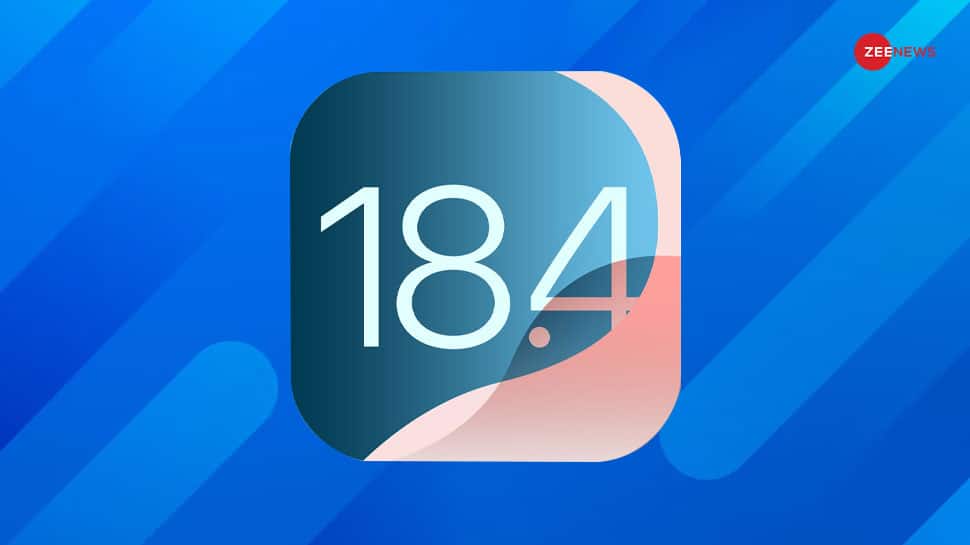
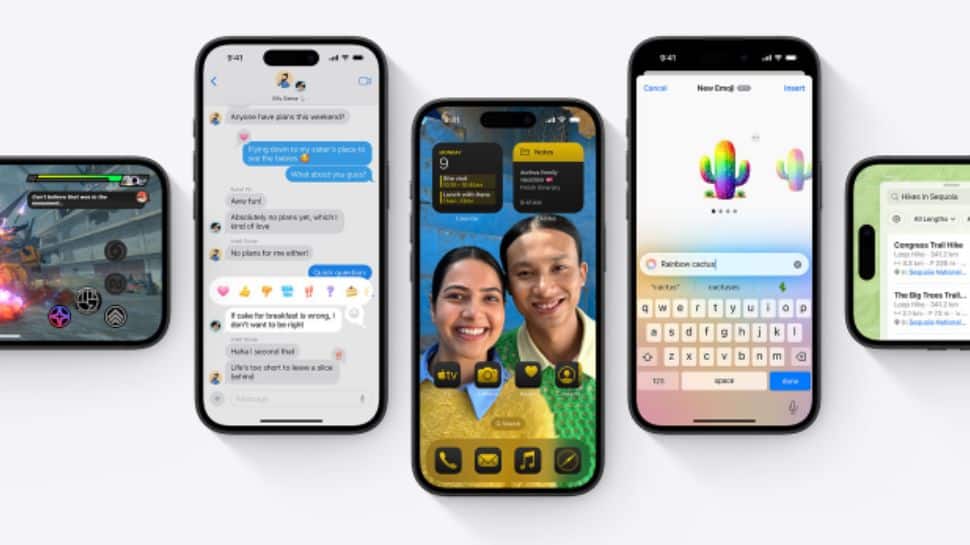
Apple iOS 18.4 Update In India: Apple has introduced the iOS 18.4 update for iPhone models in India. The new update comes with a support for new Apple Intelligence features for users such as Priority notifications. Notably, the Apple Intelligence features will only be available to all iPhone 16 models which includes the iPhone 16e, iPhone 16, iPhone 16 Plus, iPhone 16 Pro, and iPhone 16 Pro Max – iPhone 15 Pro, and iPhone 15 Pro Max. However, the Apple Intelligence was already available to users in the US, UK, Europe, and Canada. The Cupertino-based tech giant Apple has also expanded Apple Intelligence to more regions with support for additional languages including localised English (India). The new update also adds support for ten new system languages including Bangla, Gujarati, Kannada, Malayalam, Marathi, Odia, Punjabi, Tamil, Telugu, and Urdu. iOS 18.4 Update For iPhone: Availability iPhone users in India can now access AI features without switching their device language, making the experience more seamless and convenient. The company has also integrated ChatGPT into Siri and Writing Tools. Users can enable ChatGPT access for certain requests, such as generating content or analysing images. Apple Intelligence Features- What’s New Phone users can finally gain access to a suite of AI-enhanced tools designed to improve productivity and personalisation. Apple’s Intelligence features bring a smarter and more intuitive experience across devices. Genmoji lets users create personalized emojis, while Image Playground and Image Wand in the Apple Pencil tool enhance creativity. Writing Tools refine text effortlessly, and Clean Up in Photos ensures clutter-free images. Users can also Create a Memory movie and leverage Natural Language Search to find photos quickly. Notification Summaries and Reduce Interruptions Focus help manage distractions, while Intelligent Breakthrough & Silencing ensures only important alerts come through. Email and messaging become more efficient with Priority Messages in Mail, Smart Reply, and Summaries, making communication seamless and productive. How To Enable Apple Intelligence? Step 1: Unlock your iPhone and go to Settings. Step 2: Tap General > Software Update to see if iOS 18.4 is available. Step 3: Select Download and Install, then follow the on-screen instructions. Step 4: Once installed, restart your iPhone and explore the new AI features.
Ghibli AI Trend Raises Privacy Concerns: Engineer Says ‘Think Twice Before Sharing Private Photos,’ Shares How AI Is Evolving | Technology News
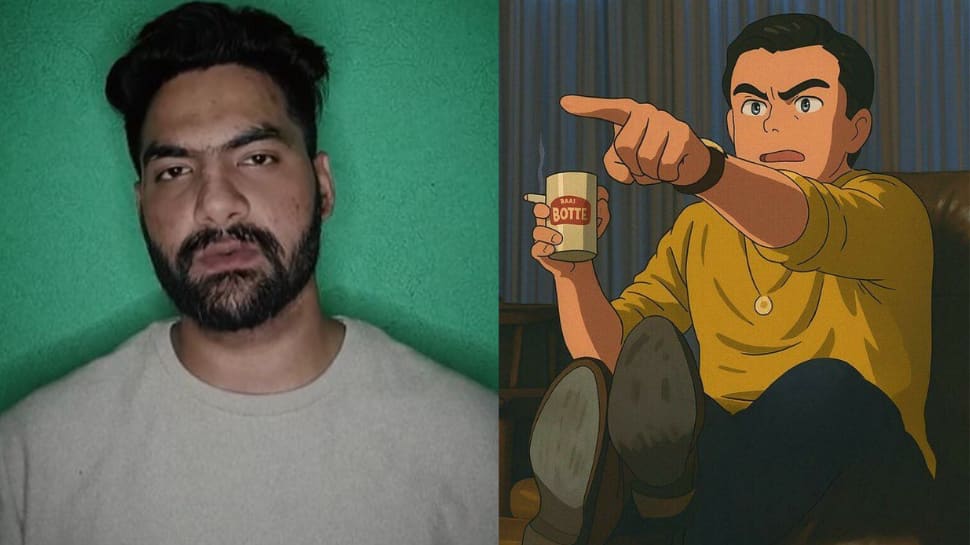
Ever since ChatGPT’s Ghibli-style AI image generator was launched by OpenAI last week, it has taken social media by storm. From politicians and celebrities to everyday users, everyone seems to be sharing their artificial intelligence-generated portraits in the signature style of Ghibli legend Hayao Miyazaki. The latest version lets people turn their own photos — or even viral internet memes — into amazing Ghibli-style artwork. Although not everyone is on board with this viral trend. Digital privacy activists and professionals are sounding the alarm on social media platforms, claiming OpenAI might be using this trend as a way to gather thousands of personal images for AI training. While many users are having fun with the feature, critics warn that they could unknowingly be handing over fresh facial data to OpenAI, raising serious privacy concerns. Explaining the process of how AI models generate images, self proclaimed AI Engineer Thakur Harsh Singh wrote, “Upload your pics, but keep personal ones safe! It’s safe to use popular AI tools like GPT, Google, and Grok for your Ghibli image—assuming their claims are true. The only thing is, just be cautious with lesser-known AI image generators (especially from unknown sources/Chinese ), as you never know how they handle your data. This video is meant to raise awareness so that you avoid sharing personal data with AI models in the future. Right now, we don’t have a model that can create an exact replica of your image, but soon we might. So, you DON’T NEED TO WORRY much about it. As per the speed at which AI is evolving. It’s important to be cautious and think twice before uploading personal photos to any random AI tools. Secondly, You don’t need thousands of images to train an AI model to generate custom images anymore! With recent advancements like DreamBooth Stable Diffusion , etc you can fine-tune AI models using just 10-12 images. These techniques allow AI to learn and recreate personalized images with minimal data. Be aware of how AI is evolving.” Watch the video here: Not just Harsh, many activists have urged that OpenAI’s data collection strategy is more than just an AI copyright issue. According to them, it allows the company to acquire voluntarily submitted images, bypassing legal restrictions that apply to web-scraped data. Under GDPR regulations, OpenAI must justify scraping images from the internet under the legal basis of “legitimate interest,” which means they must implement additional safeguards to protect user privacy and ensure compliance. This includes demonstrating that data collection is necessary, does not override individuals’ rights, and follows strict transparency and accountability measures. In a lengthy X post, Luiza Jarovsky, co-founder of the AI, Tech & Privacy Academy, said when people voluntarily upload these images, they give their consent to OpenAI to process them (Article 6.1.a of the GDPR). This is a different legal ground that gives more freedom to OpenAI, and the legitimate interest balancing test no longer applies. “Moreover, OpenAI’s privacy policy explicitly states that the company collects personal data input by users to train its AI models when users haven’t opted out,” she wrote. Most people haven’t realized that the Ghibli Effect is not only an AI copyright controversy but also OpenAI’s PR trick to get access to thousands of new personal images; here’s how: To get their own Ghibli (or Sesame Street) version, thousands of people are now voluntarily… pic.twitter.com/zBktscNOSh — Luiza Jarovsky (@LuizaJarovsky) March 29, 2025 Himachal Cyber Warriors, which claimed to be a team of cyber security experts, wrote: “Think before you #Ghibli. That cute Ghibli-style selfie? It might cost more than you think. Your photo could be misused or manipulated. AI may train on it without your consent. Data brokers might sell it for targeted ads. Stay cyber smart. Your privacy matters.” Think before you #Ghibli That cute “Ghibli-style” selfie? It might cost more than you think. Your photo could be misused or manipulated. AI may train on it without your consent. Data brokers might sell it for targeted ads. Stay cyber smart. Your privacy matters.… pic.twitter.com/aEjT3sHtTN — Himachal Cyber Warriors (@hpcyberwarriors) March 29, 2025 How to Secure your Biometric Information Be cautious before hopping on the next AI image trend, consider the risks. Check how to guard your privacy: ► Think twice before posting personal photos for AI-created images. ► Don’t post high-resolution pics on social media—they can be scraped for AI training. ► Instead of facial recognition, use PINs or passwords to unlock devices. ► Restrict camera access by checking which apps have access to it. (This article is intended for your general information only. Zee News does not vouch for its accuracy or reliability.)
iOS 19 Update: Apple Likely To Launch AI Doctor With Revamped Health App, Trained By Real Physicians | Technology News
iOS 19 Update: The Cupertino-based tech giant is working on a health-focused features to its Health app as per media reports. The much anticipated feature includes an AI-powered health coach along with a heart rate monitoring, SpO2 stats, and ECG to a hearing-aid feature. Moreover, the new feature could have health metrics in the iPhone’s Health app. Notably, this new feature will likely be deeply integrated into iOS 19. Apple’s latest initiative, codenamed “Project Mulberry,” aims to enhance user well-being through personalized recommendations, and AI-driven medical guidance. Bloomberg’s Mark Gurman revealed these details in his Power On newsletter. As part of this effort, the company is reportedly developing an AI-powered virtual doctor that can provide insights and advice based on user data. Cannot wait to see the iOS 19 version of one of Apple’s best videos ever pic.twitter.com/g1Pq5qjuqV — Dylan (@DylanMcD8) March 23, 2025 The Apple Health app, a long-standing part of the ecosystem, already gathers data from the Apple Watch, iPhone, and third-party health trackers to help users monitor fitness, sleep, and other health metrics. Adding further, Apple plans to introduce video explainers featuring real doctors on topics like nutrition, mental health, sleep hygiene, and physical therapy. To ensure accuracy, the tech giant has reportedly recruited a team of physicians to help train the AI model. The company is also bringing in external medical professionals, including experts in sleep science, nutrition, physical therapy, cardiology, and mental health, to contribute educational content. To support this, the company is setting up a dedicated facility near Oakland, California, where physicians will record these health-related videos. Furthermore, the Apple Health app is expected to get a major revamp. According to Bloomberg, one of the most anticipated features is food tracking. Currently, Apple doesn’t have a built-in system for tracking calories and food intake, but this is expected to be a key addition in the upcoming overhaul.
ChatGPT Down As Studio Ghibli Image Demand Spikes On OpenAI Platform | Technology News
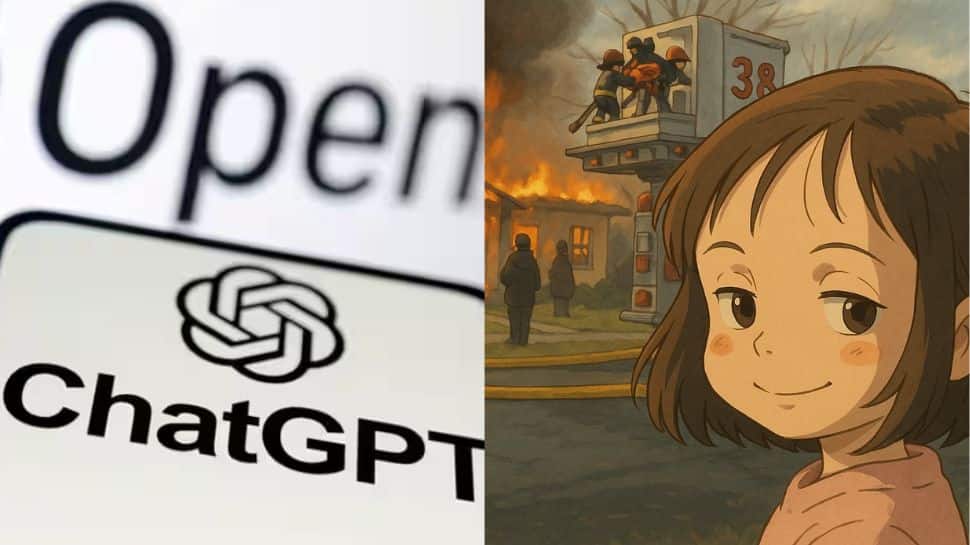
ChatGPT Down: OpenAI’s ChatGPT is facing a global outage, affecting users attempting to create Studio Ghibli-styled animated avatars and causing widespread errors across its app and API services. Meanwhile, the OpenAI has acknowledged the issue, stating, “We’re currently experiencing issues,” and confirmed that it is actively working on a resolution. The company, backed by Microsoft, is addressing the disruption to restore normal functionality. According to DownDetector, a platform that tracks online service outages, hundreds of users reported issues with OpenAI’s services, with most complaints focused on ChatGPT. Whether it’s Instagram or X (formerly Twitter), feeds are flooded with stunning Studio Ghibli-style portraits. In just 48 hours, people have turned everything—from classic Bollywood scenes to viral memes—into Japanese anime-inspired art. The outage also prompted a response from OpenAI CEO Sam Altman. In a post on X, Altman asked users to “chill” on generating these images, citing the strain on the company’s resources: “can yall please chill on generating images this is insane our team needs sleep”. can yall please chill on generating images this is insane our team needs sleep — Sam Altman (@sama) March 30, 2025 This viral trend took off after OpenAI’s ChatGPT-4o introduced a new feature that allows users to not only create images but also transform their own pictures into anime-style masterpieces. However, this feature is only available to ChatGPT Plus, Pro, Team, and Select subscribers. Free users can generate up to three animated images. However, since OpenAI restricts ChatGPT’s image generation for both free and paid users, the expected output is a short video, better suited for a GIF format. How To Create Unlimited Ghibli-Style Images For Free Using ChatGPT Step 1: Open the OpenAI ChatGPT website or app. Step 2: Upload your preferred image or generate a new one by providing context to ChatGPT. Step 3: Ask ChatGPT to ‘Ghiblify’ the image or transform it into a Studio Ghibli-style theme. Step 4: Wait a few seconds to get the desired Ghibli-styled image.

Global Cloud Infrastructure Spending To Grow 33.3% In 2025 | Technology News
New Delhi: The global cloud infrastructure spending is set to grow 33.3 per cent in 2025 to $271.5 billion compared to 2024, according to a new report. According to the International Data Corporation (IDC), spending on compute and storage infrastructure products for cloud deployments, including dedicated and shared IT environments, increased 99.3 per cent year-over-year in the fourth quarter of 2024 (4Q24) to $67.0 billion. Spending on cloud infrastructure continues to outgrow the non-cloud segment with the latter growing by 25.8 per cent in 4Q24 to $22.0 billion. The cloud infrastructure segment experienced double digit growth unit demand of 33.5 per cent, with a continued increase in average selling prices (ASPs) mostly related to the accelerated increase of GPU server shipments. According to the IDC report, non-cloud infrastructure is expected to decline -4.9 per cent to $68.1 billion. Shared cloud infrastructure is expected to grow 25.7 per cent year over year to $213.7 billion for the full year, spending on dedicated cloud infrastructure expected to grow further in 2025 with 71.8 per cent to $57.8 billion for the full year. Additionally, the cloud infrastructure GPU based accelerated market will show a 46.8 per cent growth in 2025, reaching $157.8 billion value as AI infrastructure investments still count with an important backlog as well as future projects in the cloud. “Cloud infrastructure spending growth continued outpacing market expectations again in the fourth quarter,” said Juan Pablo Seminara, director for IDC’s Worldwide Enterprise Infrastructure Trackers. Even after raising some doubts about the necessity of large investments in AI infrastructure exposed by DeepSeek’s R1 initial impact that later proven been not that accurate, the industry is also understanding that the evolution from simple chatbots to reasoning models to agentic AI will require several orders of magnitude more processing capacity, especially for inferencing. “So even by gaining efficiency on investments costs, IDC expects cloud infrastructure market growth of 17.8 per cent CAGR for the following five years,” he mentioned.

What Is Ghibli, And Why Has It Become An Overnight Internet Sensation? | Technology News
New Delhi: OpenAI’s latest image creation feature has taken the internet by storm. Social media users quickly discovered its abilities to mimic various art styles with many transforming their pictures into stunning Studio Ghibli-style visuals. The trend has sparked excitement. OpenAI CEO Sam Altman joined the trend, updating his profile picture on X with a Studio Ghibli-style image. He even invited social media users to create a better one using ChatGPT. What is Studio Ghibli’s Art Style? Studio Ghibli, founded in 1985 by Hayao Miyazaki, Isao Takahata, and Toshio Suzuki, is a famous Japanese animation studio known for its hand-drawn animation, detailed backgrounds and emotional storytelling. The name “Ghibli” comes from a Libyan Arabic word for a hot desert wind and was also inspired by the Italian aircraft Caproni Ca.309 Ghibli. A Ghibli portrait is an image designed in the signature style of Studio Ghibli. It features soft pastel colors, intricate details, and a dreamy, magical feel. It is loved by anime fans and this art style stands out for its beauty and storytelling charm. Who Has Access to ChatGPT’s Image Generation Feature? OpenAI announced that its new image generation feature is available for Plus, Pro, and Team users. Initially, Free users were also included. However, CEO Sam Altman later confirmed on X (formerly Twitter) that their access would be delayed. The company also mentioned that Enterprise and Edu users will get access through the API soon. What’s Behind the Ghibli Art Trend? Anime has a huge fan base, especially in the U.S., where about 72 per cent of people watch it regularly, according to World Population Review. Studio Ghibli’s unique art style has only added to this fascination. With OpenAI’s new feature, users can turn their photos into Ghibli-style images with just a click. This ability to give personal or famous pictures a magical, anime-like makeover has taken social media by storm, making the trend even more popular.
How To Create Ghibli-Inspired AI Art Portraits Without ChatGPT – Step-by-Step Guide | Technology News
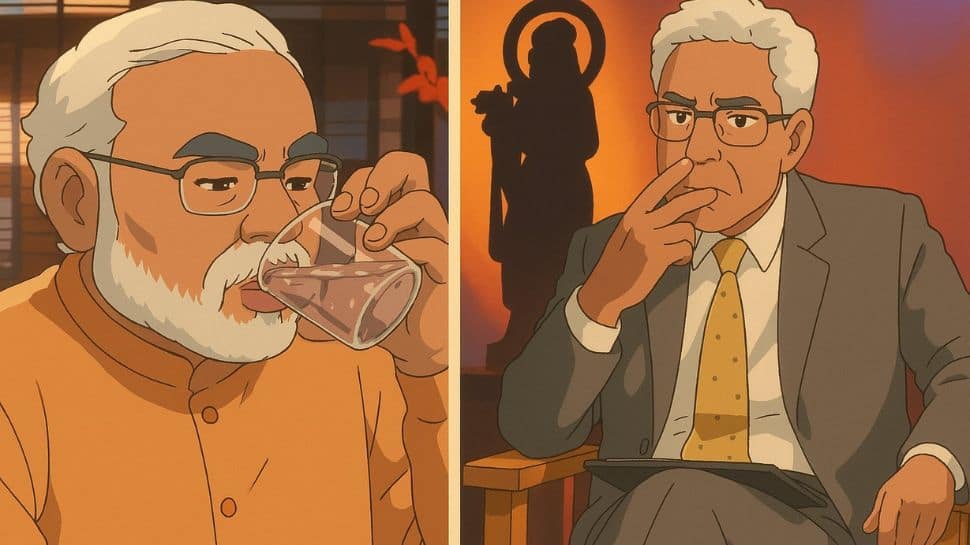
New Delhi: Social media is filled with anime magic, Whether it’s Instagram or X, feeds are flooded with stunning Studio Ghibli-style portraits. In just 48 hours, people have turned everything—from classic Bollywood scenes to viral memes—into Japanese anime-inspired art. This viral trend took off after OpenAI’s ChatGPT-4o introduced a new feature that allows users to not only create images but also transform their own pictures into anime-style masterpieces. However, this feature is only available to ChatGPT Plus, Pro, Team, and Select subscribers. Free users can generate up to three animated images. How to Create Unlimited Ghibli-Style Images for Free You can use Gemini AI to generate stunning Ghibli-style images without limits! Here’s how: – Visit the Gemini AI platform and log in. – Type a short description of the image you want in the chat box. – Submit your prompt, and let AI do the work. – Your Ghibli-style image will be generated. How to Turn Your Images into Ghibli-Style Art Using Grok – Transform your photos into stunning Ghibli-style artwork with Grok! Here’s how: – Open the Grok website or app. – Click the paper clip icon to upload your image. – Ask the AI to “Ghiblify” your photo. – Your Ghibli-style image will be generated. Third-party Apps You can also turn your photos into Studio Ghibli-inspired art using free AI tools like Craiyon, DeepAI, and Playground AI. Simply upload a picture or type a prompt like “portrait in Studio Ghibli style, lush forest background, soft colors”, and let AI do the rest! These tools may not be as detailed as GPT-4o, but they still capture the dreamy, hand-painted charm of Ghibli’s world—flowing hair, soft colors, and beautiful landscapes. For more control, Artbreeder lets you mix and edit styles, though some features may need an upgrade. What is Studio Ghibli? Studio Ghibli is a world-famous Japanese animation studio, founded in 1985 by Hayao Miyazaki, Isao Takahata, and Toshio Suzuki. Known for its beautiful hand-drawn animation and captivating storytelling, Ghibli has created some of the most beloved animated films. Iconic movies like My Neighbor Totoro, Spirited Away, Howl’s Moving Castle, Kiki’s Delivery Service, and Princess Mononoke have enchanted audiences worldwide with their magical worlds and heartfelt stories.

X Changes Hands? Musk Sells His Social Media Platform To…., For …. Billion | Technology News
New Delhi: Elon Musk has revealed that his AI company, xAI has taken over social media giant X (formerly Twitter) in a 33 billion dollars all-stock deal.The move, announced on March 28 aims to merge xAI’s cutting-edge artificial intelligence with X’s vast user base, paving the way for new innovations. xAI-X Merger: What You Need to Know Elon Musk’s AI company, xAI, has officially merged with X (formerly Twitter) in an all-stock deal, meaning no cash was involved. While both companies are privately owned and not required to share financial details. Musk confirmed that xAI is valued at 80 billion dollars and X at 33 billion dollars. According to Musk, this merger will combine their data, AI models, computing power, and top talent to create smarter, more meaningful user experiences. The goal is to enhance innovation while staying focused on the mission of seeking truth and spreading knowledge. Elon Musk to Resign from DOGE Leadership The merger news comes just hours after Elon Musk revealed that he will step down from his role in the Department of Government Efficiency (DOGE) at the end of May. During his 130-day term, Musk led efforts to cut government costs, achieving a massive 1 trillion dollars reduction in the US deficit. Appointed as a “special government employee” under President Donald Trump’s administration, he played a key role in streamlining spending. Elon Musk is making big moves in the AI industry, a key priority for both the Trump administration and the tech world, according to CNN. Earlier this year, he led a group of investors in a nearly 100 billion dollars bid to buy OpenAI, the company behind ChatGPT. This attempt marked another chapter in his ongoing rivalry with OpenAI CEO Sam Altman.

Securing The Road Ahead: Why Automotive Cybersecurity Is Essential For The Future Of Mobility | Internet & Social Media News
The automotive industry is undergoing its most significant transformation in decades. With the rise of connected vehicles, electric mobility, and autonomous driving, cars are no longer just mechanical machines—they are sophisticated, software-driven ecosystems. But with this digital revolution comes an escalating risk: cybersecurity threats. From hacking keyless entry systems to remotely controlling vehicle functions, cybercriminals are finding new ways to exploit modern cars. The question automakers must ask themselves today is: Are our vehicles secure enough to prevent these attacks? Cybersecurity is no longer a luxury—it is the new safety standard for the automotive industry. As vehicles become more advanced, they also become more vulnerable. Cyberattacks on vehicles have already been reported worldwide, proving that these threats are not just theoretical. Key cybersecurity risks in connected vehicles include remote takeover attacks, where hackers exploit vulnerabilities to disable brakes, control acceleration, or hijack steering. Weak security in infotainment and navigation systems also poses a threat, allowing attackers to access a vehicle’s core functions. Additionally, Vehicle-to-Everything (V2X) communication increases the risk of cyberattacks as vehicles interact with other cars and smart infrastructure. Another major concern is the manipulation of Over-the-Air (OTA) updates, where unauthorized software installations can introduce malware, compromise vehicle safety, and expose sensitive user data. Without proper security measures, modern cars could become vulnerable targets, putting both lives and data at risk. To address these growing concerns, the Automotive Industry Standard (AIS) 189 is set to revolutionize cybersecurity practices in India, said experts. This regulatory framework aligns with global standards like UN R155 and ISO 21434, ensuring that vehicles meet cybersecurity benchmarks to prevent cyber threats, they said. According to experts, the key objectives of AIS 189 focus on strengthening vehicle cybersecurity through multiple measures. It mandates the implementation of a Cybersecurity Management System (CSMS) to identify and mitigate security risks, along with compulsory penetration testing and risk assessments for all vehicle models before they enter the market. Additionally, it emphasizes secure Over-the-Air (OTA) updates and strong authentication mechanisms to prevent unauthorized access. Continuous monitoring and robust incident response plans are also required to detect and address cyber intrusions in real time, ensuring enhanced security for connected vehicles. Industry experts have emphasized the importance of early compliance in securing the future of vehicles. “AIS 189 is a wake-up call for automakers. The future belongs to companies that take cybersecurity seriously today,” said Vikash Chaudhary, Founder & CEO of HackersEra, a cybersecurity solution provider in automotive threat assessment and penetration testing. “The automotive industry is evolving rapidly, and cybersecurity will play a crucial role in shaping the future of mobility. The road ahead is digital, and cybersecurity will be the defining factor for success in the auto industry.” The automotive industry can no longer afford to treat cybersecurity as an afterthought. As India transitions towards a future dominated by EVs, autonomous vehicles, and smart mobility solutions, protecting these systems from cyber threats is just as critical as equipping them with airbags or anti-lock brakes. With AIS 189 setting new security benchmarks, automakers must act now to ensure their vehicles are compliant, resilient, and cyber-secure. “The next time you buy a car, ask not just about its mileage—but about its cybersecurity. Because in the era of digital mobility, safety isn’t just about airbags— it’s about how well your vehicle is protected from cyber threats,” said Vikash Chaudhary.
Want Ghibli-Style AI Art? Here’s How To Create It On ChatGPT-4o For Free | Technology News
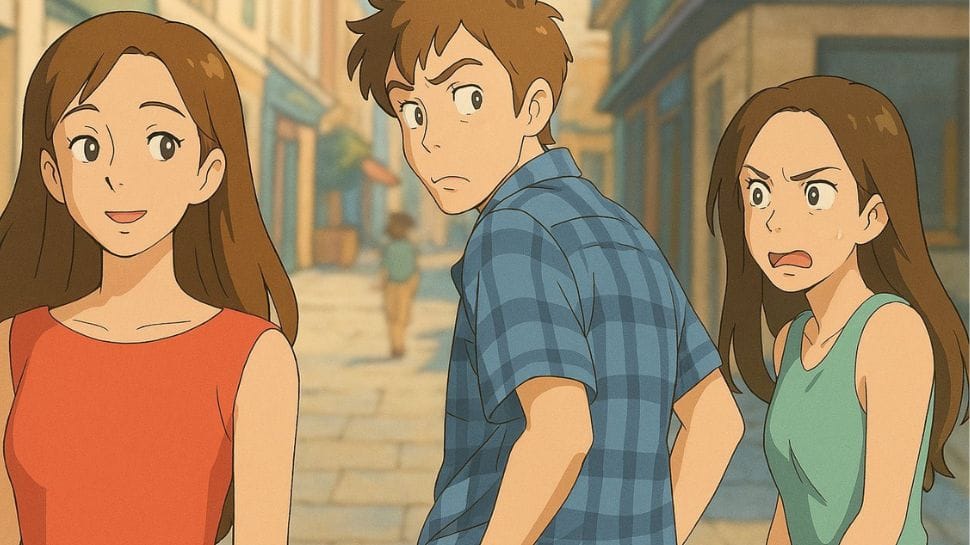
New Delhi: ChatGPT-4o’s Ghibli-style feature has taken the internet by storm in just 24 hours. The AI chatbot now lets users transform their images into different artistic styles with Studio Ghibli being the most popular. People everywhere are trying it out and uploading their photos and watching them get magical. Anime-inspired makeover. It is available on both web and mobile. How to Create Studio Ghibli-Style Images with ChatGPT-4o – Works with Free Accounts: Simply sign in with your Google ID or create a new OpenAI account. – Fast & Easy: The AI chatbot generates images quickly, though the free version has some limitations. Steps to Generate Ghibli-Style AI Images: – Go to the ChatGPT website – Log in with your Google ID or create a new OpenAI account – Open the ChatGPT interface on your screen – Enter a prompt using the keyword Studio Ghibli to generate AI-stylized images – DALL-E powers the image generation to create stunning Ghibli-style illustrations Try Free Alternatives for Ghibli-Style Art You don’t need a ChatGPT subscription to create Studio Ghibli-inspired images! Free tools like Craiyon, DeepAI, and Playground AI let you generate AI art with different customization options. Just upload a photo or enter a prompt like “portrait in Studio Ghibli style, lush forest background, soft colors,” and let the AI bring your vision to life. These tools may not have GPT-4o’s photorealistic accuracy but they do capture Ghibli’s signature charm—flowing hair, dreamy landscapes, and soft expressions. If you want more control, try Artbreeder, where you can mix images and adjust styles. Some features are free, while others may require an upgrade.