

New Delhi: Digital India has not remained a mere government programme but has also become a people’s movement, Finance Minister Nirmala Sitharaman said on Tuesday. In a post on X, she said ‘Digital India’ is central to building an ‘Aatmanirbhar Bharat’, and to making India a trusted innovation partner to the world. “From bringing internet access to remote corners of the country to making government services available online, the ‘Digital India’ initiative of Prime Minister Narendra Modi led-government has truly bridged the digital divide across the nation,” the Finance Minister wrote as the ‘Digital India’ mission completed 10 successful years. “Scan. Pay. Done. India’s UPI revolution powers nearly half of the world’s real-time digital transactions,” she further stated. According to Commerce Minister Piyush Goyal, with initiatives like UPI, DBT, GeM, ONDC, SVAMITVA, and many more, the nation is moving from digital governance to global digital leadership. “Prime Minister Narendra Modi writes, when the intent is right, innovation empowers the less empowered,” he posted on X. The Prime Minister said in a post on LinkedIn that ‘Digital India’ is central to building an ‘Aatmanirbhar Bharat’, and to making India a trusted innovation partner to the world. “To all innovators, entrepreneurs, and dreamers: the world is looking at India for the next digital breakthrough”. Ten years ago, India embarked on a bold journey into uncharted territory with great conviction. While decades were spent doubting the ability of Indians to use technology, “we changed this approach and trusted the ability of Indians to use technology,” said PM Modi. Union Minister Pralhad Joshi said that ‘Digital India’ has revolutionised agriculture through eNAM, enabling farmers to connect directly with buyers across the country. “With Rs 4 lakh crore in trade and 1.7 crore farmers empowered across 1,400+ mandis, the impact is real. A bold leap under the visionary leadership of PM Modi,” he posted on X.
Implementing Vector Search from Scratch: A Step-by-Step Tutorial
There’s no doubt that search is one of the most fundamental problems in computing.

WhatsApp Users Can Now Add Music To Status Updates On Latest iOS And Android Versions; Here’s How to Do It | Technology News
WhatsApp Music Status: Want to make your WhatsApp Status more engaging? Adding music is a great way to set the mood and express yourself creatively. Whether you’re sharing a photo, video, or a special moment, a background track can enhance the impact. WhatsApp, the instant messaging platform, has recently begun rolling out a new feature that allows you to add music to your Status on the latest version of WhatsApp for iOS and Android. Similar to Meta’s other platforms like Instagram and Facebook, WhatsApp now lets you add up to 15 seconds of music to an image and up to 60 seconds when sharing a video in your Status. These Status updates—including those with music—are protected by end-to-end encryption. That means even WhatsApp can’t see which songs you’ve added. Like always, your Status will disappear after 24 hours. Notably, the Music on Status is currently not supported on WhatsApp Web. In this guide, we’ll walk you through the simple steps to add music to your WhatsApp Status and make your updates stand out from the crowd. How To Add Music To Your WhatsApp Status Step 1: Open WhatsApp and go to the Updates tab from the bottom navigation bar. Step 2: Tap the Add Status button to begin creating a new status. Step 3: Choose an image or video from the media gallery shown. Step 4: Tap the music icon at the top of the screen to add a song. Step 5: Search or pick a track, then use the slider to select the part of the song you want. Step 6: Once satisfied, tap Done, then hit the green send button to publish your Status.
Navigating Imbalanced Datasets with Pandas and Scikit-learn
Imbalanced datasets, where a majority of the data samples belong to one class and the remaining minority belong to others, are not that rare.
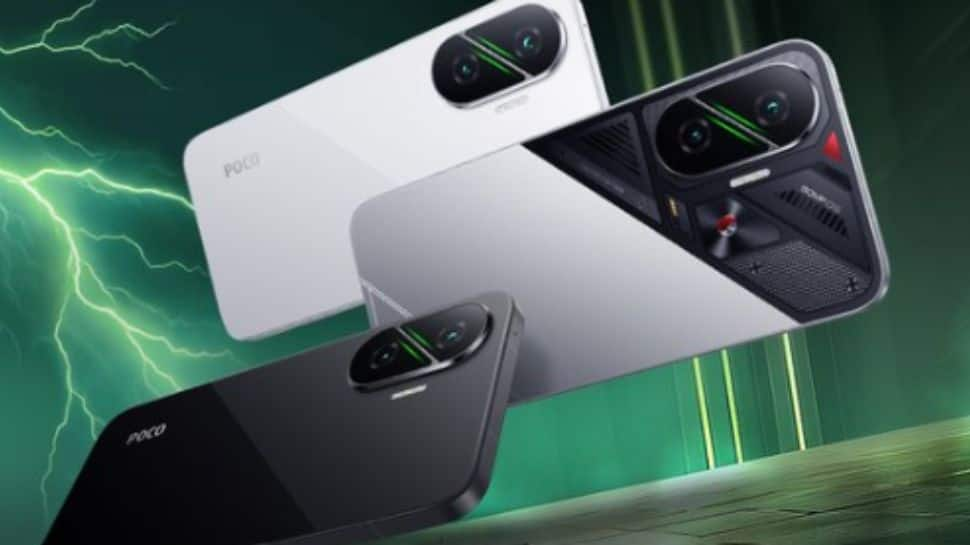
Poco F7 5G Goes On Sale In India With Discount And Sale Offers; Check Specs, Price And Availability | Technology News
Poco F7 5G Sale In India: Poco has launched the Poco F7 5G in India earlier this month. The smartphone is now available for purchase in the country. The company has promised four years of Android OS updates and six years of security patches. It comes with several artificial intelligence features such as Google Gemini, Circle to Search, AI Notes, AI Interpreter, and AI-powered image tools. As part of the first sale, the company is also offering special deals to customers. Poco F7 5G Price In India And Availability The handset starts at Rs 31,999 for the 12GB RAM + 256GB storage variant, while the 12GB + 512GB model is priced at Rs 33,999. It is available from today, 1 July via Flipkart. Poco F7 5G Discount And Sale Offers HDFC, SBI, and ICICI Bank cardholders can avail an instant discount of Rs 2,000, reducing the effective prices to Rs 29,999 and Rs 31,999, respectively. Buyers can also benefit from an extra Rs 2,000 exchange bonus. First sale offers include one-year screen damage protection worth Rs 10,000 and an extra one-year warranty, extending the total coverage to two years. Poco F7 5G Specifications The smartphone is powered by Qualcomm’s Snapdragon 8s Gen 4 chipset and features a large 6.83-inch AMOLED display with a 1.5K resolution (1,280×2,772 pixels) and a smooth 120Hz refresh rate. It packs a robust 7,550mAh battery that supports 90W fast charging and 22.5W reverse charging. On the photography front, the device sports a dual-camera setup comprising a 50-megapixel primary sensor and an 8-megapixel ultrawide lens, while a 20-megapixel front camera handles selfies and video calls. Built for durability, the smartphone is claimed to meet IP66, IP68, and IP69 ratings for dust and water resistance. On the connectivity front, the device supports 5G, 4G, Wi-Fi 7, Bluetooth 6.0, GPS, NFC, and a USB Type-C port. The Poco F7 5G weighs 222 grams and has a slim profile with a thickness of 7.98mm. The smartphone also features Poco’s advanced 3D IceLoop cooling system, which uses AI-driven temperature control along with a large vapor chamber to effectively manage heat. Adding further, it includes WildBoost Optimisation 3.0 to deliver an enhanced gaming experience.
Advanced Feature Engineering Using Scikit-Learn Pipelines with Pandas’ ColumnTransformer and NumPy Arrays
Pandas , NumPy , and Scikit-learn .
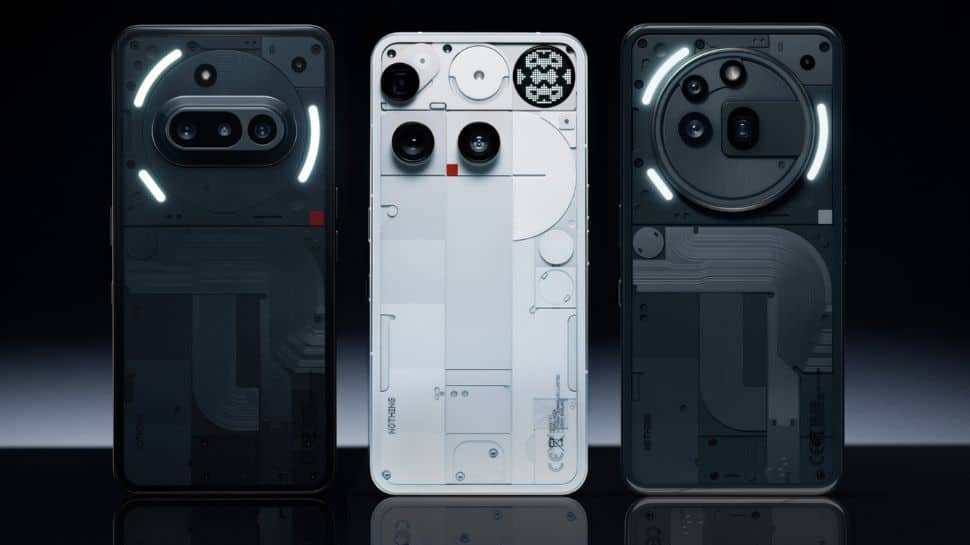
Nothing Phone 3 Launched In India With Glyph Matrix; Check Specs, Price And Launch Offers | Technology News
Nothing Phone 3 India Launch: Nothing, a London-based company, has expanded its smartphone portfolio in India with the launch of the new Phone (3) after two years. The newly-launched smartphone arrives with substantial upgrades across performance, display, software, and durability. The Nothing Phone 3 will run on Nothing OS 3.5 based on Android 15, with Nothing OS 4.0 based on Android 16 announced to be rolled out in Q3 2025. The company promised that the phone will get 5 years of Android updates and 7 years of security patches. The Nothing Phone 3 will be available in two colour options which include Black and White. The smartphone comes with the Glyph Matrix, which is made up of 489 individually firing LEDs, Glyph Button, and a red recording light. Nothing Phone 3 Specifications: The smartphone features a 6.67-inch flexible AMOLED display with a 120Hz adaptive refresh rate and an impressive peak brightness of 4500 nits. It is powered by the Snapdragon 8s Gen 4 processor, built on TSMC’s 4nm process, ensuring high performance and efficiency. The smartphone is backed by a 5500mAh silicon-carbon battery that supports 65W fast charging. The phone boasts an upgraded triple rear camera setup, comprising a 50MP OIS main sensor, a 50MP OIS periscope lens, and a 50MP ultra-wide camera. On the photography front, it offers a 50MP front-facing shooter at the front. Adding further, the device is equipped with Qualcomm’s Hexagon NPU to efficiently handle AI-related tasks. The phone gets the Corning Gorilla Glass Victus 2 protection on the front, and regular Gorilla Glass layer at the back. Nothing Phone 3 Price In India And Availability The Nothing Phone (3) is priced in India starting at Rs 79,999 for the base variant with 12GB RAM and 256GB storage, while the top-end 16GB + 512GB model is priced at Rs 89,999. Sales begin on July 15, and the device will be available through Flipkart, Flipkart Minutes, Vijay Sales, Croma, and other leading retail stores across the country. Nothing Phone 3 Launch Offers The Pre-bookings for the Nothing Phone (3) start on July 1. As a special launch offer, customers who pre-book will receive the Nothing Ear (worth Rs 14,999) for free with their purchase. Adding further, all users who pre-book or buy the device on July 15 will get an extra one-year extended warranty. Furthermore, Nothing is also offering up to 24 months of no-cost EMI options through leading banks.
Positional Encodings in Transformer Models
This post is divided into five parts; they are: • Understanding Positional Encodings • Sinusoidal Positional Encodings • Learned Positional Encodings • Rotary Positional Encodings (RoPE) • Relative Positional Encodings Consider these two sentences: “The fox jumps over the dog” and “The dog jumps over the fox”.
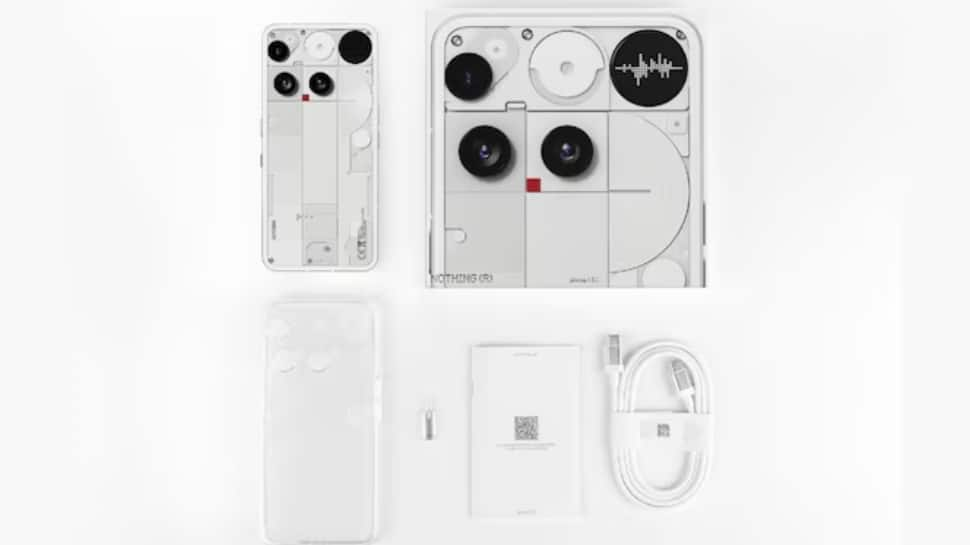
Nothing Phone 3 Launched At Rs…; Key Features And Specifications – Check Discount Offers | Technology News
Nothing Phone 3: Nothing has officially launched the Nothing Phone 3 in India. Available in White and Black colours, the Nothing Phone 3 will go on open sale from July 15. Customers who pre-book the device will receive a free pair of Nothing Ear earbuds as part of a special launch offer. There is also a flat discount of Rs 5,000 for users of cards from certain banks. Nothing Phone 3 Prices 12GB RAM + 256GB storage variant: Rs 79,999 16GB RAM + 512GB storage version: Rs 89,999 The new smartphone comes with the Snapdragon 8s Gen 4 chipset and is paired with up to 16GB of RAM and 512GB of internal storage. It features a 6.67-inch AMOLED display with a 1.5K resolution (1,260 x 2,800 pixels), 120Hz adaptive refresh rate, HDR10+ support, and 4,500 nits peak brightness. The screen has Gorilla Glass 7i on the front and Gorilla Glass Victus on the back for protection. The smartphone gets a triple rear camera setup, with each lens offering 50 megapixels. The setup includes a 50MP main camera with OIS, a 50MP periscope telephoto lens with OIS and 3x optical zoom, and a 50MP ultra-wide camera. On the front, it has a 50MP selfie camera for high-resolution video calls and self-portraits. The rear panel also introduces a new Glyph Matrix, a circular light ring made up of 489 individually controllable micro-LEDs, replacing the older Glyph Interface. It can display charging progress, animations, time, and other alerts. It runs on Nothing OS 3.5, based on Android 15, and the company promises five years of Android updates along with seven years of security patches. Connectivity options include 5G, Bluetooth 6, NFC, Wi-Fi 7, GPS, A-GPS, GLONASS, GALILEO, QZSS, and NavIC. The phone features a 360-degree antenna design for enhanced connectivity. It also includes an in-display fingerprint sensor, dual stereo speakers, and two high-definition microphones. Sensors onboard include an ambient light sensor, accelerometer, gyroscope, proximity sensor, and electronic compass. Powering the device is a 5,500mAh battery (Indian variant) with 65W wired fast charging, which can charge the phone from 1% to 100% in 54 minutes. The phone also supports 15W wireless charging, 7.5W reverse wired charging, and 5W reverse wireless charging. The handset measures 160.60 x 75.59 x 8.99 mm and weighs 218g. It has an IP68 rating, making it dust- and water-resistant.
How to Combine Scikit-learn, CatBoost, and SHAP for Explainable Tree Models
Machine learning workflows often involve a delicate balance: you want models that perform exceptionally well, but you also need to understand and explain their predictions.