
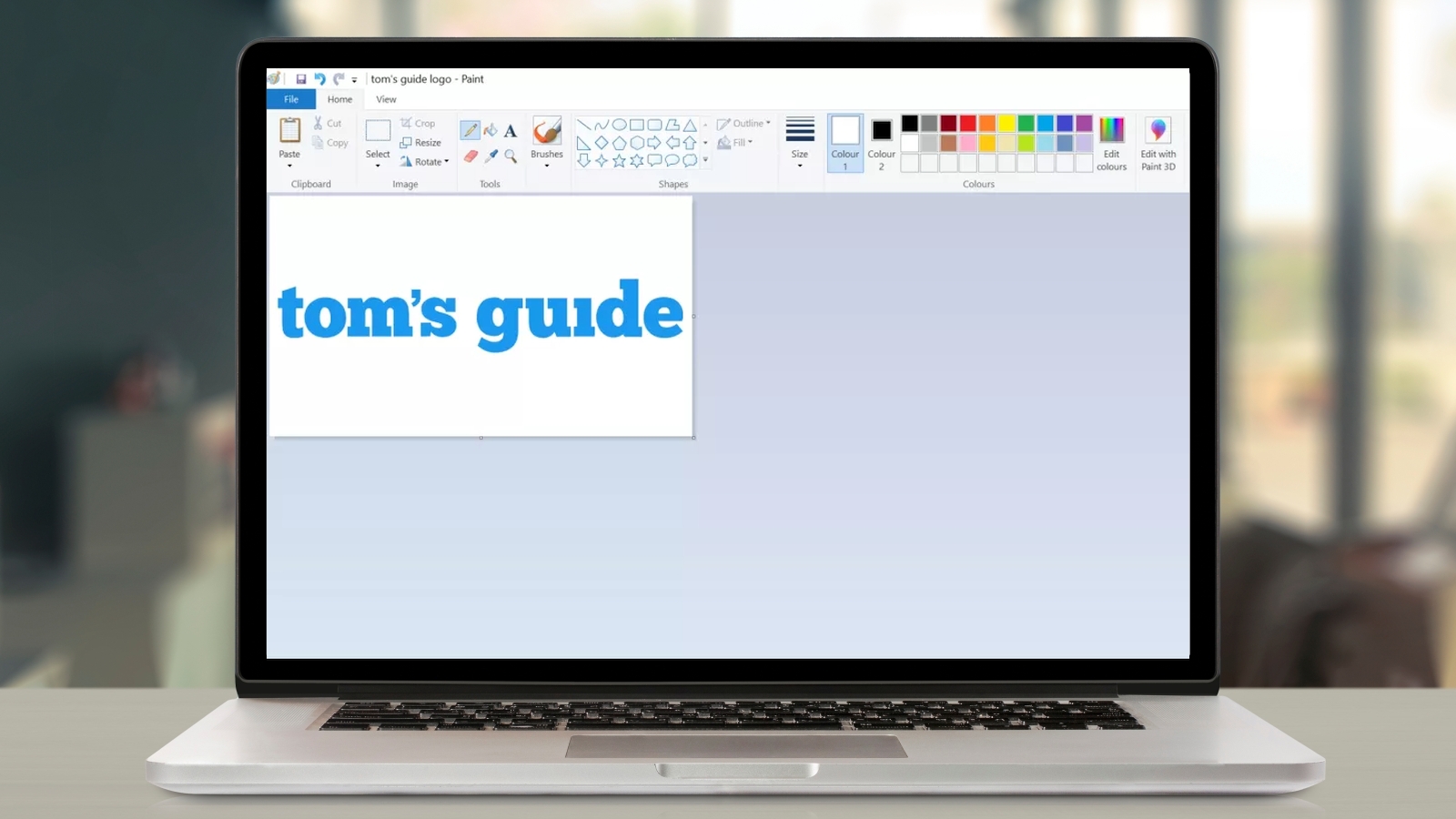
Microsoft Paint received a major overhaul in terms of features and design with Windows 11 update and now it is due for another update that’s set to bring a couple of new features, refinements and more. Microsoft via an official announcement has confirmed the Background removal tool for Paint. The company has mentioned that it has started rolling out an update for the Paint app on Windows Insider in the Canary and Dev Channels (version 11.2306.30.0). And, the update will bring the ability to remove the background of any image automatically in just a single click. How does the background removal tool work Microsoft has mentioned that the background removal in MS Paint will be a single-click feature. This will leave users with a smooth cutout of the subject as it can detect the subject from the entire canvas or from a selection using the selection tool and remove it. All users need to do is import content onto the canvas and click on the new remove background button from the toolbar to remove the background of the entire image. Users will also get the option to use the rectangle select to specify a particular area in the image and then remove the background using the newly introduced tool. Official rollout It is worth mentioning that the background removal tool is currently in testing and available to Windows Insider Preview users running either Canary or Dev Channel builds. The official rollout details are not available as of now. However, we expect it to become available to all users in the coming months, once Microsoft is done receiving the feedback and refining the feature during the beta testing period.
Gmail may soon give you the option to react to an email with emojis
It looks like Google is on an emoji spree. Recently, the company added emoji icons for Maps list, then it brought emoji reactions to Meet, Docs and several other services. Now it seems that it is planning to bring emoji reactions to Gmail. The new feature appears to allow users to react to emails in the inbox. New hidden code for Gmail reveals emoji reactions Hidden code for the Gmail app for iOS (spotted by Steve Moser) and Android (spotted by TheSpAndroid) suggest that Google is reportedly planning to bring emoji reactions to Gmail inbox. The report says that the codes reveal that an emoji reaction feature is in development for the email service. Emoji reactions in Gmail are “coming soon” according to the hidden code found within the Android app. Also, some strings suggest that Google is also planning to show users a message “You’re among the first Gmail users to get an emoji reaction. Soon you’ll be able to send emoji reactions yourself”. This suggests that Google is soon planning to introduce this feature in Gmail, but in beta first with select users before the final rollout. It is yet to be seen how Google is planning to implement emoji reactions in Gmail. And, even the choice of emojis users will have for the reaction. We expect a little flexibility here – at least. That’s not it. The strings from the hidden code also include some restrictions. Here’s a list according to the report. Emails received via BCC won’t support reactions Encrypted messages won’t support reactions Email threads with “large groups” will not support reactions There’s a currently unspecified limit on how much you can use a single emoji reaction Messages can only support up to 20 emoji reactions from a single person Messages can only support up to 50 unique emoji reactions There’s a currently unspecified limit on how much you can use a single emoji reaction Messages can only support up to 20 emoji reactions from a single person Messages can only support up to 50 unique emoji reactions At first glance, emoji reactions in Gmail seem like a weird idea, but realistically it could be quite useful as mentioned above. Currently, though, it’s unclear when Google plans to roll the feature out, as there’s been no official announcement or tease. Emoji reactions aren’t new for emails There are several email services that allow users to react to an email using emojis, including Outlook. Microsoft’s email client lets users react to an email with emojis. Although it does not show them as a complete email reply, the feature comes in handy in case an email is only about acknowledgement.
Top 20 AI Business Ideas to Start in 2024
In the rapidly evolving landscape of technology, Artificial Intelligence (AI) stands out as a beacon of innovation, promising to reshape industries and redefine the way we live, work, and think. As we approach 2024, the potential of AI has expanded beyond mere speculation, presenting tangible opportunities for entrepreneurs, governments, and industries. From enhancing consumer experiences to revolutionizing public services, the following AI business ideas offer a glimpse into a future where technology and human ingenuity converge to create unprecedented value. 1. Industry-specific YouTube channel about AI Similar to the newsletter idea, but in video format. This can cater to various niches and provide insights on how AI is impacting those sectors. 2. AI Newsletter Create an email newsletter that covers AI developments. There’s a growing demand for niche, industry-specific newsletters that discuss AI developments relevant to specific industries or job roles, such as dentists, doctors, veterinarians, lawyers, insurance agents, real estate agents, and more. 3. Property Management for Independent Landlords A significant part of a property manager’s job involves messaging. This can be automated using tools like GPT-4, allowing property managers and landlords to streamline their communication processes. 4. Airbnb Messaging Automation Given the high volume of messaging involved in Airbnb hosting, there’s an opportunity to develop a tool that automates most of the messaging for hosts or to offer a full-service Airbnb management service that uses AI messaging to reduce costs. 5. AI-Driven Time Management AI is proficient at saving time on universal business initiatives like copywriting, social post scheduling, image creation and editing, and even forecasting cash flow. Tools like ChatGPT can help in generating content, pitch decks, and more. 6. AI for Research and Market Analysis Over 40% of startups fail because they’ve misread the market demand. AI can be used to identify companies addressing specific ideas, refine their prompts to identify selling points and messaging already in the market, and find gaps that still exist. 7. Cost Savings with AI The biggest percentage of a startup’s overhead costs is usually payroll. AI can help founders conserve cash by automating tasks that would otherwise require human intervention. For instance, instead of hiring a customer service team, one could run an AI-enabled chatbot. Additionally, AI can help manage cash allocation across the business, integrating data from various platforms to provide a clearer picture of ROI and effective budget allocation. 8. Automated Phone System for Solopreneurs Many small business owners can’t man their phones all the time. An automated phone system using GPT-4 combined with voice-to-text and text-to-voice models can handle customer calls, especially beneficial for businesses like landscaping where the owner might be busy with hands-on work. 9. AI in Foreign Policy AI will play a crucial role in geopolitical leadership and economic resilience. Governments are likely to invest heavily in AI technologies to maintain global competitiveness. 10. AI-Enabled Consumer Experiences The metaverse, cryptocurrencies, and other next-gen consumer experiences will be critically enabled by AI. AI algorithms can bridge the feedback loops between the digital and physical realms, enhancing user experiences. 11. AI in Addressing Climate Crisis AI can play a pivotal role in mitigating the threats posed by climate change. From prediction markets powered by AI to “twin Earth” simulations that require real-time data, AI can help in understanding and addressing environmental challenges. 12. Personalized Medicine with AI AI can help in constructing and analyzing “digital twin” rubrics of individual biology, paving the way for truly personalized medical treatments. 13. Insurance Claims Adjustment & Investigation A lot of the work done by insurance claims adjusters and investigators can be automated using large language models and image analysis AI tools. 14. Software Development Agency Arbitrage With the rise of AI, there’s an opportunity to streamline software development processes and offer more efficient solutions. 15. Automated Email Customer Support Many businesses have customer support emails. An AI tool can automate a significant portion of this, reducing the workload on human agents. 16. AI Textbot Therapist Use GPT-4 to act as a therapist, offering users a phone number they can text for therapeutic conversations. 17. YouTube Thumbnail Generator Develop an AI tool that can analyze a video’s content and automatically produce a captivating, high-performing thumbnail. This can help content creators increase their click-through rates. 18. End-to-End AI-Generated YouTube Channel Imagine a YouTube channel that’s entirely automated. This would involve: Automatic generation of video ideas based on scraping news and other articles, with GPT-4 conducting related research processes. Script creation using GPT-4. Production of an audio track from the script using tools like Eleven Labs. Automated selection and sequencing of stock video clips relevant to different segments of the audio track. As AI text-to-video tools progress, stock video clip selection can be replaced by AI video generation. Automatic thumbnail, video description generation, and upload to YouTube. Potential niches for this channel could include human geography, finance & economics daily news, space exploration & tech, sports history & facts, history of brands, and many more. 19. SaaS Product for AI YouTube Channels Instead of launching an AI-generated YouTube channel yourself, consider creating a SaaS product that enables others to do so. Users could specify their niche, design their YouTube brand, and list sources for content inspiration. The software would then automate the entire content creation and upload process. 20. AI and ML Transforming Scientific Method AI and Machine Learning (ML) can bring about significant improvements in scientific research. They enable the analysis of enormous data sets and computationally discover complex relationships and patterns, potentially ushering in a new golden age of scientific discovery. Conclusion The transformative power of Artificial Intelligence is undeniable. As we’ve explored, the potential applications of AI in 2024 span a diverse range of sectors, from real estate and healthcare to government operations and transportation. For aspiring entrepreneurs and established businesses alike, the time is ripe to harness the capabilities of AI, not just as a tool but as a strategic partner in innovation. As the boundaries of what AI can achieve continue to expand, those who embrace
Stock and Share Market News, Economy and Finance News, Sensex, Nifty, Global Market, NSE, BSE Live IPO News
Zaggle Prepaid Ocean Services IPO opens on September 14 Zaggle IPO | The initial public offering comprises a fresh issue of shares worth Rs 392 crore by the company, and an offer-for-sale of 1,04,49,816 equity shares by eight selling shareholders including promoters Raj P Narayanam, and Avinash Ramesh Godkhindi.
Oppo A38 smartphone with 5000 mAh battery, 50MP camera launched: Price, specs and more
Oppo A38 is here. Oppo has expanded its smartphone lineup with the launch of its new budget smartphone — Oppo A38. The smartphone sports an HD+ display and is powered by MediaTek chipset. The smartphone runs Android 13 operating system and is backed by a 5000 man battery.Price and availabilityOppo A38 comes only in one variant — 4GB+128GB and is priced at Rs 12,999. The budget smartphone comes in Glowing Black and Glowing Gold colour options. Customers can purchase the smartphone online from Flipkart.inOppo A38 specificationsThe OPPO A38 is a feature-packed smartphone that offers an immersive visual experience with its 6.56-inch HD+ LCD screen. This display boasts a smooth 90Hz refresh rate and up to 720 nits peak brightness. Under the hood, it is powered by the MediaTek Helio G85 processor, featuring an octa-core configuration that includes dual Cortex-A75 cores clocked at 2GHz and six Cortex-A55 cores also running at 2GHz. The device comes equipped with 4GB of LPDDR4X RAM and 128GB of eMMC 5.1 storage, expandable up to a whopping 1TB via a microSD card slot.Running on Android 13 with ColorOS 13.1, the OPPO A38 supports dual SIM cards. It boasts a dual rear camera setup, with a 50MP primary rear camera featuring an f/1.8 aperture, accompanied by a 2MP portrait camera and LED flash. For selfies and video calls, there’s a 5MP front-facing camera with an f/2.0 aperture. In terms of connectivity, the OPPO A38 supports 5G SA/NSA and dual 4G VoLTE for high-speed internet access. It also features Wi-Fi 802.11 ac support for dual-band Wi-Fi connectivity, Bluetooth 5.3, GPS, and a USB Type-C port. Additionally, it retains the 3.5mm audio jack for traditional headphone connections. Powering all these features is a substantial 5000mAh battery, which supports 33W SuperVOOC fast charging.
GOAT Brand Labs Completes 100% Acquisition Of Frangipani
Back in 2021, GOAT Brand Labs invested in Frangipani, a kidswear label brand Rishi Vasudev said that with GOAT Brand Labs assuming full control, they will leverage all their D2C platform capabilities to advance the brand to the next level of growth Founded in 2021 by Rishi Vasudev and Rameswar Mishra, GOAT collaborates with D2C founders and helps them to scale their brands GOAT Brand Labs has completed acquisition of the remaining stake in Frangipani, in line with the terms initially set during their majority acquisition in 2021. Back in 2021, GOAT Brand Labs invested in Frangipani, a kidswear label brand. Founded in 2012 by Sunaina Patel, Mansi Kilachand, Frangipani focuses on trendy, high-quality clothing for children and women at affordable prices. “As founders of this business, which was started as a brand for our own kids and has always been a labour of love for us, we are happy that the partnership with GBL has been successful. We hope that in GBL’s capable hands, the brand will achieve newer heights,” Patel and Kilachand, said. “Sunaina and Mansi have played a pivotal role in growing Frangipani over the last 10 years. With GBL taking full control, we will continue using all our D2C platform capabilities to accelerate the brand for the next level of growth,” Rishi Vasudev, CEO and cofounder of GOAT Brands Labs, said. Founded in 2021 by Rishi Vasudev and Rameswar Mishra, GOAT collaborates with D2C founders and helps them to scale their brands. Its portfolio of brands includes Chumbak, The Label Life, Pepe Inner Fashion, trueBrowns, Abhishti, Neemli Naturals, Breakbounce, NutriGlow, Voylla and Imara, among others. GOAT Brand Labs raised $50 Mn in an equity and debt part in its Series A round in 2022. It counts Tiger Global, Flipkart, Mayfield, Winter Capital, Nordstar and Better Capital as its investors. In India, it competes with the likes of UpScalio and Mensa Brands. As per an Inc42 report, the country’s D2C market is projected to become a $300 Bn space by 2030, growing at a CAGR of 24%.
Market Research: TCS bag order from British carmaker JLR: Deal size and other details
India’s largest-IT services company Tata Consultancy Services (TCS) has entered into a strategic partnership with the Digital unit of Tata Son-owned British car company JLR. UK-based JLR is owned by Tata Motors, a subsidiary of TCS parent Tata Sons. The deal is valued at £800 million ($1 billion) over the next five years. According to the company, TCS will transform, simplify, and help manage the Digital estate, and build a new future-ready, strategic technology architecture that will support JLR’s Rimagine strategy.Reports suggest that the deal (with possible extensions) is valued at about £1.5 billion ($1.9 billion). The current 10-yr deal is valued at £840 million ( around $1.0 billion).What is the deal with JLR Digital aboutTCS has had a longstanding relationship with JLR Digital, spanning over a decade. As a part of the new partnership, TCS will deliver services spanning application development & maintenance, enterprise infrastructure management, cloud migration, cybersecurity and data services. Through synergies and economies of scale with suppliers, this partnership aims to deliver substantial savings for JLR over the next five years, unlocking free cash flow to reinvest into the future. TCS will leverage its contextual knowledge, deep domain expertise, proprietary platforms, vast partner ecosystem and future-ready talent pool to help JLR enhance its digital capacity. As a part of the new partnership, TCS will deliver a broad range of services spanning application development and maintenance, enterprise infrastructure management, cloud migration, cybersecurity and data services.Outside of the new contract, TCS is partnering with JLR to help accelerate its vision of modern luxury client experience tailored to different markets globally. “This is a truly bi-modal partnership where the efficiencies from leaner operations will help fund the new digital core, while our contextual knowledge and expertise will de-risk and accelerate that transformation,” said Anupam Singhal, business group head, manufacturing, TCS.“Building world class partnerships and maximising the benefits of being part of the Tata Group is a key part of our Reimagine strategy. Consistent with this, we are pleased to expand our long-term relationship with TCS to accelerate our digital transformation,” said Nigel Blenkinsop, executive director, enterprise performance and quality, JLR. TCS has operated in the UK for more than 45 years and currently employs more than 23,000 people in the UK and Ireland.TCS, in June, won a deal from UK-based National Employment Savings Trust (Nest) to digitally transform its scheme administration services.
Here’s Everything You Need To Know About Search Engine Marketing
What Is Search Engine Marketing? Search Engine Marketing, often abbreviated as SEM, is a form of digital advertising that aims to increase a website’s visibility on search engine results pages (SERPs) through paid advertising. It involves creating and managing paid search campaigns to drive targeted traffic to a website, ultimately boosting its online presence and driving conversions. Search Engine Marketing is also commonly referred to as Pay-Per-Click (PPC) advertising. This name originates from the payment model used in SEM, where advertisers pay a fee each time their ad is clicked. What Are The Examples of Search Engine Marketing? Google Ads (formerly Google AdWords): Advertisers bid on specific keywords, and their ads appear on Google’s search results pages when users search for those keywords. Bing Ads: Similar to Google Ads, this platform allows advertisers to display ads on Bing’s search engine. Yahoo Search Marketing: Advertisers can place ads on Yahoo’s search results pages. Shopping Ads: These ads display product images, prices, and descriptions, making them particularly effective for ecommerce businesses. Display Ads: These are visual ads that appear on various websites within a display network, targeting users based on their interests and online behaviour. Remarketing/Retargeting: These ads target users who have previously visited a website, encouraging them to return and complete a desired action. Here are the examples of Search Engine Marketing: Search Ads (Text Ads): These are the traditional ads that appear at the top or bottom of search engine results pages. They consist of text and a headline, often accompanied by ad extensions and are triggered by specific keywords. Display Ads: Display ads are visually engaging and can include images, videos, and interactive elements. They appear on websites within a display network and target users based on demographics, interests, and browsing behaviour. What Are The Components Of Search Engine Marketing? Keywords: Keywords are the foundation of SEM. Advertisers select relevant keywords that users might use when searching for their products or services. Ad Copy: This is the text that appears in the ads. It should be compelling, relevant, and include a call to action. Ad Extensions: These are additional pieces of information that enhance the ad, such as site links, callouts, and location information. Landing Pages: Landing pages are the web pages where users are directed when they click on an ad. These pages should be relevant to the ad and optimised for conversions. Quality Score: Quality Score is a metric that measures the relevance of your ad to the keywords and landing page. It impacts your ad’s position and cost. Bid Management: Advertisers set bids for their keywords, indicating the maximum amount they’re willing to pay for a click. Effective bid management is crucial for optimising campaigns. Click-Through Rate (CTR): CTR is the ratio of clicks to impressions. A high CTR indicates that your ads are resonating with users. Conversion Tracking: This involves tracking the actions users take after clicking on an ad, such as making a purchase or filling out a form. What Are Its Advantages? Targeted Reach: SEM allows advertisers to target specific keywords, demographics, and user behaviour, ensuring that ads are shown to a relevant and interested audience. Quick Results: Unlike organic search efforts, SEM can bring immediate visibility and traffic to a website. Measurable Performance: SEM provides detailed metrics, allowing advertisers to track clicks, impressions, conversions, and other key performance indicators. Budget Control: Advertisers have full control over their budgets and can set daily or campaign-level spending limits. Flexibility: Ad campaigns can be adjusted and optimised in real-time based on performance data, ensuring efficient resource allocation. Brand Exposure: Even if users don’t click on your ads, they still see your brand’s name and message, contributing to brand awareness. Remarketing Opportunities: SEM enables remarketing efforts, allowing businesses to re-engage users who have previously interacted with their website. Geo-Targeting: Advertisers can target specific geographic locations, ensuring that ads are shown to users in relevant locations. The post Here’s Everything You Need To Know About Search Engine Marketing appeared first on Inc42 Media.
Now, Pay Via FASTag To Charge EVs, Use Ring For Contactless Payments
The NPCI’s partnership with IMHCL will enable users to access EV charging facilities on the lines of how they make contractless toll payments on the highways The NPCI, in collaboration with fintech startup LivQuik, also launched ‘OTG Ring’, a contactless payment wearable ring The payments body also unveiled its co-creation framework that will foster collaboration among various players within the digital payments ecosystem The National Payments Corporation of India (NPCI) launched an array of new products and struck a slew of fintech partnerships on the sidelines of the recently concluded Global Fintech Fest 2023. Encompassing the electric vehicle (EV) and digital payments domains, the NPCI has partnered with the Indian Highway Management Company Limited (IHMCL) to launch EV charging payments on the National Electronic Toll Collection (NETC) FASTag platform. The move will enable electric vehicle owners to access EV charging facilities on the lines of how they make contactless toll payments on the highways. “… This integration brings the benefits of contactless transactions, real-time monitoring, and secure payments to the EV charging ecosystem, fostering a seamless experience for users,” the NPCI said. During the three-day event, the payments body unveiled a clutch of products in partnership with fintech startups. In collaboration with fintech startup LivQuik, the NPCI has launched an ‘OTG Ring’, a contactless payment wearable ring. The Made in India product will allow users to make payments to any Near Field Communication (NFC)-based device and aims to replace plastic cards for various open-loop transit programs. It also launched a prepaid gift card in partnership with the state-backed payments network RuPay as well as a separate personalised prepaid card in collaboration with Pepper Money and PineLabs. The NPCI also unveiled a prepaid card in collaboration with FamX, primarily targeted at Gen Zs. The payments corporation also announced its partnership with forex services company Thomas Cook India to reportedly launch the country’s first RuPay prepaid forex card (Thomas Cook RuPay Card) for Indians travelling to the United Arab Emirates (UAE). Enabled by homegrown fintech startup CARD91, the pilot offering will gradually be rolled out globally in a phased manner. In addition, the NPCI also unveiled its co-creation framework that will foster collaboration among various players within the digital payments ecosystem. “In today’s rapidly evolving business landscape, innovation is the key to success. Therefore, the launch of the Co-Creation Framework will provide a structured and dynamic approach to fostering collaboration among partners and stakeholders, driving creativity and innovation to new heights,” it said in a statement. The NPCI also launched a flurry of features on top of its unified payments interface (UPI) network. It showcased peer-to-peer money transfers on Amazon Alexa via voice commands at the fintech summit. The feature is expected to be rolled out to users soon. With this, users can ask Alexa to transfer money to their contacts and input PIN to process digital payments. Alongside, the payments corporation also formally launched the UPI-ATM, which entails an interoperable UPI QR-based cash withdrawal. Under this, any participating bank account holder can withdraw cash from a UPI-enabled ATM by using UPI app. Alongside, NPCI International Payments Limited (NPIL) also announced its agreement with cross-border payments solutions provider Paymentwall to enable Indian consumers to make ecommerce purchases with UPI in the US and the UK. Under this, all Paymentwall merchants will accept UPI in the US and UK and will expand the acceptance of the payments platform overseas. Another major highlight of the event was the launch of ‘UPI AutoPay on QR’ which will allow users to activate recurring payments by just scanning a QR code. This comes just a day after Reserve Bank of India (RBI) Governor Shaktikanta Das launched four new features on the UPI network, including conversational payments platform Hello! UPI and NFC-based offline payment offeringsUPI LITE X and UPI Tap & Pay. The slew of launches are part of the NPCI’s bid to achieve 10,000 Cr monthly transactions and expand digital payments to all nooks and corners of the country. With UPI recently achieving the milestone of 1,000 Cr monthly transactions in August 2023, all eyes are now on how the payments network scales up going forward.
Samsung starts rolling out One UI update for Galaxy Watch 5 series, here’s everything that’s new
Samsung announced One UI Watch 5 with a slew of new changes and updates. Despite the fact that the user interface and design haven’t changed much, the latest One UI update for Galaxy Watch incorporates a handful of internal changes to uplift user experience. The company has been gradually rolling out the One UI Watch 5 update to its older smartwatches and as per the latest report, the update is now rolling out to Galaxy Watch 5 and Watch 5 Pro users in India. According to the report, the update is currently rolling out for the Galaxy Watch 5 GPS variant. However, it is also expected to become available for the LTE variant as well in the coming days. The update carries the firmware version R9xxXXU1BWH5 and the update is available to download via the Galaxy Wearable app. One UI Watch 5 update: What’s newFirst up, the One UI Watch 5 is based on Wear OS 4. And, the update is pretty heavy as it has a download size of around 1.77GB. Meanwhile, the update also includes July 2023 security patch in addition to new features like an updated layout for watch faces, a new card-based background for notifications and more. The changelog is pretty lengthy and to make things simpler for you, here’s the complete changelog as mentioned by Samsung on its official website. Watch Faces and Tiles:New vertical layout for easier watch face and tile selection.Battery tile for checking device battery levels (watch, phone, Galaxy Buds).Improved Buds controller tile with 360 audio control.Quick access to timers from the Timer tile.Ability to set an album or story as a dynamic watch face.Samsung Health:Enhanced sleep coaching with a redesigned results screen.Automatic recording of cycling workouts.Personalized heart rate zones during running workouts.Improved accuracy for track runs on a 400-meter track.Ability to create custom exercises.Backup and Restore:Periodic backup of watch data to the phone.Option to save backups to Samsung Cloud.Easier transfer of watch data to a new phone.Control Your Phone:More call controls from the watch, including volume adjustment and keypad buttons.Access to camera controls on the watch when using Galaxy Z Flip5 or Fold5 in Flex mode or Tent mode.Additional Changes:Dictate text with the Home button using voice input.Bixby can read notifications aloud with headphone connectivity.Multiple timers support (up to 20 timers).Share medical info during emergencies.Device care for monitoring battery, storage, and memory status.Universal gestures for touchless control.Organize apps into folders.Enhanced security with PIN or pattern requirement after factory reset.Addition of Samsung Pay feature.Some apps may require separate updates after the watch upgrade.