

New Delhi: A 73-year-old woman from Vile Parle, Mumbai, was cheated out of Rs 2.89 crore by cyber criminals who pretended to be big government officials. After receiving the complain of the fraud Mumbai Police acted quickly and managed to get back Rs 1.29 crore. The Threat of “Digital Arrest” and Legal Intimidation The scam happened between Monday and Wednesday. The fraudsters first called her on WhatsApp, acting as officials from the Telecom Regulatory Authority of India (TRAI). They scared her by saying there were suspicious money transactions from her bank account. Then, another person, pretending to be a policeman, told her she was connected to a businessman under investigation for fraud and threatened her with something called a “digital arrest”—basically saying she would be cut off digitally and face legal trouble if she didn’t cooperate. Coercion Through Fear: The scammers didn’t stop there. They made a video call, this time pretending to be a judge, and convinced her that transferring money was the only way to avoid arrest. Out of fear, the woman transferred a total of Rs 2.89 crore to the accounts they gave her, all within three days. Timely Intervention: Cyber Police Freeze Rs 1.29 Crore After realising she had been tricked, she quickly called the 1930 cyber helpline, which is set up to help cybercrime victims. The police registered her complaint on the national cybercrime portal and swung into action. Because she reported the crime so quickly, the cyber police were able to freeze Rs 1.29 crore before the scammers could take it out. Mumbai Police are still working to recover the remaining money. They also warned people specially senior citizen to be vigilant and not transfer any money to anyone threating them of digital arrest as their is no law that allows police to arrest someone digitally.
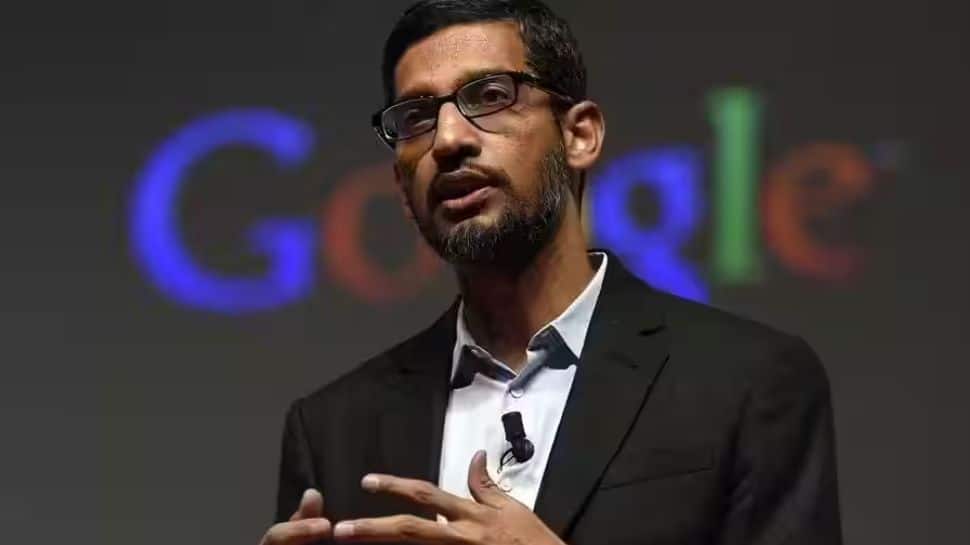
Google Has $75 Billion Capex For AI expansion This Year: Google CEO | Technology News
New Delhi: Sundar Pichai, the CEO of Google, presented a vision for the company’s future at the recent Bloomberg Tech Summit. He highlights that artificial intelligence will not only revolutionise Google’s products but also increase the company’s technical workforce and societal effect. Google’s staggering 75 billion dollars capital expenditure commitment to AI infrastructure was disclosed by Pichai in an interview with Emily Chang. Pichai showed confidence in Google’s ability to expand, despite worries that AI and personalized chatbots could threaten the company’s conventional search business. As proof of Google’s dedication to remaining at the lead of AI innovation, he quoted the introduction of Google AI Pro and the premium Google AI Ultra membership, which provide additional capabilities and early access to experimental features. These services make use of the most recent Gemini models, which now enable new types of virtual agents that may help users with a variety of activities and provide recommendations of higher quality. He also denied that AI will result in widespread layoffs at Google. Pichai argued that by automating repetitive jobs, AI is increasing engineers’ productivity and allowing them to concentrate on creativity and challenging problem-solving. He said that, in contrast to industry trends of downsizing, this productivity improvement will actually drive the expansion of Google’s technical base well into the future. Google, invests more than 50 billion dollar a year in research and development,and is in a strong position to influence how people engage with AI. The company a time when AI will be a true companion that is intricately woven into everyday life. According to Pichai, the company’s future CEO needs to be aware of both the technical aspects of artificial intelligence (AI) and the significant social impact of the products Google develops in order to maintain innovation’s responsibility and inclusivity.

Goodbye PIN Codes! Know All About India’s New Digital Address System, DIGIPIN | Technology News
New Delhi: Imagine if your home address was as smart as your smartphone. In a big push to modernise India’s age-old postal system, the government has introduced DIGIPIN—a new digital address system that aims to replace traditional PIN codes. Launched by the Department of Posts, DIGIPIN uses a unique 10-digit code to precisely identify the exact location of a property, making deliveries, navigation, and verification simpler and smarter than ever before. What Makes DIGIPIN Different? DIGIPIN stands for Digital Postal Index Number. It’s a unique 10-digit code that gives the exact location of a property—unlike traditional PIN codes that cover broad areas. This new system is designed to improve service delivery, especially in remote or hard-to-reach places, by using accurate geographic coordinates to pinpoint addresses. How Does DIGIPIN Work? India has been mapped into tiny square grids, and each grid is assigned a unique 10-digit code based on its exact latitude and longitude. This means your DIGIPIN is like a digital address that points directly to your home’s spot on the map—making it easy to locate with pinpoint accuracy. As per a press release by the Ministry of Communications on May 27, 2025, DIGIPIN is an open-source, geo-coded digital address system built on a grid format. It’s designed to work seamlessly across platforms and services. The aim is to provide “Address-as-a-Service” (AaaS) — a smart solution to manage address data and enable smooth, secure interactions between citizens, government bodies, and private organisations. Why is DIGIPIN Useful? Here’s how DIGIPIN makes everyday services smarter and more efficient: – Improves accuracy: Eliminates confusion caused by similar-sounding or duplicate addresses. – Pinpoints exact location: Uses precise geographic coordinates for better identification of properties. – Boosts logistics and deliveries: Ensures smoother last-mile delivery, especially in rural and remote areas. – Enhances emergency response: Helps locate places quickly during emergencies, saving time and lives. – Supports GIS-based services: Lays the foundation for integrating GIS technology in service delivery across sectors. – Enables secure interactions: Facilitates safe and efficient communication between citizens, government bodies, and private companies. – Cost-effective solution: A smarter, scalable alternative to traditional address systems that works across platforms. How to Find Your DIGIPIN Getting your digital address is simple! Just head over to the official website: https://dac.indiapost.gov.in/mydigipin/home. Here, you can easily find your unique 10-digit DIGIPIN code that accurately marks your exact location.

Nintendo Switch2 India Launch On THIS Date –Check Features And Expected Price
New Delhi: After massive success of Nintendo Switch, the gaming company launched Switch2 on 5 June 2025, for gaming enthusiasts who had been restlessly waiting for the launch of the next generation of switch around the world. Switch2 consoles have gone out of stock globally within a day of its roll out. Priced at $499, Switch 2 comes with some major features upgrade over previous gen Switch. Major Specification of Switch2 Display: Nintendo Switch2 comes with larger 7.9-inch 1080p LCD touchscreen with HDR10 support and a refresh rate of 120Hz. It supports up to 4k resolution at 60Hz with HDR and 1440p at 120Hz. Performance: Nintendo Switch2 is Powered by Nvidia Terga T239 chip with an octa-core ARM CORTEX- A78C CPU AND 12SM Ampere GPU. Switch2 comes with 12GB LPDDR5X RAM AND Faster loading speed. Storage: It comes with 256 GB of internal storage which can be expanded up to 2TB with help of microSD. Controllers: Switch 2 comes with new joy controllers attach magnetically and include mouse-like capabilities allowing sliding across surfaces for precise control, enhancing gameplay experience. Battery Life: Switch 2 can give around 6.5 hours of onscreen time on single charge. Nintendo Switch2 India Launch date While the global launch of Switch2 happned on 5 June, it will only be available in India from 8 June 2025. The price of Switch2 is expected to be somewhere around Rs 58,000 and Rs 65,000. Launched in 2017, Nintendo sold around 150 million units of Switch first gen worldwide as of December 2024. Before switch series Nintendo was struggling due to poor sales of Wii U which resulted in loss of profit and market share. (Written/Edited by Aman Choudhary)

Google DeepMind Working On AI To Simplify Email: CEO Demis Hassabis
New Delhi: During the recent SXSW London event, Demis Hassabis, Nobel laureate and CEO of Google DeepMind, created headlines with his frank remarks about email overflow. Hassabis disclosed that he would pay thousands of dollars monthly just to get freedom from the constant barrage of emails, putting the spotlight on a problem that troubles millions of people around the world. He explained how the endless stream of messages, notifications, and repetitive requests not only wastes time but also leads to a loss of important communication. To get rid of this challenge, Hassabis and his DeepMind team are developing a disruptive artificial intelligence system. This AI is designed to read, understand, and respond to routine emails in a user’s unique writing style, effectively serving as a digital personal assistant. The goal is to automate tedious communication tasks, allowing users to focus on more meaningful work and personal interactions. Hassabis highlights that this technology will also shield users from the attention-seeking algorithms installed by major tech companies, helping people take control over their digital lives. Demis Hassabis is not new to solving complex problems. He is known for leading the development of AlphaFold, an AI system which cracked the 50-year-old challenge of predicting protein structures—a scientific breakthrough that helped him win the 2024 Nobel Prize in Chemistry. Since co-founding DeepMind in 2010, which was later acquired by Google in 2014, Hassabis has kept pushing the boundaries of artificial intelligence. Today, he leads Google’s efforts toward artificial general intelligence (AGI), with a vision to use AI not just for scientific discovery but also to improve everyday life. (Written/Edited by: Aman Choudhary)

Samsung Teases Galaxy Z Fold 7 Ultra Ahead Of Galaxy Unpacked 2025; Check Expected Specs And Price Of Galaxy Z Fold 7 | Technology News
Samsung Galaxy Z Fold 7 Ultra: South Korean Samsung is likely to expand its foldable smartphone lineup this year with the highly anticipated Galaxy Z Fold 7 Ultra, joining the standard Galaxy Z Fold 7, Galaxy Z Flip 7, and the Galaxy Z Flip 7 FE. However, the South Korea-based tech giant recently released a teaser that hints at an “Ultra” version for the foldable device, signalling a significant step forward in design, display size, along with some AI features. The use of Ultra for the Galaxy Fold series will be an intriguing move if it comes through but it could be Samsung’s way of saying get the S25 Ultra features in this form factor. Samsung is widely anticipated to unveil its next-generation foldable devices in July 2025, likely at its annual Galaxy Unpacked event. In addition to the foldables, the company may also launch new Galaxy Watch models and potentially debut its long-rumoured tri-fold device. Samsung drops first Galaxy Z Fold 7 teaser, confirms size and feature improvement pic.twitter.com/xKEi2hGeBe — The Sam #OneUI8 (@Samoneui8) June 4, 2025 Galaxy Z Fold 7 Specifications (Expected) The foldable device is expected to feature a 6.5-inch cover screen and a large 8.2-inch foldable main display, providing an improved experience for multitasking and immersive media consumption. According to the rumours, the device will boast an ultra-thin profile—measuring just 4.54mm when unfolded and around 9mm when folded—making it sleeker than its predecessor, the Galaxy Z Fold 6 smartphone. The battery capacity is likely to remain unchanged at 4,400mAh. Additionally, both the Samsung Galaxy Z Fold 7 and Galaxy Z Flip 7 are anticipated to launch in three colour options and offer at least two storage configurations. As per the Geekbench listing, the Galaxy Z Fold 7 would run on Android 16 and include at least 12GB of RAM. Samsung is expected to pack an overclocked version of the Snapdragon 8 Elite in the new phone, much like the “for Galaxy” versions of Snapdragon chips in previous foldables and the Galaxy S25 series. Samsung Galaxy Z Fold 7 Price In India (Expected) Samsung is expected to launch the Galaxy Z Fold 7 in July, with the base variant featuring 12GB RAM and 256GB storage likely to be priced at around Rs. 1,64,999.
A Gentle Introduction to Word Embedding and Text Vectorization
“I’m feeling blue today” versus “I painted the fence blue.
Encoders and Decoders in Transformer Models
This article is divided into three parts; they are: • Full Transformer Models: Encoder-Decoder Architecture • Encoder-Only Models • Decoder-Only Models The original transformer architecture, introduced in “Attention is All You Need,” combines an encoder and decoder specifically designed for sequence-to-sequence (seq2seq) tasks like machine translation.
Using NotebookLM as Your Machine Learning Study Guide
Learning machine learning can be challenging.
Selecting the Right Feature Engineering Strategy: A Decision Tree Approach
In machine learning model development, feature engineering plays a crucial role since real-world data often comes with noise, missing values, skewed distributions, and even inconsistent formats.