
In this article, you will learn how agentic AI architecture has evolved by mid-2026, including the shift away from orchestrated reasoning loops, the rise of multi-agent swarms, and the standardization of tool protocols through MCP. Topics we will cover include: Why native reasoning models have made complex external orchestration frameworks increasingly redundant. How to design a multi-agent swarm using stateless specialist agents connected through handoff tools. How the Model Context Protocol, persistent memory graphs, and emerging security patterns define the current production landscape. Let’s not waste any more time. Introduction Look back at how we built AI agents just a year ago, and the dominant paradigm was brute-force orchestration. Engineers spent their time hand-crafting complex ReAct (Reasoning and Acting) loops, fighting with brittle prompt chains, and trying to force single, massive language models to juggle planning, tool execution, and context management all at once. Today, in mid-2026, the ecosystem has fractured and specialized. The era of the monolithic, do-everything agent is fading. We’re now working with native reasoning models, standardized tool protocols, and multi-agent architectures, often called “swarms.” As foundation models have integrated “System 2” thinking directly into their architectures, the role of the AI engineer has shifted from prompting agents to designing the infrastructure in which specialized agents communicate. This tutorial breaks down the current state of agentic AI architecture, covers the three major shifts defining production systems today, and walks through how to design a modern agent swarm. 1. Transitioning Away from Orchestrated Loops Let’s start at the layer that has changed most dramatically: how agents actually think. Previously, in The Machine Learning Practitioner’s Guide to Agentic AI Systems, we explored patterns like Plan-and-Execute and Reflexion. These were external loops, where we used code to force a model to think step-by-step, critique its own output, and try again. Today, foundation models handle test-time compute natively. Models now generate hidden reasoning tokens, explore multiple solution branches, and self-correct before outputting a single word to the user. The scaffolding we built to simulate reflection is becoming redundant. What this means for your architecture: you no longer need to build complex orchestration frameworks just to get an agent to plan. If you’re still using LangChain or LlamaIndex to force a model to reflect on its own errors, you may be adding latency and token overhead for something the model now handles more naturally. The orchestration layer should instead focus on routing, state management, and environment execution. The agent’s cognitive loop is handled by the model; your job is to build the sandbox it operates in. With that cognitive overhead lifted, we can put engineering energy somewhere more valuable: decomposing work across multiple specialized agents. 2. Building Agent Swarms (Multi-Agent Microservices) Now that models handle their own reasoning, the question becomes: what should a single agent actually be responsible for? The answer production teams have landed on is: as little as possible. As argued in Beyond Giant Models: Why AI Orchestration Is the New Architecture, attaching 50 tools to a single large model creates a bottleneck. A growing number of production teams have moved toward agentic swarms — a collection of smaller, highly specialized agents that communicate via a standardized protocol. Instead of one agent with 50 tools, you have: A Triage Agent that understands the user’s intent and routes requests. A SQL Agent that only knows your database schema and has one tool: execute_query. A Python Agent running in an isolated container that handles data transformations. You might wonder whether splitting a monolithic agent into many smaller ones just moves the complexity around rather than reducing it. Here’s the key insight: the complexity doesn’t disappear, but it becomes manageable, testable, and replaceable in a way it never was before. Building a Basic Swarm Pattern The following is illustrative pseudo-code. It is not runnable as written. There is no swarm_framework package. For real implementations, see the OpenAI Agents SDK or LangGraph Swarm: from swarm_framework import Agent, Swarm, TransferCommand # Define the triage entry point triage_agent = Agent( name=”Triage”, system_prompt=”Route the request to the correct specialist agent.”, tools=[transfer_to_sql, transfer_to_analyst] ) from swarm_framework import Agent, Swarm, TransferCommand # Define the triage entry point triage_agent = Agent( name=“Triage”, system_prompt=“Route the request to the correct specialist agent.”, tools=[transfer_to_sql, transfer_to_analyst] ) # Define scoped specialist agents sql_agent = Agent( name=”Data Fetcher”, system_prompt=”You write and execute read-only PostgreSQL queries.”, tools=[execute_read_query] ) analysis_agent = Agent( name=”Data Analyst”, system_prompt=”You analyze datasets using Python pandas and generate insights.”, tools=[run_python_sandbox] ) # Define scoped specialist agents sql_agent = Agent( name=“Data Fetcher”, system_prompt=“You write and execute read-only PostgreSQL queries.”, tools=[execute_read_query] ) analysis_agent = Agent( name=“Data Analyst”, system_prompt=“You analyze datasets using Python pandas and generate insights.”, tools=[run_python_sandbox] ) # Define the handoff routing logic def transfer_to_analyst(context_variables): “””Call this when raw data has been fetched and needs analysis.””” return TransferCommand(target_agent=analysis_agent, context=context_variables) sql_agent.add_tool(transfer_to_analyst) # Initialize and run the swarm enterprise_swarm = Swarm( starting_agent=triage_agent, agents=[triage_agent, sql_agent, analysis_agent] ) response = enterprise_swarm.run( user_input=”How did our Q2 churn rate correlate with support ticket volume?” ) # Define the handoff routing logic def transfer_to_analyst(context_variables): “”“Call this when raw data has been fetched and needs analysis.”“” return TransferCommand(target_agent=analysis_agent, context=context_variables) sql_agent.add_tool(transfer_to_analyst) # Initialize and run the swarm enterprise_swarm = Swarm( starting_agent=triage_agent, agents=[triage_agent, sql_agent, analysis_agent] ) response = enterprise_swarm.run( user_input=“How did our Q2 churn rate correlate with support ticket volume?” ) Notice the architecture: individual agents are stateless per call, and orchestration relies on handoff tools. When the SQL agent finishes fetching data, it calls a tool to transfer control and the data context to the Analyst agent. This keeps context windows lean and lets you use cheaper, faster models (like Qwen3 or current-generation small language models) for individual nodes, reserving larger models for routing and synthesis. This pattern — stateless-per-agent but stateful-across-the-system — becomes even more important once you factor in how tools are connected. That’s where standardization has made a real difference. 3. The Standardization of Agency: Model Context Protocol Building a swarm is one thing; connecting it to the real-world systems
Access Denied
Access Denied You don’t have permission to access “http://zeenews.india.com/technology/explained-why-qr-codes-always-have-3-corner-squares-and-how-they-work-3064077.html” on this server. Reference #18.eff43717.1785589670.215f249a https://errors.edgesuite.net/18.eff43717.1785589670.215f249a
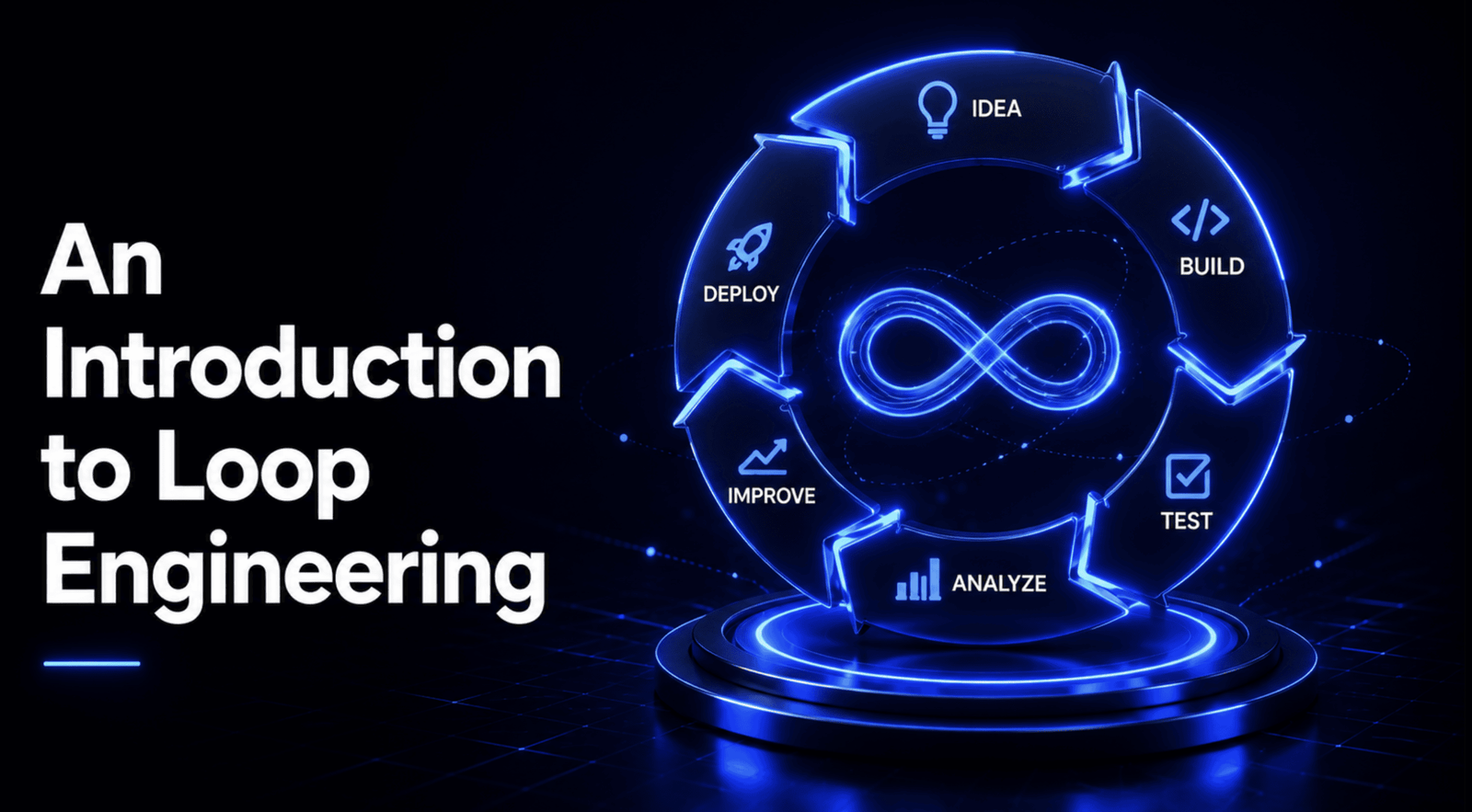
An Introduction to Loop Engineering
In this article, you will learn what loop engineering is, where it came from, and how to design autonomous AI agent cycles that run reliably without constant human supervision. Topics we will cover include: The origin and definition of loop engineering, and how it fits into the broader progression from prompt engineering to context engineering to harness engineering. The anatomy of a reliable loop, including its essential components, common patterns, and the pseudocode skeleton that underlies nearly every production implementation today. The three hardest problems in loop engineering — context management, termination, and verification — and the failure modes that result from getting any one of them wrong. Introduction A few months ago, a developer’s evening looked like this: open the coding agent, type an instruction, wait, read what came back, paste the error into the chat, wait again, nudge it in a slightly different direction, and repeat until the feature actually worked or until it was time to sleep. The agent was doing real work, but the human was still holding it the entire time, one turn after another, like driving a car that needs a hand on the wheel every three seconds. That evening looks different now for a growing number of engineers. They write one instruction, close the laptop, and come back the next morning to a draft pull request, a triaged issue list, or a green CI build, along with a readable trail of what the agent tried and why. Nobody stood over it, typing the next prompt. What changed wasn’t the model. It was what got built around the model. The name that stuck for that shift is loop engineering, and it went from a niche phrase to something people were debating on every timeline within about a week in June 2026. This article walks through where the term came from, the research it actually descends from, what a loop is made of, and how to build a small one of your own. What Loop Engineering Actually Means Loop engineering is the practice of designing the system that prompts, checks, remembers, and re-runs an AI agent, instead of a person doing all of that by hand, turn by turn. The unit of work stops being a single prompt or even a single conversation. It becomes a loop: a repeating cycle where the model takes an action, gets feedback from its environment, uses that feedback to decide what to do next, and keeps going until a real, checkable condition is met. It helps to hold this next to the thing it’s replacing. A chain runs in a fixed order: step A leads to step B, which leads to step C, and that’s it. A loop is dynamic. The agent might go from A to B, discover B didn’t work, revise its approach, and only then move to C, or it might loop back to A entirely. MindStudio’s breakdown of the concept puts it plainly: a loop continues until a task is genuinely complete, a stopping condition triggers, or the agent determines it can’t go any further. That’s a fundamentally different shape of work than “ask once, get an answer, copy it out.” The other framing worth sitting with is the “recursive goal” idea. Instead of typing each next step, you define a purpose — something like “make the test suite pass” or “triage every open issue and draft fixes for the straightforward ones” — and the agent iterates on its own toward that purpose: inspect the code, make a change, run a check, read the outcome, decide the next move. The skill shifts from writing one very good sentence to designing a cycle you trust enough to walk away from. How This Became a Term Almost Overnight It’s worth being specific about the timeline here, because the speed is part of the story. On June 7, 2026, developer Peter Steinberger, known for the OpenClaw agent project, posted on X that the relevant skill had already changed: you shouldn’t be prompting coding agents anymore, you should be designing the loops that prompt them for you. That post reportedly crossed 6.5 million views within days and dominated agent-focused conversation for the following week. The very next day, Google engineer and author Addy Osmani published an essay titled simply “Loop Engineering” that took Steinberger’s claim and gave it an actual anatomy: automations, worktrees, skills, connectors, and sub-agents, plus a sixth piece underneath all of it — external memory. That essay is what turned a viral take into a vocabulary that other people could build on and argue about. It wasn’t only outsiders making this case. Boris Cherny, who leads Claude Code at Anthropic, is quoted by Osmani as saying, “I don’t prompt Claude anymore. I have loops running that prompt Claude, and figuring out what to do. My job is to write loops.” When the person building one of the most-used coding agents on the market says he’s stopped prompting it directly, the idea has clearly moved past a fringe opinion. The timing makes sense once you look at what changed underneath it. By mid-2026, coding agents had gotten good enough to run unattended for genuinely long stretches, recovering from their own mistakes along the way, rather than needing correction every second or third step. Once a single agent run can last an hour and touch dozens of files, the bottleneck isn’t the sharpness of your prompt anymore. It’s whether you’ve built a cycle that keeps the agent productive, checked, and pointed at the right goal for the whole hour — including the part where nobody’s watching. Where It Fits: Prompt, Context, Harness, Loop Loop engineering didn’t appear out of nowhere, and it helps to see it as the newest layer in a steady progression outward, each one wrapping the previous layer rather than replacing it. Prompt engineering came first, roughly 2022 through 2024. The skill was wording: giving the model a role, breaking a task into steps, providing examples, and asking it to reason step by step.
Access Denied
Access Denied You don’t have permission to access “http://zeenews.india.com/technology/russia-charges-telegram-founder-pavel-durov-with-facilitating-terrorism-issues-international-arrest-warrant-3063663.html” on this server. Reference #18.eff43717.1785482992.18ca4e28 https://errors.edgesuite.net/18.eff43717.1785482992.18ca4e28
5 Architectural Patterns for Persistent Memory and State in AI Agents
Memory & State For AI Agents Building an AI agent can be tricky. Keeping it on track over a six-month deployment is incredibly hard. LLMs are stateless by design. Every call starts from scratch, with no memory of what came before. Early agent developers worked around this by dumping the entire conversation history into the context window and hoping for the best. By now, we know that approach breaks down fast. Latency spikes, and the model’s ability to actually use what’s in context degrades: relevant facts get buried, and when two versions of a fact are both in the window, there’s no guarantee it picks the current one. Token costs balloon too, though prompt caching has softened that blow for stable prefixes. The fix isn’t a bigger context window; it’s treating memory and state as deliberate architectural decisions, not afterthoughts. Before getting into the patterns, it’s worth being precise about what those two terms mean, because they’re easy to conflate. State is a snapshot. It’s everything the agent currently knows about a task right now: what step it’s on, what the last tool call returned, what variables it’s tracking. Think of it as a whiteboard. It gets updated constantly as the task progresses, and when the session ends it’s gone, unless you deliberately persist it, which is what Pattern 2 is about. Memory is the mechanism that carries information across a boundary: the next turn, the next session, or a completely separate agent running later. Working memory is the shortest-horizon case (turn to turn); semantic and episodic memory span sessions. The two interact in a specific cycle. At the start of a task, the agent reads from memory to build its initial state: loading relevant facts, applicable behavioral rules, and records of past failures on similar tasks. During the task, the agent updates state continuously as it works. As the task progresses and concludes, it writes select pieces of that state back to memory so the next turn or session can benefit from what just happened. Memory feeds into state; state feeds back into memory. This distinction matters because the failure modes are different. A broken state means the agent loses track of what it’s doing mid-task. Broken memory means the agent can’t learn, can’t personalize, and treats every interaction like a blank slate. Both failures are common in production systems, and they require different fixes. The five patterns below address both: Patterns 1 and 2 manage state; 3 and 4 build the memory layer that persists across sessions; and 5 constrains both. 1. The In-Context Working Buffer (Short-Term Execution) The Concept Working memory holds the ephemeral state of the current session: the active prompt, recent conversational turns, and live tool outputs. Think of it as the agent’s short-term scratch space, flushed when the session ends. How It Works Rather than letting the message list grow indefinitely, the working buffer acts as a sliding window. The agent writes immediate reasoning steps to a scratchpad. As the buffer approaches a token limit, a summarization process compresses older turns into a dense background summary, keeping the logical conclusions and dropping the raw tool outputs. When the task wraps up, the buffer is flushed: anything worth keeping gets extracted to long-term stores, and the rest is discarded. Worth noting: that mid-conversation summarization may rewrite the prompt prefix, which invalidates the KV cache and creates a latency spike on the very next call. It’s a real tradeoff to design around. When To Use It Every agent needs this. It’s the baseline for handling multi-step reasoning within a session. 2. Execution Checkpointing (Fault Tolerance & Pausing) Once you have a strategy for managing what the agent holds in memory during a session, the next question is what happens when that session is interrupted. The Concept Long-running tasks fail. An agent might time out, hit a rate limit, or pause waiting for a human to approve an action. Checkpointing saves the agent’s workflow state to a database so execution can resume exactly where it stopped, without re-running work that already completed. How It Works Graph-based frameworks model workflows as nodes and edges. After each step, the framework persists the workflow state, including variables, history, and current position, to a durable store like PostgreSQL or SQLite. If the agent crashes, it reloads the last checkpoint and picks up from there. One thing practitioners regularly get burned by: resumption doesn’t give you exactly-once semantics. If a node partially executed before crashing (say it sent an email or wrote a database row), it may execute again on resume. Side-effecting nodes need to be idempotent. Also keep in mind that open file handles and client objects can’t be checkpointed, which limits what you can safely put in state. When To Use It Essential for human-in-the-loop systems, regulated workflows where actions need approval, and any long-horizon task susceptible to network failures. 3. Semantic Memory (Cross-Session Knowledge) Checkpointing handles continuity within a task. But what about knowledge that needs to survive across entirely separate sessions? The Concept Semantic memory is what the agent knows: facts, user preferences, and domain knowledge that persist across independent sessions. How It Works Facts are extracted asynchronously and stored in an external database, usually a vector store with metadata filtering, sometimes paired with a knowledge graph where relationship traversal genuinely matters. When a query comes in, the system retrieves the most relevant facts and injects them into the prompt before the model sees it. Note that extraction may cost an additional LLM call or more, depending on architecture, and often one per turn. One conflict to design around: if a user mentions “I use Postgres” in March and “we migrated to Snowflake” in July, both facts end up in the store. Retrieval might surface either one. Fact invalidation, through recency weighting, supersession logic, or TTLs, is what actually solves the stale fact problem raised at the top. Also worth calling out explicitly: credentials and secrets are not semantic memory. Don’t store API keys in a retrievable
Access Denied
Access Denied You don’t have permission to access “http://zeenews.india.com/technology/apple-crosses-usd-5-trillion-market-cap-on-tuesday-trading-becomes-second-company-to-achieve-milestone-3063671.html” on this server. Reference #18.c4f43717.1785430384.1a86ce90 https://errors.edgesuite.net/18.c4f43717.1785430384.1a86ce90
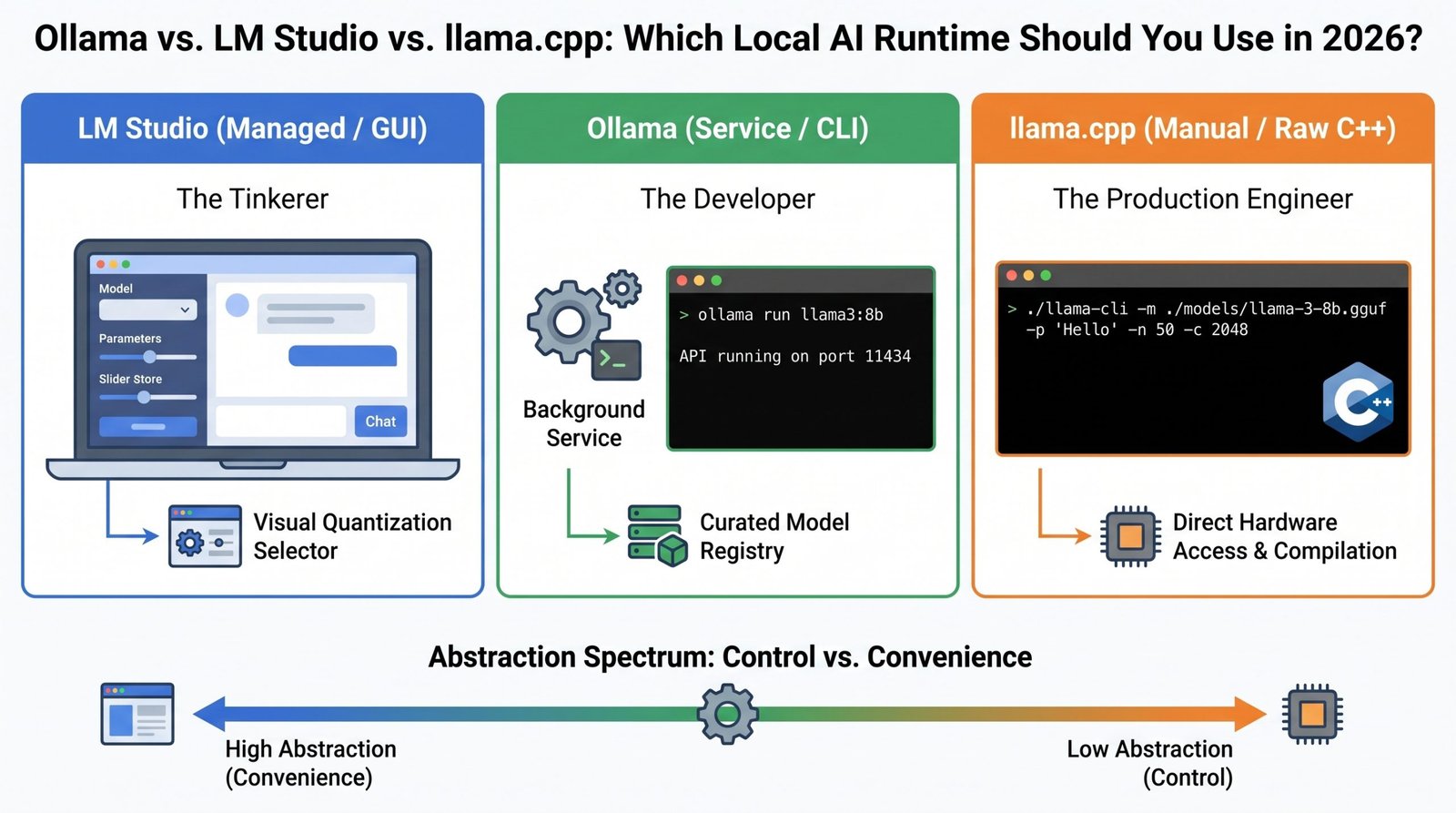
Ollama vs. LM Studio vs. llama.cpp: Which Local AI Runtime Should You Use in 2026?
In this article, you will learn how Ollama, LM Studio, and llama.cpp differ across the dimensions that matter most to practitioners, and how to choose the right one for your workflow. Topics we will cover include: How the three runtimes compare across five key axes: interface, API compatibility, quantization control, model discovery, and update cadence. How to match your working style to the right tool using three practitioner personas. The natural progression most practitioners follow as their needs grow more demanding. Introduction In our Introduction to Small Language Models, we covered why local, small-footprint AI is changing the development stack. We followed that up with a look at the most capable hardware-friendly models in our Top 7 Small Language Models You Can Run on a Laptop. Then we walked through the fastest way to get inference running locally in Run a Local AI Model in 15 Minutes: Your First Ollama Setup. By now, you probably have a 3B or 8B parameter model running quietly in your terminal. Spend enough time in the local AI ecosystem, though, and you’ll notice Ollama isn’t the only option competing for your hard drive. Three tools dominate the local AI runtime landscape: Ollama, LM Studio, and llama.cpp. Choosing between them can feel like guesswork, but all three are running the same core inference engine under the hood. What actually differs is developer experience, abstraction level, and how much control you want over the process. To make that concrete, let’s start by looking at each tool doing the exact same job. The Code Contrast: One Task, Three Abstractions The fastest way to understand how these tools differ in philosophy is to see them side by side. Here’s the exact same task — asking a local Llama 3.2 model to say “Hello” — across all three runtimes. # ————————————————————— # The Same Task: Asking a local Llama 3.2 3B model to say “Hello” # ————————————————————— # 1. LM Studio (Assuming the GUI is open and the local server is toggled ON) curl http://localhost:1234/v1/chat/completions \ -H “Content-Type: application/json” \ -d ‘{“model”: “llama-3.2-3b”, “messages”: [{“role”: “user”, “content”: “Hello”}]}’ # 2. Ollama (Via its dedicated, background-daemon CLI) ollama run llama3.2 “Hello” # 3. llama.cpp (Via the raw, compiled C++ binary in your terminal) ./llama-cli -m ./models/llama-3.2-3b-q4_k_m.gguf -p “Hello” -n 50 -c 2048 -ngl 33 # ————————————————————— # The Same Task: Asking a local Llama 3.2 3B model to say “Hello” # ————————————————————— # 1. LM Studio (Assuming the GUI is open and the local server is toggled ON) curl http://localhost:1234/v1/chat/completions \ –H “Content-Type: application/json” \ –d ‘{“model”: “llama-3.2-3b”, “messages”: [{“role”: “user”, “content”: “Hello”}]}’ # 2. Ollama (Via its dedicated, background-daemon CLI) ollama run llama3.2 “Hello” # 3. llama.cpp (Via the raw, compiled C++ binary in your terminal) ./llama–cli –m ./models/llama–3.2–3b–q4_k_m.gguf –p “Hello” –n 50 –c 2048 –ngl 33 Notice the progression. LM Studio wraps everything in a graphical interface and exposes a friendly API endpoint. Ollama tucks the complex parameters behind a single CLI command. And llama.cpp puts everything on the table: model file path, token prediction limit (-n), context window size (-c), and how many neural network layers to offload to your GPU (-ngl), all of which you define explicitly. That spectrum from “managed” to “manual” runs through every dimension of how these tools work. Let’s break each one down. The 5 Axes of Practitioner Comparison Marketing bullet points don’t tell you much about how a tool actually feels when you’re deep in a development cycle. Here’s how the three runtimes compare across the dimensions practitioners actually notice. 1. GUI vs. CLI (The Interface Layer) LM Studio is a full desktop application built on Electron/React. It includes a ChatGPT-style chat interface, a visual model browser, and sliders for adjusting inference parameters. Ollama runs as a silent background service. You interact with it through the command line or HTTP requests. It’s designed to stay out of your way. llama.cpp is a raw CLI. There’s no background service unless you explicitly compile and run the llama-server binary, and every action requires typing out execution flags by hand. 2. OpenAI API Compatibility (The Integration Layer) The interface layer matters for day-to-day use, but the integration layer determines whether a tool fits into your existing codebase. When you’re building applications, you want local models to drop in as a replacement for OpenAI’s cloud API without rewriting your existing logic. Both Ollama (port 11434) and LM Studio (port 1234) expose /v1/chat/completions endpoints out of the box. Change the base URL in your Python or Node.js SDK and your app thinks it’s talking to GPT-4. llama.cpp also provides an OpenAI-compatible server, but getting it running requires manual shell scripting and a solid grasp of the available parameters. 3. Quantization Control (The Hardware Layer) Once you’ve sorted out how you’ll connect to the model, the next question is how well it fits on your machine. Quantization shrinks large models to laptop-friendly sizes by reducing the precision of their internal weights, and the three runtimes handle this very differently. Ollama manages quantization for you. Pull a model and it defaults to a well-tuned 4-bit quantization. If you want something different, you append a specific tag via the CLI (e.g. :8b-instruct-q8_0). LM Studio stands out here: it shows a visual list of every available quantization for a given model, with a color-coded indicator telling you whether it’ll fit in your RAM before you commit to the download. llama.cpp gives you full control. You download the exact .gguf file you want, and you have access to the underlying Python scripts to quantize raw PyTorch tensors into custom formats yourself. 4. Model Library Breadth (The Discovery Layer) Control over quantization is only useful if you can find the models you want to run. Here’s how each tool handles discovery. Ollama maintains a curated central registry, similar in feel to Docker Hub. It’s clean and reliable, but it can lag a few days behind major model releases. LM Studio has a built-in Hugging Face
Access Denied
Access Denied You don’t have permission to access “http://zeenews.india.com/technology/indias-mobile-phone-exports-jump-165-fold-in-a-decade-to-rs-2-59-lakh-crore-govt-3063677.html” on this server. Reference #18.c4f43717.1785379868.1446ada6 https://errors.edgesuite.net/18.c4f43717.1785379868.1446ada6
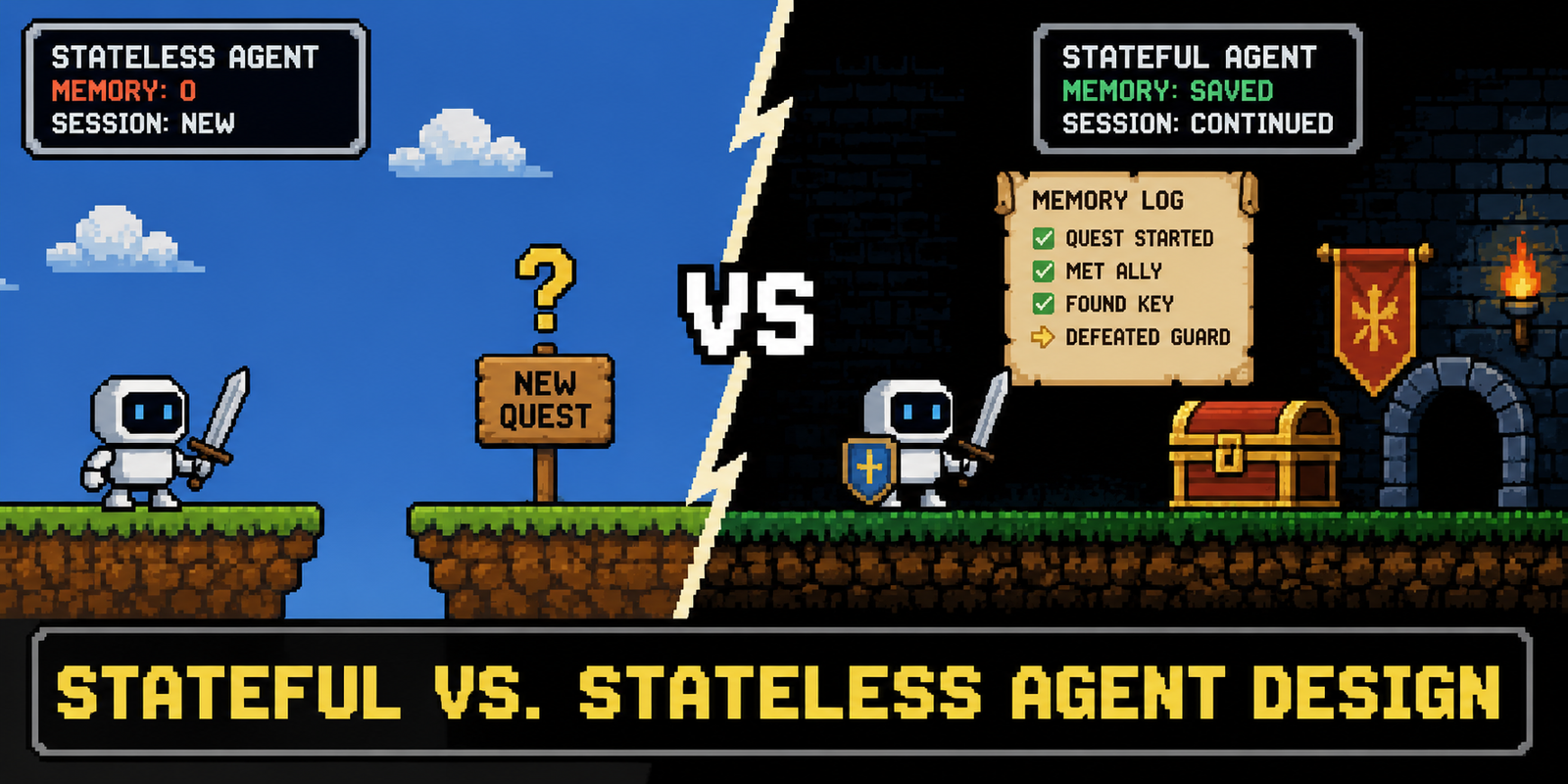
Stateful vs. Stateless Agent Design: Tradeoffs for Scalable Agentic Systems
In this article, you will learn how an agent’s approach to managing state — stateless or stateful — shapes both its implementation and the deployment architecture built around it. Topics we will cover include: What separates stateless from stateful agents, and the tradeoffs each design imposes on scaling. How to implement a stateless agent that depends entirely on the client to supply conversation history. How to implement a stateful agent that manages its own memory through a database layer. Introduction A previous article laid out a comprehensive architectural roadmap for AI agent deployment, examining the infrastructure needed to bring agents into production settings. As a follow-up, we now turn to a fundamental, practical question that has to be answered before any load balancer is configured: where does the agent’s memory reside? Agents may handle their state (the context gained so far and the conversation history) in different ways, and this code-level decision can significantly impact the entire deployment architecture. This article breaks down the two primary paradigms for handling an agent’s state: stateless and stateful design. A simplified version of a real-world implementation, using open language models served through the fast Groq API, will illustrate these ideas in practice. Initial Setup If this is the first time you are using language models from Groq in a Python program, you’ll need to install the required library: pip install groq. After that, we import it and set our Groq API key in the code below: import os from groq import Groq # Get an API key in https://console.groq.com/keys and set it here os.environ[“GROQ_API_KEY”] = “PASTE_YOUR_GROQ_API_KEY_HERE” # Initializing the client client = Groq() # Using an efficient model from Groq: Llama 3.1 8B Instant MODEL_ID = “llama-3.1-8b-instant” import os from groq import Groq # Get an API key in https://console.groq.com/keys and set it here os.environ[“GROQ_API_KEY”] = “PASTE_YOUR_GROQ_API_KEY_HERE” # Initializing the client client = Groq() # Using an efficient model from Groq: Llama 3.1 8B Instant MODEL_ID = “llama-3.1-8b-instant” An important setup decision here is the choice of a specific model. llama-3.1-8b-instant is a highly cost-efficient model that is, at the time of writing, generously supported on Groq’s 2026 free tier: it allows up to 14,400 requests per day. That makes it an ideal choice for illustrating the stateless and stateful agent paradigms below. Stateless Agents: Fire and Forget Stateless agents treat each request as completely isolated and independent. The agent reads the user prompt, invokes the LLM inference engine, and delivers the output. Once that execution cycle ends, everything is forgotten. The Tradeoff Architectures based on stateless agents can be scaled horizontally with remarkable ease. Since no user memory is stored on a backend server, incoming requests can be forwarded to any available instance. There is, however, an important limitation in multi-turn conversations: the frontend must re-send the whole conversation history alongside every new request. As a result, the context window grows with a snowballing effect, quickly driving up token usage. Illustrative Example This runnable code illustrates, through a basic scenario, how a stateless agent typically interacts with a Groq language model. First, we define a stateless_agent function that emulates an agent’s interaction with our chosen model. Importantly, no state or memory of the conversation is kept internally. Instead, the previous conversation history can optionally be passed in as a parameter and appended to the current prompt. The API call to the Groq model takes place in client.chat.completions.create(). def stateless_agent(prompt: str, provided_history: list = None) -> str: “”” The agent relies completely on the client to provide context. It retains no information from past interactions in local memory. “”” # Initializing with a system prompt messages = [{“role”: “system”, “content”: “You are a helpful, concise assistant.”}] # Appending whatever history the client provided if provided_history: messages.extend(provided_history) # Appending the new prompt messages.append({“role”: “user”, “content”: prompt}) # The LLM processes the entire chain of messages response = client.chat.completions.create( model=MODEL_ID, messages=messages, max_tokens=100 ) return response.choices[0].message.content.strip() 1 2 3 4 5 6 7 8 9 10 11 12 13 14 15 16 17 18 19 20 21 22 23 def stateless_agent(prompt: str, provided_history: list = None) -> str: “”“ The agent relies completely on the client to provide context. It retains no information from past interactions in local memory. ““” # Initializing with a system prompt messages = [{“role”: “system”, “content”: “You are a helpful, concise assistant.”}] # Appending whatever history the client provided if provided_history: messages.extend(provided_history) # Appending the new prompt messages.append({“role”: “user”, “content”: prompt}) # The LLM processes the entire chain of messages response = client.chat.completions.create( model=MODEL_ID, messages=messages, max_tokens=100 ) return response.choices[0].message.content.strip() To understand the limitations of a stateless agent, we simulate a simple user-model conversation through it: # — Testing the Stateless Agent — print(“— Turn 1 —“) prompt_1 = “Hi, my name is Alice and I am learning about API infrastructure.” response_1 = stateless_agent(prompt_1) print(f”Agent: {response_1}”) print(“\n— Turn 2 (Without Client Context) —“) # The agent fails here because it retained no memory of Turn 1 prompt_2 = “What is my name and what am I learning about?” response_2 = stateless_agent(prompt_2) print(f”Agent: {response_2}”) print(“\n— Turn 2 (With Client Context) —“) # The frontend MUST inject the history into the payload for the agent to succeed frontend_payload = [ {“role”: “user”, “content”: prompt_1}, {“role”: “assistant”, “content”: response_1} ] response_3 = stateless_agent(prompt_2, provided_history=frontend_payload) print(f”Agent: {response_3}”) 1 2 3 4 5 6 7 8 9 10 11 12 13 14 15 16 17 18 19 20 21 # — Testing the Stateless Agent — print(“— Turn 1 —“) prompt_1 = “Hi, my name is Alice and I am learning about API infrastructure.” response_1 = stateless_agent(prompt_1) print(f“Agent: {response_1}”) print(“\n— Turn 2 (Without Client Context) —“) # The agent fails here because it retained no memory of Turn 1 prompt_2 = “What is my name and what am I learning about?” response_2 = stateless_agent(prompt_2) print(f“Agent: {response_2}”) print(“\n— Turn 2 (With Client Context) —“) # The frontend
Access Denied
Access Denied You don’t have permission to access “http://zeenews.india.com/technology/iphone-17-series-accounted-for-44-pc-of-apples-india-shipments-in-q2-2026-3062472.html” on this server. Reference #18.c4f43717.1784726804.76c430f8 https://errors.edgesuite.net/18.c4f43717.1784726804.76c430f8