
Google Photos AI Upgrade: Google Photos is rolling out free artificial intelligence tools that turn your old memories into artistic creations. The popular service, with over 1.5 billion users globally, announced on Wednesday that it would incorporate AI-driven tools to allow users to experiment with their photo memories. With this tool, users will be able to turn photos into videos and remix photos into various styles, such as anime or 3D animations. In recent months, the company has introduced a range of Gemini-powered features for users and launched video AI tools such as Veo 3, which was unveiled at the I/O 2025 event in May. Photo-To-Video Feature Google’s Veo 2 model now powers a photo-to-video feature that lets users transform still images into six-second video clips. This function is akin to tools already seen in applications like Gemini and YouTube. Users can choose between prompts such as “Subtle movements” or “I’m feeling lucky” to transform their selected photos into six-second video clips. The feature is currently rolling out to Android and iOS users in the United States. Google Photos Remix Feature Adding further, Google Photos is getting a new Remix feature, powered by the Imagen AI model. It lets users quickly change the style of any photo from their gallery. The feature will roll out in the US over the next few weeks on Android and iOS devices. To keep things clear, all AI-made images will include a SynthID digital watermark. However, Google says these features are still experimental, and user feedback will help shape their future. Users can give a thumbs-up or thumbs-down to show if they liked the AI results, helping Google improve the tools over time. This input will assist Google in optimising the tools and improving the user experience. New Create Tab Furthermore, a new Create tab is coming soon to the bottom bar in Google Photos, next to Photos, Collections, and Search. It will let you easily make collages, highlight videos, and more. The tab will roll out in the US next month. As Google Photos continues to evolve, these updates are expected to draw interest from both casual users and enthusiasts who enjoy exploring creative possibilities with their digital media.
Google Unveils Key Initiatives To Boost India’s AI Capabilities At I/O Connect 2025 | Technology News
Bengaluru: Google unveiled a range of initiatives aimed at propelling India’s AI capabilities and empowering developers at Google I/O Connect India 2025 in Bengaluru on Wednesday. During the event, the key announcement was the localisation of onshore processing for Gemini 2.5 Flash, enabling faster, low-latency AI performance for Indian developers—especially in regulated sectors such as healthcare, finance, and governance. “Indian developers are literally writing the next chapter of India’s success story, using AI capabilities to build real-world applications that are reaching millions of businesses and people across India and the world,” said Manish Gupta, Senior Director for India and APAC at Google DeepMind. The company also emphasised its continued commitment to India’s developer ecosystem, revealing that the Play and Android platforms contributed ₹4 lakh crore in revenue and generated 35 lakh jobs in 2024. Google further introduced agentic AI tools and optimised templates in Firebase Studio, allowing developers to build and deploy full-stack AI applications more quickly and efficiently. In a major move for mobile commerce, Google announced expanded access to over 250 million mapped places globally and launched India-specific pricing for Google Maps UI components. Additionally, AI-powered summaries in the Places API will help developers create location-based services tailored specifically for Indian users. To further India’s AI ambitions, Google is collaborating with three India AI Mission startups—Sarvam, Soket AI, and Gnani—on Make-in-India AI models based on Gemma. Sarvam’s recent model, “Sarvam-Translate,” exemplifies this homegrown innovation. In partnership with IIT Bombay’s BharatGen, Google is also advancing ASR (Automatic Speech Recognition) and TTS (Text-to-Speech) models for Indic languages. To support India’s thriving game development community, Google launched the ‘Google Play x Unity Game Developer Training’ program, in collaboration with Unity and GDAI. Targeted at 500 Indian developers initially, the program offers over 30 hours of specialised training across various game development roles. Highlighting grassroots innovation, the Gen AI Exchange Hackathon encouraged developers to apply their AI skills to real-world challenges. During the event, startups such as Sarvam, InVideo, Glance, and Nykaa showcased impactful solutions built using Google’s AI models.

Google Generated Rs 4 Lakh Cr App Revenue, Fostered Developer Jobs In India In 2024: Report | Technology News
Bengaluru: Google has generated Rs 4 lakh crore in app revenue in India, and significantly contributed towards developer jobs in the country in 2024, the tech giant said on Wednesday. Citing data from Public First, an economics, policy, and opinion research consultancy, the tech giant lauded Indian developers and startups shaping AI use with Google. “Based on third-party evaluations, the Google Play and Android ecosystem generated Rs 4 lakh crore in revenue for app publishers and the wider economy in India in 2024,” Google said in a blog post. The ecosystem led to the creation of 35 lakh direct, indirect, and spillover jobs in the country, the tech giant said. “The Indian ecosystem comprises the second largest number of active developers on Google Play across the world, contributing over 10 lakh developer jobs in 2024,” it added. The ecosystem played an important role in shaping the impact and inclusiveness of India’s digital economy. “Indian developers are literally writing the next chapter of India’s success story, using AI capabilities to build real-world applications that are reaching millions of businesses and people across India and the world,” said Dr. Manish Gupta, Senior Director for India and APAC at Google DeepMind. “We’re giving India the best tools, the most open platforms, and the strongest support to build boldly for the world, fostering a profound ‘AI Productivity Leap’ across businesses and startups,” added Preeti Lobana, Country Manager, Google India. To further support the Indian developer and startup ecosystem, the tech giant announced several initiatives at Google I/O Connect India 2025, held in Bengaluru — including its high-performance Gemini 2.5 Flash model, new Agentic AI tools in Firebase Studio, and a new training programme in partnership with Unity, one of the world’s leading gaming engine platforms. It mentioned collaborations with three India AI Mission startups — Sarvam, Soket AI, and Gnani — in building innovative solutions toward the development of the country’s Make-in-India AI models. The tech giant also announced measures expanding the availability of fresh and accurate information in Google Maps, comprising over 250 million places worldwide, enabling developers to build better generative AI features.
India’s Mobile Exports Jump From Rs 1,500 Cr To Rs 2 Lakh Cr In Decade: IT Minister | Technology News
New Delhi: India’s mobile phone exports have surged 127 times over the past decade, rising from Rs 1,500 crore to Rs 2 lakh crore, Union Minister of State for Electronics and Information Technology, Jitin Prasada, informed the Lok Sabha in a written reply on Wednesday. The minister attributed this unprecedented growth in mobile manufacturing to the Production-Linked Incentive (PLI) scheme. Over the last ten years, mobile production in India has witnessed a 28-fold increase, growing from ₹18,000 crore to ₹5.45 lakh crore. Under the aegis of the National Policy on Electronics (NPE) 2019, the Ministry of Electronics and Information Technology (MeitY) had notified the Production Linked Incentive (PLI) Scheme for Large-Scale Electronics Manufacturing (LSEM) and the PLI Scheme for IT Hardware. “The PLI Scheme for Large-Scale Electronics Manufacturing has significantly impacted the mobile manufacturing sector in India, particularly in transforming the country from a net importer to a net exporter of mobile phones. Bharat is now the second-largest mobile manufacturing country in the world,” the minister stated in his written reply. As of June 2025, the PLI Scheme for Large-Scale Electronics Manufacturing has attracted a cumulative investment of ₹12,390 crore, led to a cumulative production of ₹8,44,752 crore, exports worth ₹4,65,809 crore, and created 1,30,330 direct jobs. Meanwhile, the PLI Scheme 2.0 for IT Hardware has attracted a cumulative investment of ₹717.13 crore, resulted in cumulative production worth ₹12,195.84 crore, and generated 5,056 direct jobs as of June 2025. Total Foreign Direct Investment (FDI) in the electronics manufacturing sector over the last five years (since 2020–21) stands at USD 4,071 million, of which USD 2,802 million has been contributed by MeitY PLI beneficiaries. As part of its ‘Atmanirbhar Bharat’ and ‘Make in India’ initiatives, the government launched PLI schemes across several sectors in 2020 to make Indian manufacturers globally competitive, attract investments, boost exports, integrate India into the global supply chain, and reduce import dependency.

WhatsApp Is Replacing Native Windows App With Web-Based Version- Details Here | Technology News
New Delhi: WhatsApp, the instant messaging platform, is reportedly introducing a significant update for Windows users. Meta is replacing the native WhatsApp app on Windows with a web-based version. It is now available on the Microsoft Store. This marks a shift from the standalone desktop app launched in 2021, which had previously eliminated the need to rely on WhatsApp’s browser version. However, the platform has dedicated apps for various platforms, including Android, iOS, iPadOS, macOS, wearOS and Windows. Following the new beta update, users will be automatically logged out of their existing WhatsApp accounts and will need to re-link them. Once set up, the WhatsApp interface on Windows will no longer resemble the traditional desktop app, but will closely mirror the WhatsApp Web experience. Meanwhile, the new beta app is based on Microsoft Edge WebView2 technology, which means the app will now function more like a web browser. Although it includes all features such as Channels, Status, and Communities, reports suggest that it may use more system resources compared to the old desktop app. After downgrading its Messenger app on Windows, Meta has now taken a similar approach with WhatsApp. Both platforms are being transitioned to a web-style experience on desktop. These development clearly hints that the Meta is shifting its focus toward web-based interfaces. Web-Based Shift Signals Meta’s New Desktop Strategy To ensure smooth performance of the new WhatsApp beta, users must have the latest version of Microsoft Edge installed. The updated interface drops traditional Windows design elements in favor of a layout that mirrors the WhatsApp Web experience. While the beta is currently limited to testers, a wider rollout is anticipated soon. It remains uncertain whether similar changes will extend to MacBooks. However, tech experts suggest Meta may soon bring this web-based interface to macOS as well. In the meantime, WhatsApp has rolled out a new iPad app featuring a split-screen interface, enhancing usability on larger tablet screens. WhatsApp Beta New Version For Windows: Uses More RAM Meta asserted that this change helps them update WhatsApp faster by using the same code for all platforms. However, a report from Windows Latest found that the new version uses about 30% more RAM than the older desktop app. This means regular users might notice it uses more system resources.
Apple Clocks 36 Per Cent Growth In iPhone Shipments In India In H1 2025: Industry Data | Technology News
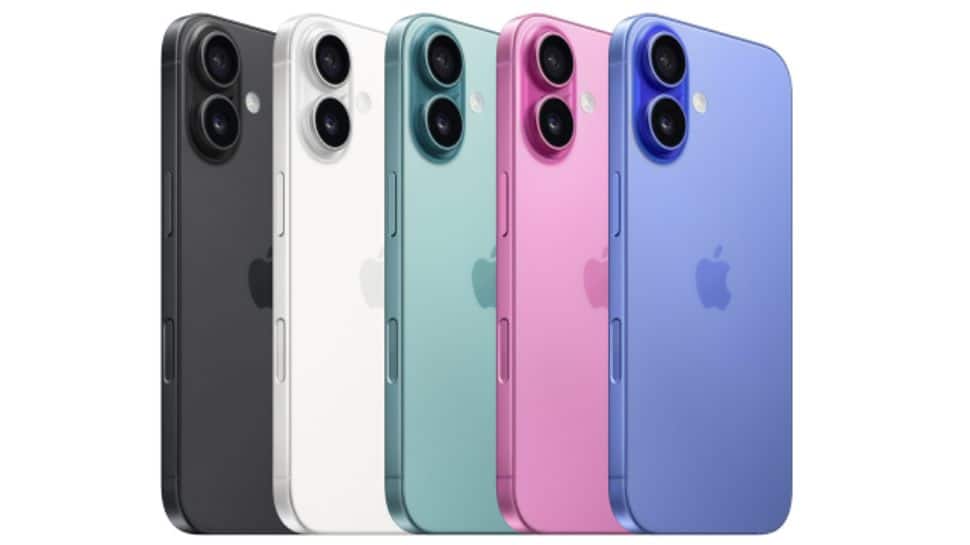
Mumbai: Apple has recorded a strong 36 per cent year-on-year (YoY) growth in iPhone shipments in India during the first half of 2025 (H1 2025), industry data showed on Wednesday. The company also saw 13 per cent growth in its iPad segment — reflecting the growing demand for its latest-generation devices in the country, according to the data, a CyberMedia Research (CMR) report said. The impressive growth was driven by the popularity of Apple’s newest models. The iPhone 16 series emerged as the top performer, capturing 62 per cent of the iPhone market share in H1 2025, followed by the iPhone 15 series with 30 per cent share. The iPhone 16e and iPhone 14 series also contributed to the company’s sales, each holding around 4 per cent market share, the data showed. In the tablet segment, the iPad 11 series led the way with a 64 per cent share, while the iPad Air 2025 series followed with a 25 per cent share. Older models like the iPad Pro 2024, iPad Air 2024, and iPad 10 series held smaller shares in the market, according to the data. According to CMR estimates, Apple is expected to continue its strong performance in the second half of 2025, with a potential market share of 33 per cent in iPads and 11 per cent in iPhones. In a statement, Prabhu Ram, VP-Industry Research Group (IRG), CMR, said the company’s growth in India is being powered by strong demand, better affordability through financing schemes, a maturing ecosystem, and a deeper retail presence. He also highlighted that localised production and the expanding digital lifestyles of Indian consumers are further fueling its growth. “Apple’s growth trajectory in India continues to benefit from a confluence of factors: improved affordability through financing schemes, a maturing ecosystem, localised production, and deeper retail presence,” Ram stated. He added that the Indian market continues to offer significant room for expansion, especially in the premium device segment, where the brand remains firmly positioned to lead.

Google Pixel 10, Pixel 10 Pro To Launch In India At ‘Made By Google’ Event: Check Expected Camera, Display, Battery, And Price Details | Technology News
Google Pixel 10 And Pixel 10 Pro India Launch: The year 2025 is shaping up to be a blockbuster season for smartphones. Every major company is launching feature-packed devices in the Indian market. Samsung has just unveiled its Galaxy Fold 7 and Flip 7, while Vivo recently released the X200 FE. Now, with August approaching, the launch of the Pixel 10 series is right around the corner. Google has officially confirmed that it will debut on August 20 at the ‘Made by Google’ event. The Made by Google event is slated to begin at 10 AM PT which is 10:30 PM IST for those watching in India. Even a month ahead of its release, the Pixel 10 series is already generating significant global buzz. The series is expected to include four models — the Google Pixel 10, Pixel 10 Pro, Pixel 10 Pro XL, and Pixel 10 Pro Fold. Each device is set to receive notable upgrades, positioning them well for the competitive smartphone market in 2025. Moreover, a 13-second teaser released on Google’s website showcases the phone in a greyish colour variant, with a “10” animation that smoothly transitions into the camera island which strongly hints at the final design of the upcoming Pixel lineup. Google is officially showing the Pixel 10 already. Assuming this isn’t a 10 Pro, looks like 3 cameras on the base phone is the main thing that’s new. Otherwise… same design pic.twitter.com/i3gF7Mshts — Marques Brownlee (@MKBHD) July 22, 2025 Google Pixel 10 Specifications (Expected) The device is expected to feature a 6.3-inch Full HD+ OLED display with a 120Hz refresh rate, protected by Gorilla Glass Victus 2. The screen could offer up to 3,000 nits of peak brightness, including 2,000 nits in high-brightness mode, ensuring excellent visibility even under harsh sunlight. Under the hood, the phone is likely to be powered by Google’s new Tensor G5 chipset. It may pack a 4,970mAh battery with support for 29W wired fast charging and 15W wireless charging. On the photography front, the Pixel 10 is tipped to sport a 48MP primary sensor — likely the same one used in the Pixel 9a. However, the ultra-wide-angle camera might see a downgrade from 48MP to 12MP. A new 10.8MP telephoto lens, possibly borrowed from the Pixel 9 Pro Fold, is also expected to be part of the setup. Google Pixel 10 Pro And Pixel 10 Pro XL Specifications (Expected) The Pixel 10 Pro is expected to feature a 6.3-inch 120Hz LTPO OLED display with Gorilla Glass Victus 2 protection and up to 3,000 nits of peak brightness. Meanwhile, the larger Pixel 10 Pro XL is tipped to offer a 6.8-inch 120Hz LTPO OLED display with the same peak brightness and durability. Both models are likely to sport a powerful triple rear camera setup, consisting of a 50MP primary sensor, a 48MP ultra-wide-angle lens, and a 48MP telephoto lens. On the front, a 42MP selfie camera is expected to handle selfies and quality video calls. The Pixel 10 Pro could be backed by a 4,870mAh battery with support for 29W wired fast charging, 15W wireless charging, and Qi2 wireless charging. On the other hand, the Pixel 10 Pro XL is likely to pack a larger 5,200mAh battery, supporting 39W wired fast charging and 15W wireless charging. Google Pixel 10 And Pixel 10 Pro Price In India (Expected) The Google Pixel 10 is expected to launch in India at a starting price of around Rs 79,999. The Pixel 10 Pro could be available for approximately Rs 90,600, while the Pixel 10 Pro XL may carry a price tag of Rs 1,17,700. As for the flagship model, the Google Pixel 10 Pro Fold is likely to debut at a starting price of Rs 1,79,999.

Massive Spike In Cybercrime Cases in India From 2018 To 2022: NCRB Data | Technology News
Cybercrime Cases In India: Cybercrime in India has seen a steep rise of over 140 per cent in the past five years, with cases more than doubling between 2018 and 2022, the Ministry of Home Affairs said on Tuesday. According to the latest report published by the National Crime Records Bureau (NCRB), the number of cybercrime cases registered in 2018 was 27,248. This figure rose sharply to 65,893 in 2022, Minister of State (MoS) for Home Affairs Bandi Sanjay Kumar said in response to a question in the Lok Sabha. These crimes include offences carried out using communication devices such as mobile phones, computers, and internet networks. However, the NCRB clarified that specific data related to complaints lodged by elderly citizens is not maintained separately. The Ministry of Home Affairs has stated that ‘Police’ and ‘Public Order’ fall under the responsibility of State Governments as per the Constitution. Therefore, the prevention and investigation of cyber crimes lie primarily with the States and Union Territories. However, the Central Government supports their efforts through advisories and funding under different schemes aimed at enhancing the capacity of local law enforcement agencies. To strengthen India’s response to cybercrime, the Central Government has taken several steps. These include setting up the Indian Cyber Crime Coordination Centre (I4C), launching the National Cyber Crime Reporting Portal (https://cybercrime.gov.in), and starting the Citizen Financial Cyber Fraud Reporting and Management System (CFCFRMS) in 2021. According to the Ministry, over Rs 5,489 crore has been saved through timely intervention in more than 17.82 lakh financial fraud complaints reported under CFCFRMS. To further help citizens, a 24×7 helpline number ‘1930’ has also been operationalised. In addition, the government has blocked more than 9.42 lakh SIM cards and over 2.6 lakh mobile IMEIs involved in cybercrimes. Awareness campaigns have also been a major part of the government’s strategy, the Minister of State explained. From caller tunes in multiple languages warning against digital scams to ads in Metros, newspapers, and cinema halls, various channels have been used to educate the public. “Even the Prime Minister spoke about the dangers of ‘digital arrests’ in his ‘Mann Ki Baat’ address on October 27, 2024,” MoS Kumar stated. The Government has also involved social media influencers, Prasar Bharati, and events like Raahgiri and IPL to spread awareness. Campaigns have reached schools, railway stations, and even religious events like Kumbh Mela 2025.

Realme 15 And Realme 15 Pro India Launch On July 24: Check Expected Camera, Display, Battery And Price | Technology News
Realme 15 Series India Launch: Chinese smartphone manufacturer Realme is set to launch its new Realme 15 series smartphones in India tomorrow, July 24. The lineup will include two models: the Realme 15 and the Realme 15 Pro. The company has revealed that the upcoming Realme 15 series has achieved an AnTuTu benchmark score of over 1.1 million. Earlier, Realme announced AI imaging tools like AI Edit Genie and AI Party for the Realme 15 Pro 5G smartphone in the country. Furthermore, the Realme 15 is expected to be available in three colour options: Silk Pink, Velvet Green, and Flowing Silver. The Realme 15 Pro is likely to come in Velvet Green and Flowing Silver, with Silk Purple replacing Silk Pink. However, key details, including prices and specifications, have been leaked online ahead of the official launch event. Realme 15 Specifications (Expected) The Realme 15 is expected to feature a 6.8-inch AMOLED display with a 1.5K resolution, an impressive peak brightness of 6,500 nits, and a smooth 144Hz refresh rate. It is powered by the MediaTek Dimensity 7300+ processor and paired with a massive 7,000mAh battery that supports 80W wired fast charging. On the photography front, the smartphone will sport a 50MP primary sensor with Optical Image Stabilisation (OIS) and an 8MP ultrawide lens on the rear, while the front will house a 50MP camera for selfies and video calls. The handset is likely to measure just 7.66mm in thickness and will come with IP68 and IP69 ratings for dust and water resistance. Realme 15 Pro Specifications (Expected) It is expected to feature a 6.8-inch AMOLED panel with the same 1.5K resolution and 144Hz refresh rate as the standard model. The phone will be powered by the Snapdragon 7 Gen 4 chipset, ensuring strong performance. Like its sibling, the device will pack a large 7,000mAh battery with support for 80W fast charging. On the photography front, the Realme 15 Pro is likely to offer a 50MP primary sensor with Optical Image Stabilisation (OIS) and a 50MP ultrawide lens, along with a 50MP front-facing camera for selfies and video calls. The Pro variant will have a slightly thicker body at 7.69mm but will retain the same IP68 and IP69 ratings for dust and water resistance. Realme 15 Series Price In India And Availability The top-end Realme 15 Pro is expected to be priced around Rs 39,999, while the base variant could start below Rs 30,000. Meanwhile, the standard Realme 15 is likely to be priced under Rs 25,000. Following the launch event scheduled for 7:00 PM IST on July 24, both smartphones will be available for purchase via Flipkart.

Dixon Technologies’ Profit Declines 39% Sequentially To Rs 280 Crore In Q1 | Technology News
Mumbai: Dixon Technologies’ net consolidated profit for the first quarter of the current financial year (Q1 FY26) stood at Rs 280 crore, down 39 per cent sequentially, according to its exchange filing on Tuesday. The company had posted a net profit of Rs 465 crore in the preceding quarter (Q4 FY25). However, the net profit of the homegrown company doubled on year-on-year (YoY) from Rs 139.70 crore that it reported in the corresponding quarter a year ago (Q1 FY25). The revenue from operation also saw a decent uptick both sequentially and year-on-year, reaching at Rs 12,835.66 crore from Rs 10,292.54 crore in the preceding quarter and Rs 6,579.8 crore in the same quarter a year earlier. The Mobile and Other EMS Division’s operating profit contribution increased to 82 per cent from 69 per cent in the previous year, and its share of total revenue increased to 91 per cent from 79 per cent in the first quarter of FY25. The company EBITDA rose to Rs 484 crore in the quarter, a surge of 89 per cent YoY. Meanwhile, the company saw a jump of Rs 2,497 crore in its total expenses to Rs 12,478.58 crore from Rs 9,981.92 crore in the January-March quarter (Q4 FY25). The shares of the company settled in the negative territory on Tuesday. The stock closed at Rs 16,110.0, down Rs 171 or 1.05 per cent. The company’s shares have recovered well after continuing to be under pressure, rising 21.3 per cent since plunging to a two-month low of Rs 13,280 in late June. The stock experienced bullish run from February 2023 to December 2024, yielding an impressive 559 per cent return and reaching an all-time high of Rs 19,148 per share. Post the rally, the shares experienced some correction due to profit booking, but they have since bounced back. The stock is currently 16 per cent below its peak at Rs 16,112.