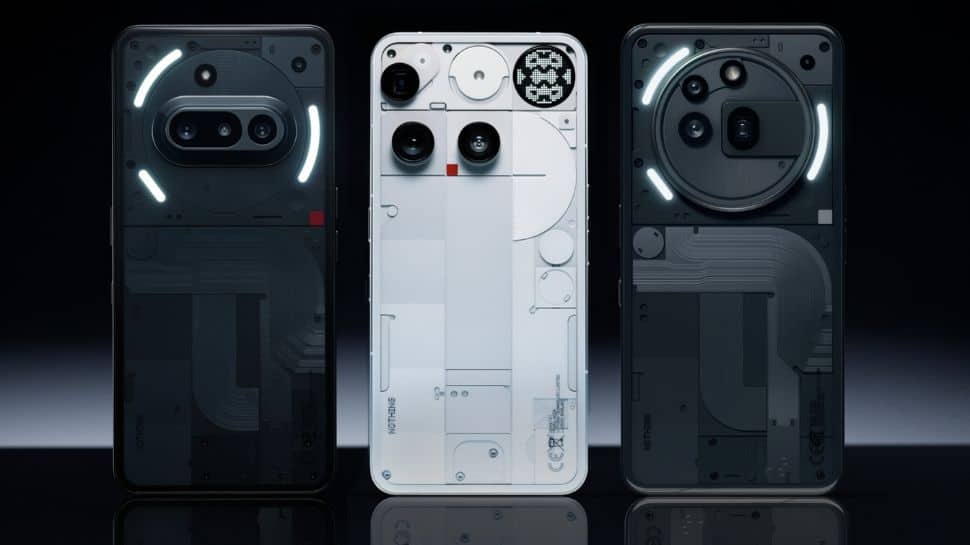
Nothing Phone 3 India Launch: Nothing, a London-based company, has expanded its smartphone portfolio in India with the launch of the new Phone (3) after two years. The newly-launched smartphone arrives with substantial upgrades across performance, display, software, and durability. The Nothing Phone 3 will run on Nothing OS 3.5 based on Android 15, with Nothing OS 4.0 based on Android 16 announced to be rolled out in Q3 2025. The company promised that the phone will get 5 years of Android updates and 7 years of security patches. The Nothing Phone 3 will be available in two colour options which include Black and White. The smartphone comes with the Glyph Matrix, which is made up of 489 individually firing LEDs, Glyph Button, and a red recording light. Nothing Phone 3 Specifications: The smartphone features a 6.67-inch flexible AMOLED display with a 120Hz adaptive refresh rate and an impressive peak brightness of 4500 nits. It is powered by the Snapdragon 8s Gen 4 processor, built on TSMC’s 4nm process, ensuring high performance and efficiency. The smartphone is backed by a 5500mAh silicon-carbon battery that supports 65W fast charging. The phone boasts an upgraded triple rear camera setup, comprising a 50MP OIS main sensor, a 50MP OIS periscope lens, and a 50MP ultra-wide camera. On the photography front, it offers a 50MP front-facing shooter at the front. Adding further, the device is equipped with Qualcomm’s Hexagon NPU to efficiently handle AI-related tasks. The phone gets the Corning Gorilla Glass Victus 2 protection on the front, and regular Gorilla Glass layer at the back. Nothing Phone 3 Price In India And Availability The Nothing Phone (3) is priced in India starting at Rs 79,999 for the base variant with 12GB RAM and 256GB storage, while the top-end 16GB + 512GB model is priced at Rs 89,999. Sales begin on July 15, and the device will be available through Flipkart, Flipkart Minutes, Vijay Sales, Croma, and other leading retail stores across the country. Nothing Phone 3 Launch Offers The Pre-bookings for the Nothing Phone (3) start on July 1. As a special launch offer, customers who pre-book will receive the Nothing Ear (worth Rs 14,999) for free with their purchase. Adding further, all users who pre-book or buy the device on July 15 will get an extra one-year extended warranty. Furthermore, Nothing is also offering up to 24 months of no-cost EMI options through leading banks.
Positional Encodings in Transformer Models
This post is divided into five parts; they are: • Understanding Positional Encodings • Sinusoidal Positional Encodings • Learned Positional Encodings • Rotary Positional Encodings (RoPE) • Relative Positional Encodings Consider these two sentences: “The fox jumps over the dog” and “The dog jumps over the fox”.
Nothing Phone 3 Launched At Rs…; Key Features And Specifications – Check Discount Offers | Technology News
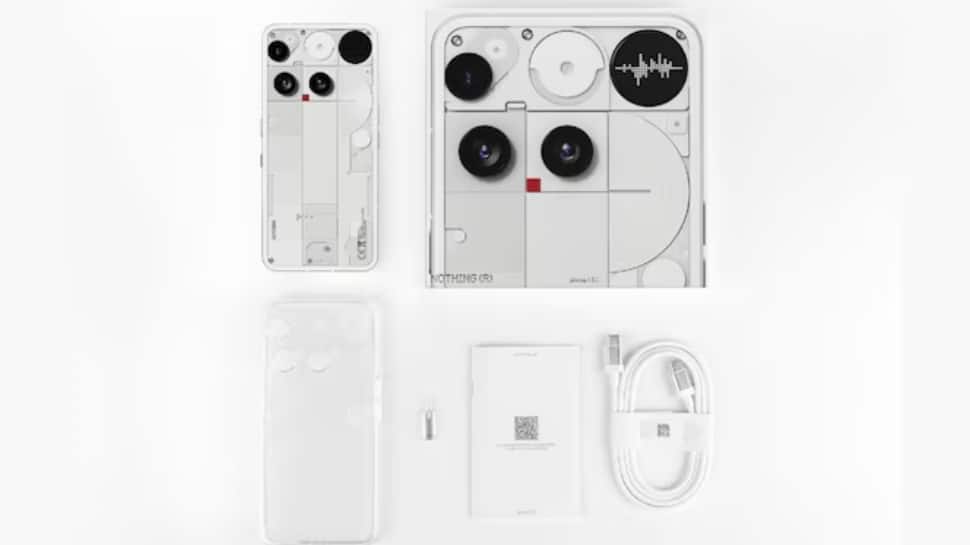
Nothing Phone 3: Nothing has officially launched the Nothing Phone 3 in India. Available in White and Black colours, the Nothing Phone 3 will go on open sale from July 15. Customers who pre-book the device will receive a free pair of Nothing Ear earbuds as part of a special launch offer. There is also a flat discount of Rs 5,000 for users of cards from certain banks. Nothing Phone 3 Prices 12GB RAM + 256GB storage variant: Rs 79,999 16GB RAM + 512GB storage version: Rs 89,999 The new smartphone comes with the Snapdragon 8s Gen 4 chipset and is paired with up to 16GB of RAM and 512GB of internal storage. It features a 6.67-inch AMOLED display with a 1.5K resolution (1,260 x 2,800 pixels), 120Hz adaptive refresh rate, HDR10+ support, and 4,500 nits peak brightness. The screen has Gorilla Glass 7i on the front and Gorilla Glass Victus on the back for protection. The smartphone gets a triple rear camera setup, with each lens offering 50 megapixels. The setup includes a 50MP main camera with OIS, a 50MP periscope telephoto lens with OIS and 3x optical zoom, and a 50MP ultra-wide camera. On the front, it has a 50MP selfie camera for high-resolution video calls and self-portraits. The rear panel also introduces a new Glyph Matrix, a circular light ring made up of 489 individually controllable micro-LEDs, replacing the older Glyph Interface. It can display charging progress, animations, time, and other alerts. It runs on Nothing OS 3.5, based on Android 15, and the company promises five years of Android updates along with seven years of security patches. Connectivity options include 5G, Bluetooth 6, NFC, Wi-Fi 7, GPS, A-GPS, GLONASS, GALILEO, QZSS, and NavIC. The phone features a 360-degree antenna design for enhanced connectivity. It also includes an in-display fingerprint sensor, dual stereo speakers, and two high-definition microphones. Sensors onboard include an ambient light sensor, accelerometer, gyroscope, proximity sensor, and electronic compass. Powering the device is a 5,500mAh battery (Indian variant) with 65W wired fast charging, which can charge the phone from 1% to 100% in 54 minutes. The phone also supports 15W wireless charging, 7.5W reverse wired charging, and 5W reverse wireless charging. The handset measures 160.60 x 75.59 x 8.99 mm and weighs 218g. It has an IP68 rating, making it dust- and water-resistant.
How to Combine Scikit-learn, CatBoost, and SHAP for Explainable Tree Models
Machine learning workflows often involve a delicate balance: you want models that perform exceptionally well, but you also need to understand and explain their predictions.

Fresher Hiring In India Rises 11% In June, Led By Non-Tech Sectors, Tier-II Cities: Report | Technology News
New Delhi: The Indian job market witnessed an encouraging 11% growth in fresher hiring in June, led by strong demand in sectors such as accounting, insurance, and artificial intelligence/machine learning (AI/ML), a new report said on Wednesday. The Naukri JobSpeak report highlights that non-tech sectors are increasingly becoming attractive for young professionals. “Fresher hiring in non-tech sectors continues to gain traction, reflecting expanding opportunities for young professionals,” said Pawan Goyal, Chief Business Officer at Naukri. Among Indian cities, Coimbatore emerged as a key hub for freshers, reporting a 24% jump in hiring during the month. Startups also showed renewed hiring momentum, especially in metro cities like Pune, Bengaluru, and Chennai. Pune led the pack with a 32% surge in hiring by startups. Meanwhile, Raipur recorded the highest overall growth in job trends among all cities, with a 22% rise in job postings. The insurance sector stood out with a 32% increase in overall hiring, including a massive 59% jump in fresher recruitment. The accounting and finance segment also showed strong performance, with a 34% year-on-year (YoY) increase. However, the architecture and interior design sector topped the hiring charts with a remarkable 50% YoY growth. Hospitality and travel sectors continued their recovery with a 21% rise compared to June 2024. The BPO/ITES industry also saw a 19% growth, driven by aggressive hiring in emerging cities like Jaipur (up 64%) and Baroda (up 54%). “What stood out in June was the sharp pickup in hiring across core service sectors like Hospitality and BPO/ITES,” Goyal added. In a positive sign for the IT industry, hiring turned positive again after a quiet period, especially in tier-II cities. Banking and finance unicorns also ramped up recruitment, hiring 30% more candidates than in June of the previous year. The report also showed an increase in demand for experienced professionals. Jobs requiring 13–15 years of experience grew by 15%, while those seeking candidates with over 16 years of experience also rose by 15%, mainly in industries like real estate and pharma/biotech.
Interpolation in Positional Encodings and Using YaRN for Larger Context Window
This post is divided into three parts; they are: • Interpolation and Extrapolation in Sinusoidal Encodings and RoPE • Interpolation in Learned Encodings • YaRN for Larger Context Window Sinusoidal encodings excel at extrapolation due to their use of continuous functions: $$ \begin{aligned} PE(p, 2i) &= \sin\left(\frac{p}{10000^{2i/d}}\right) \\ PE(p, 2i+1) &= \cos\left(\frac{p}{10000^{2i/d}}\right) \end{aligned} $$ You can simply substitute $p$ with a larger value to obtain the positional encoding for a longer sequence.
Vivo T4 Ultra 5G Review: Sleek Looks, Strong Specs, And Smart AI Features Under Rs 40,000 – Check 4 Reasons to Buy And 3 Reasons to Skip | Technology News
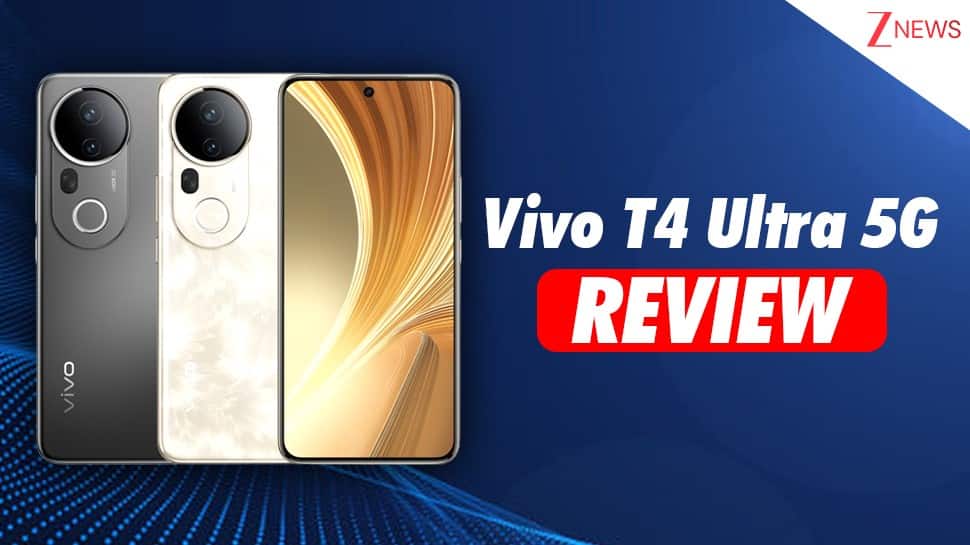
Vivo T4 Ultra 5G Review: Vivo has launched a new smartphone in its T-series—the Vivo T4 Ultra. The phone is priced under Rs 40,000 and takes on rivals like the iQOO Neo 10, Motorola Edge 60 Pro, and OnePlus 13R. The phone comes with the 8GB+256GB, 12GB+256GB, and 12GB+512GB storage variants and offered in Meteor Grey and Phoenix Gold colour options. The display is protected by SCHOTT Xensation α glass, and the phone runs on FunTouch OS 15 based on Android 15. Vivo promises 3 years of Android updates and 4 years of security patches, which adds to its long-term value. After using the Vivo T4 Ultra for over a month, it’s clear this is a performance-focused smartphone that offers great value for money in the mid-range segment. Vivo T4 Ultra 5G: Design And Build Quality The Vivo T40 Ultra 5G has a sleek and modern look with a matte finish that resists fingerprints and scratches. It’s lightweight at just 192g and super slim at 7.43mm, making it comfortable to hold. The curved edges help with grip, but the phone does feel a bit slippery, so using a case is a good idea. While it looks premium, the plastic side frame slightly brings down the high-end feel. Also, the IP65 rating is decent, but at this price, other phones offer better water and dust protection like IP67 or IP68. Vivo T4 Ultra 5G: Display Performance The display is one of the phone’s best features. You get a 6.67-inch curved AMOLED screen with 2800 x 1260 resolution and a 120Hz refresh rate—great for smooth scrolling and videos. It’s bright too: 800 nits typical, 1600 nits in high brightness, and a massive 5000 nits peak for sunny outdoor use. Colours are vibrant, thanks to 1.07 billion colour support, HDR10+, and a Visual Enhancement mode for apps like Netflix and YouTube. It’s protected with Schott α glass, offering strong resistance to drops and scratches. (Also Read: OPPO K13 5G Review: Big Battery, Smooth Display, Snapdragon Power Under Rs 20,000; Check 6 Reasons To Buy, 3 To Skip This Phone) Vivo T4 Ultra 5G: Performance And Hardware The T40 Ultra is a performance beast. It’s powered by the MediaTek Dimensity 9300+ processor and Immortalis-G720 GPU, offering top-tier speed for everything from daily use to heavy gaming. It scored 2223 (single-core) and 7295 (multi-core) on Geekbench, and 1,820,818 on AnTuTu. Games like BGMI, COD Mobile, and Genshin Impact run smoothly, even with high graphics. It also supports 120fps gameplay in select titles. There’s some heating during long sessions, but overall performance stays stable. Vivo T4 Ultra 5G: Camera Capabilities The phone has a strong camera setup with a 50MP main lens (OIS), a 50MP periscope zoom lens, and an 8MP ultra-wide camera. Daylight shots look sharp and colourful, with HDR kicking in automatically for better contrast. The periscope lens supports 3x optical, 6x lossless, and up to 100x digital zoom, although image clarity drops after 6x. Low-light photos come out well too, thanks to OIS and Ultra Dark mode. You can record 4K videos at 60fps from both front and back cameras. Portrait shots have excellent background blur and edge detection. Vivo T4 Ultra 5G: Battery Life And Charging The 5500mAh BlueVolt battery gives great battery life. Even with heavy use—like gaming and video streaming—it easily lasts a full day. With regular use, you can stretch it to nearly 2 days. It charges quickly with 90W wired charging, going from 0 to 50% in around 25 minutes. While not the fastest in the market, this speed is good and helps keep battery health intact in the long run. Vivo T4 Ultra 5G: Software And AI Features The phone runs on Funtouch OS 15 based on Android 15. It feels smooth and modern, and Vivo promises 3 years of Android updates and 4 years of security patches, which is great for long-term use. It also packs handy AI features like: AI Note Assist for summarizing and translating text, Live Text to pull text from images, On-device Call Translation for multi-language conversations and Circle to Search for instant look-ups. The Link to Windows feature helps you connect and sync with your PC. One downside is the pre-installed apps like Facebook, Amazon, PhonePe, and more. You can remove them, but they reappear after a factory reset, which isn’t ideal for those who want a clean setup. Vivo T4 Ultra 5G: Price In India And Variants The T40 Ultra is available in three configurations to suit different needs and budgets. The base variant, featuring 8GB RAM and 256GB of storage, is priced at Rs 37,999. For those seeking more multitasking power, the 12GB RAM + 256GB storage option is available at Rs 39,999. The top-end model, offering 12GB RAM and an ample 512GB of storage, comes in at Rs 41,999. Vivo T4 Ultra 5G Pros: Point 1: The T40 Ultra offers up to 5000 nits brightness, HDR10+ support, and 1.07 billion colours, ensuring vibrant visuals and clear outdoor viewing, with optimized playback for Netflix and YouTube content. Point 2: Its triple camera setup includes a 50MP periscope lens with 3x optical, 6x lossless, and 100x digital zoom. OIS, autofocus, and night mode deliver sharp photos in any condition. Point 3: A 5,500mAh battery and 90W fast charging power the phone, delivering 50% charge in 25 minutes and up to two days of usage for gaming, streaming, and daily multitasking needs. Point 4: The phone records 4K videos at 60fps from both front and rear cameras. With Wi-Fi 7, Bluetooth 5.4, and NFC, it ensures fast sharing, clear calls, and smooth connectivity. Vivo T4 Ultra 5G Cons: Point 1: The phone feels light and slippery in hand, and its vibration motor delivers weak haptic feedback, making typing, gaming, and overall interactions feel less refined than competitors in its price range. Point 2: Preloaded apps like Facebook and Amazon reinstall after a factory reset, causing clutter. Adding further,
7 Concepts Behind Large Language Models Explained in 7 Minutes
If you’ve been using large language models like GPT-4 or Claude, you’ve probably wondered how they can write actually usable code, explain complex topics, or even help you debug your morning coffee routine (just kidding!).

India’s Digital Identity Adoption Surges Amid Rising Trust, AI Integration: Report | Technology News
New Delhi: As India’s digital ecosystem expands at an unprecedented pace, Indian consumers are rapidly embracing new-age identity technologies while balancing convenience with security concerns, a new report said on Wednesday. The data compiled by Okta highlights that more than 30% of Indian users log into ten or more personal online accounts every month — showcasing the country’s accelerating digital footprint. Amid this growth, Indian consumers are also displaying a greater readiness to adopt biometrics and AI-driven services compared to global peers. Despite the growing array of authentication methods, passwords remain the most convenient option for 82% of Indians. However, biometrics are steadily gaining traction, with 55% using fingerprint authentication and 35% relying on Face ID for smoother logins. “Despite the new options, 82% of Indians still find passwords to be the most convenient way to verify their identity,” the report said. “More than half of the population (54%) find it convenient to use a government ID like Aadhaar for verification purposes, followed by SMS/voice calls (44%),” it added. Security perceptions remain high for passwords (79%), SMS authentication (74%), and fingerprints. However, risky practices persist — 1 in 5 Indians reuse the same password across all personal accounts. India’s growing trust in digital platforms is also noteworthy. As many as 67% of Indian respondents trust businesses to protect their data, well above the global average of 50%. This trust extends to key sectors — banks (79%), tech firms (73%), government agencies (70%), and online retailers (69%). However, digital vigilance is rising too, with 81% of Indians expressing concern about identity fraud — significantly higher than the global average of 63%. The report, based on a global survey of 6,750 consumers (including 750 from India), also found that Indians are more open to engaging with enterprise AI agents. While 65% appreciate the speed and 24/7 support of AI, as many as 76% still prefer human interaction. Interestingly, 64% of Indians are willing to share health data with AI agents, compared to 32% globally, and 49% are comfortable sharing financial data, compared to 27% globally. “AI is no longer a future concept — it is embedded in the way we live, work, and connect,” said Shakeel Khan, Regional Vice President and Country Manager, Okta India. Ben Goodman, SVP & GM, Asia Pacific & Japan at Okta, added, “In Asia Pacific, trust has become the true currency of digital engagement. From logins to AI agents, consumers want experiences that are seamless, secure, and respectful of their data.”
Unlocking Performance: Accelerating Pandas Operations with Polars
<a href="https://pola.